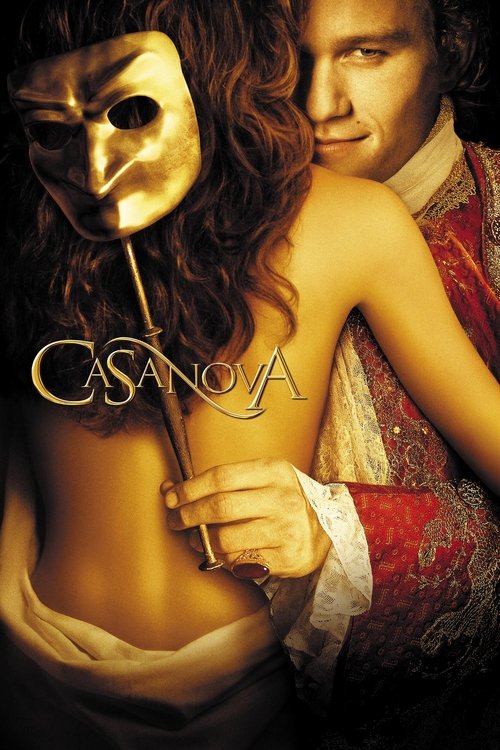
Casanova (2005)
Directed by Lasse Hallström
No — Casanova is not woke, scoring 18 out of 100 on our wokeness meter.
This 2005 Venetian adventure presents a curious attempt at reimagining a historical figure through a modern lens.
Consciousness Markers
Francesca Bruni secretly writes illegal feminist tracts under the male pseudonym Bernardo Guardi and publicly argues for women's rights, making gender advocacy a genuine plot engine rather than mere background.
The historical Casanova is heavily reinvented into a romantic hero opposite an invented feminist author, though the liberties are farcical rather than ideologically driven.
Francesca's women's-rights declamations carry a mild sermonizing tone, but they are folded into period comedy rather than delivered as direct moral instruction.
The cast is overwhelmingly white European, with Omid Djalili as the servant Lupo being the lone notable exception in a natural, unremarked supporting role.
Francesca's mother pressures her into a wealthy arranged marriage to settle debts, a faint transactional-marriage critique that never rises to systemic economic commentary.
No LGBTQ+ characters, themes, or subtext appear anywhere in the film.
The film engages no racial themes or commentary whatsoever.
No environmental or climate content of any kind.
The rotund Paprizzio is largely a source of comic mockery and is lured into a weight-loss regimen, the opposite of body-positive framing.
No neurodivergent characters or themes are present.
Why it received this score
This 2005 Venetian adventure presents a curious attempt at reimagining a historical figure through a modern lens. The casting remained overwhelmingly European, which limits the film's scope of cultural awareness. The core of the story relies on a romantic entanglement between a notorious womanizer and an intellectual who challenges the established order. This pairing allows the film to operate in a gray zone between traditional farce and social commentary.
The most significant progressive vector of the picture is Francesca Bruni. Her secret writing of illegal feminist tracts elevates her role far beyond a typical romantic interest. Her arguments for women's rights form a genuine engine for the narrative, though the presentation is slightly heavy-handed. We see moments of lecture energy in her impassioned declamations, yet these moments are carefully folded into the conventions of period comedy. The film achieves a degree of revisionist history by transforming a boorish libertine into a conflicted figure caught opposite a serious intellectual force.
Where the picture fails is in its outright omission of several contemporary social issues. There is no engagement with systemic racial consciousness or climate concerns. Furthermore, the narrative provides zero representation for LGBTQ+ themes or neurodivergent perspectives. The portrayal of the rotund Paprizzio serves only as fodder for mockery, offering no insight into body positivity. It is a competent piece of period entertainment, yet its progressive sensibilities are localized and highly selective. It is a movie that cares about gender equality in the 18th century, but it ignores the rest of the century entirely.
Analysis generated by our Consciousness Algorithm


Synopsis
With a reputation for seducing members of the opposite sex, regardless of their marital status, a notorious womanizer discovers a beauty who seems impervious to his charms. However, as he continues to pursue the indifferent lady, he finds himself falling in love.
Questions about Casanova
Is Casanova woke?
No — Casanova is not woke, scoring 18 out of 100 on our wokeness meter. That earns it a verdict of Ultra Based.
Does Casanova have any woke elements?
1 of the 10 markers register at 30 or above, led by Feminist Agenda (45). On Feminist Agenda: Francesca Bruni secretly writes illegal feminist tracts under the male pseudonym Bernardo Guardi and publicly argues for women's rights, making gender advocacy a genuine plot engine rather than mere background.
How does Casanova compare to other 2005 movies?
It ranks #40 of the 181 films from 2005 we've scored; their average is 13. The wokest is The Constant Gardener (72).
How is the Woke Score calculated?
An AI-assisted process researches the film and its reception, scores it 0–100 on ten markers, then combines those into one 0–100 Woke Score. It measures a specific set of 2020s cultural themes, not film quality.