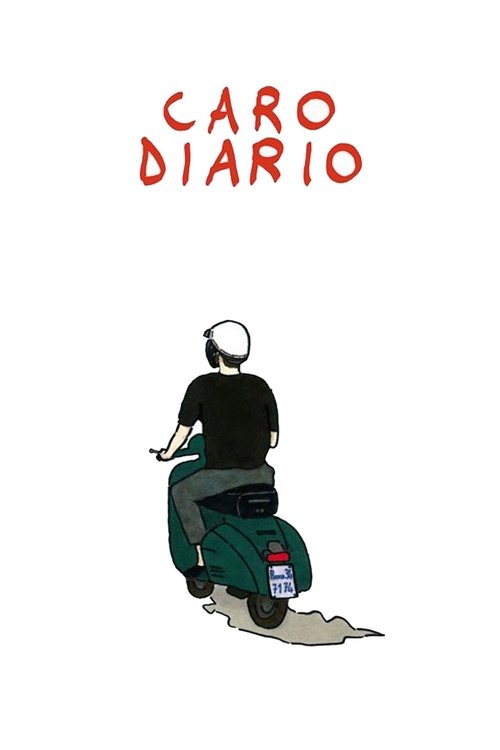
Caro diario (1993)
Directed by Nanni Moretti
No — Caro diario is not woke, scoring 12 out of 100 on our wokeness meter.
An open diary in three chapters, and a Vespa is the only engine that drives it.
Consciousness Markers
The film offers a subtle critique of modern consumerism, the commercialization of nature, and the often-useless nature of the expensive medical establishment.
As a self-referential diary, Moretti constantly comments on art, politics, and society, but this is observational irony rather than a formal, didactic lecture.
The film features a cast rooted in Italian cinema, but the focus remains on the director's personal perspective rather than pushing specific modern representation narratives.
While the film features female characters, the narrative does not engage with a specific feminist agenda or critique gender dynamics in a modern, progressive way.
The setting of the Aeolian Islands provides a natural backdrop, but the critique is focused on tourism and human behavior rather than a specific climate crusade.
There is no discernible focus on LGBTQ+ themes or representation within the film's narrative or character development.
The film is deeply rooted in Italian culture and society, and does not address issues of race or racial consciousness.
There is no commentary or focus on body image or body positivity in the film's portrayal of its characters.
The film deals with physical illness, but does not explore themes related to neurodivergence or mental health in a contemporary, specific manner.
The film is a personal reflection and does not attempt to challenge or revise established historical narratives.
Why it received this score
An open diary in three chapters, and a Vespa is the only engine that drives it. Nanni Moretti plays himself, or a version of himself, riding through a deserted Roman August, then retreating to the Aeolian Islands, then submitting his itching body to a parade of specialists who cannot agree on anything. The structure is loose, the tone is dry, and the camera watches its own author with the patience of a man who has decided that his private irritations are a public matter. They are, mildly.
The film's politics are the politics of a grumpy pedestrian. Moretti scowls at the gentrification of his neighborhoods, at the banality of Italian cinema, at critics who overpraise a serial killer picture. On the islands, his friend Gerardo flees modern commodities and ends up enslaved to soap operas, a small joke about how consumer appetite wins every argument. The final chapter turns that suspicion outward: a year of expensive pills, dietary prohibitions, and alternative cures, all useless, until one doctor listens long enough to order an X-ray. The target is the commercialization of care, and the film strikes it without a slogan. The film does not, however, assemble a roster of contemporary concerns. Its cast is Italian, its gaze is male and autobiographical, and its women drift through the frame as friends and companions with no argument attached. Race, sexuality, body image, and mental health go unmentioned, not out of evasion but because the diary has other entries. There is no climate sermon, though the crowded ferries and the water shortages on Alicudi carry a quiet grudge.
The result is a film that observes and rarely instructs. Moretti comments on art, politics, and society constantly, but he does it as a man thinking aloud, not as a man handing out homework. The irony stays dry, the self-regard stays comic, and the diagnosis, when it finally arrives, is delivered with a glass of water and a bitter toast. Three decades on, it reads as a portrait of a specific temperament, and temperaments do not age into movements.
Analysis generated by our Consciousness Algorithm


Synopsis
Nanni Moretti recounts in his diary three slice-of-life stories marked by a dry, ironic gaze: in the first, he rides his Vespa through a deserted, sun-drenched summertime Rome; in the second, he visits a reclusive friend on an island, who ropes him into an impromptu journey between islets in search of quiet; and in the last, he finds himself grappling with an unknown illness.
Questions about Caro diario
Is Caro diario woke?
No — Caro diario is not woke, scoring 12 out of 100 on our wokeness meter. That earns it a verdict of Ultra Based.
Does Caro diario have any woke elements?
1 of the 10 markers register at 30 or above, led by Eat the Rich (40). On Eat the Rich: The film offers a subtle critique of modern consumerism, the commercialization of nature, and the often-useless nature of the expensive medical establishment.
How does Caro diario compare to other 1993 movies?
It ranks #29 of the 97 films from 1993 we've scored; their average is 11. The wokest is Bound by Honor (60).
How is the Woke Score calculated?
An AI-assisted process researches the film and its reception, scores it 0–100 on ten markers, then combines those into one 0–100 Woke Score. It measures a specific set of 2020s cultural themes, not film quality.