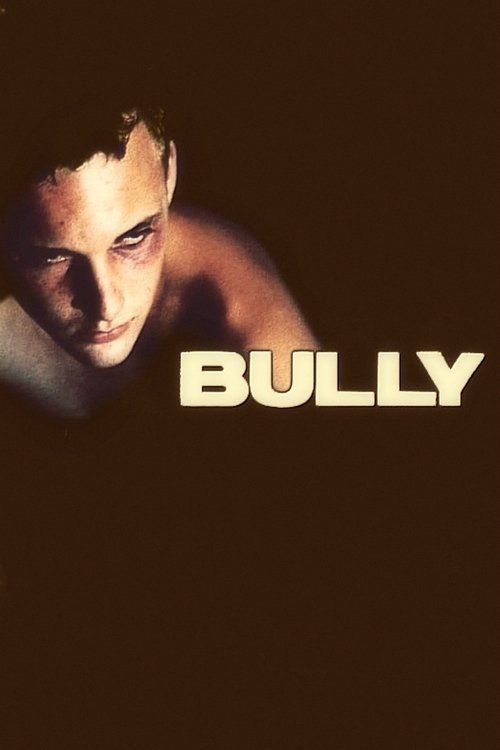
Bully (2001)
Directed by Larry Clark
No — Bully is not woke, scoring 11 out of 100 on our wokeness meter.
Bully (2001) is Larry Clark's clinical adaptation of Jim Schutze's true-crime book, following South Florida teenagers toward the murder of Bobby Kent.
Consciousness Markers
The film foregrounds closeted homosexuality and gay subtext — Bobby's implied repressed attraction to Marty, a gay bar humiliation scene, and gay pornography — but treats it as pathology and abuse rather than affirmation.
The cast is overwhelmingly white, reflecting the real South Florida subjects; Daniel Franzese (openly gay) was cast naturally rather than as a diversity gesture. No deliberate representation agenda.
Critics noted the film is deliberately amoral and refuses to explain or moralize, offering no lecture or message.
The film was widely criticized for gratuitous, voyeuristic nudity of its female cast; it offers no feminist framing whatsoever.
No racial themes or commentary; the story concerns white suburban teenagers with no engagement with race.
The Everglades serve only as a murder site; there is no environmental or climate messaging.
No economic critique or class-based messaging; the film is a clinical true-crime account.
Nudity is presented exploitatively and voyeuristically, the opposite of body-positive framing.
No neurodivergence themes or characters are present.
The film stays faithful to the documented 1993 murder and real court testimonies rather than revising history.
Why it received this score
Bully (2001) is Larry Clark's clinical adaptation of Jim Schutze's true-crime book, following South Florida teenagers toward the murder of Bobby Kent. Its social consciousness is mostly absent by design. The casting is naturalistic: a white suburban milieu, with Daniel Franzese present without fanfare or ribbon. No representation campaign is underway. The gay material exists, but not as affirmation. Bobby's closeted attraction, the gay bar humiliation, and the use of gay pornography as an instrument of abuse treat homosexuality as pathology and power, not liberation.
The film's treatment of women and bodies is where its progressive credit collapses. Clark lingers on naked teenage girls with a voyeuristic camera, and critics called the result gratuitous. There is no feminist frame and no body-positive gaze; exploitation is the operating mode. Race, climate, class, and neurodivergence are not on its mind. The Everglades are a dump site, not an ecosystem. The story stays close to the documented 1993 murder and court testimony, with no revisionist project.
Its lecture energy is near zero because Clark refuses to explain or moralize. The courtroom scene lets the culprits bicker, and title cards deliver the sentences. No sermon, no lesson, no redemptive thesis. This is an amoral neon glare, clinical and ugly. The result is a film that earns no social-justice credentials and seems proud of it. We classify accordingly, with the sober estimate that Bully is not a vehicle for progressive instruction. It is a true-crime specimen under glass.
Analysis generated by our Consciousness Algorithm


Synopsis
A group of teenagers in South Florida enact a murder plot against their mutual bully, Bobby, who has emotionally, physically, and sexually abused them for years.
Questions about Bully
Is Bully woke?
No — Bully is not woke, scoring 11 out of 100 on our wokeness meter. That earns it a verdict of Ultra Based.
Does Bully have any woke elements?
1 of the 10 markers register at 30 or above, led by LGBTQ+ Themes (30). On LGBTQ+ Themes: The film foregrounds closeted homosexuality and gay subtext — Bobby's implied repressed attraction to Marty, a gay bar humiliation scene, and gay pornography — but treats it as pathology and abuse rather than affirmation.
How does Bully compare to other 2001 movies?
It ranks #53 of the 148 films from 2001 we've scored; their average is 12. The wokest is Monster's Ball (60).
How is the Woke Score calculated?
An AI-assisted process researches the film and its reception, scores it 0–100 on ten markers, then combines those into one 0–100 Woke Score. It measures a specific set of 2020s cultural themes, not film quality.