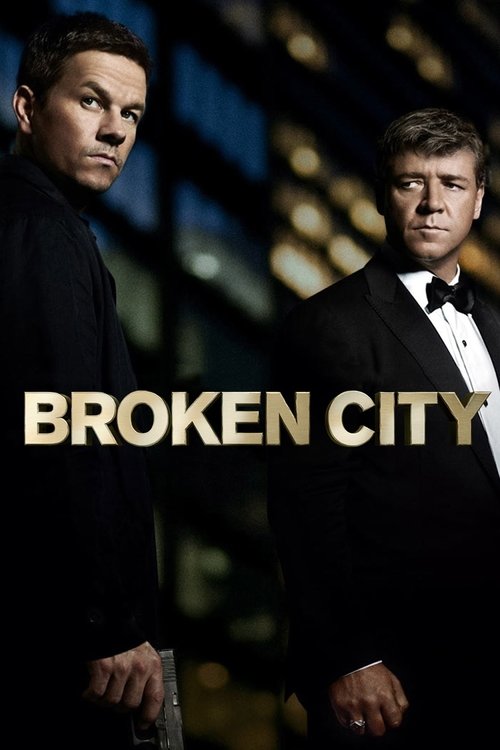
Broken City (2013)
Directed by Allen Hughes
No — Broken City is not woke, scoring 14 out of 100 on our wokeness meter.
Broken City arrives as a 2013 crime thriller of the sort studios once churned out with grim regularity, and it carries itself with the weary assurance of a genre piece that knows exactly which beats to hit.
Consciousness Markers
The villainous mayor and a wealthy contractor profit from a corrupt housing project that displaces poor residents, giving the film a mild eat-the-rich, anti-gentrification streak.
The supporting cast includes Jeffrey Wright, Natalie Martinez, Michael Beach, and Alona Tal, but their presence is incidental to a conventional crime-thriller ensemble rather than a stated representational aim.
The corruption plot is delivered through genre mechanics rather than preachy exposition, with only mild moralizing about power and justice.
The story includes a Latino victim and a Black commissioner, and touches on displacement in a housing project, but it does not frame these elements as racial-justice commentary.
There are no LGBTQ+ characters, themes, or subtext in the film.
Female characters exist in the plot, but the film does not advance a feminist agenda or critique patriarchal structures.
There is no climate-related content or environmental messaging.
The film does not engage with body-positivity themes or body-diversity messaging.
No neurodivergent characters or themes are present.
The film is a fictional crime thriller and does not revise or reinterpret historical events.
Why it received this score
Broken City arrives as a 2013 crime thriller of the sort studios once churned out with grim regularity, and it carries itself with the weary assurance of a genre piece that knows exactly which beats to hit. Mark Wahlberg plays an ex-cop turned private investigator. Russell Crowe plays the mayor who ruined him. The machinery of double-cross and revenge grinds forward with professional competence, and the film's engagement with social consciousness stays confined largely to a housing project called Bolton Village and the people it displaces.
That thread is where the film's mildest progressive instincts live. The Bolton Village Housing Project is sold out from under its residents so a wealthy contractor and the mayor can build high-rise offices, and the narrative treats this as villainy worth toppling. A murdered teenager, Yesenia Barea, lived in that project, and her sister becomes the protagonist's girlfriend. The film gestures toward the cost of gentrification without ever organizing itself around racial justice. A Black commissioner and several Latino performers appear in the ensemble, present and competent, but the casting carries no stated representational program.
Elsewhere the ledger is blank. There is no LGBTQ content, no feminist argument, no environmental sermon, no body-diversity messaging, no neurodivergent character, and no reinterpretation of history. The moralizing, such as it is, arrives through genre mechanics: a recording, an arrest, a toast in a bar. The film would like credit for caring about the poor, and it earns a modest portion of it. Mostly it wants to be L.A. Confidential, and mostly it is not.
Analysis generated by our Consciousness Algorithm


Synopsis
In a broken city rife with injustice, ex-cop Billy Taggart seeks redemption and revenge after being double-crossed and then framed by its most powerful figure, the mayor. Billy's relentless pursuit of justice, matched only by his streetwise toughness, makes him an unstoppable force - and the mayor's worst nightmare.
Questions about Broken City
Is Broken City woke?
No — Broken City is not woke, scoring 14 out of 100 on our wokeness meter. That earns it a verdict of Ultra Based.
Does Broken City have any woke elements?
1 of the 10 markers register at 30 or above, led by Eat the Rich (35). On Eat the Rich: The villainous mayor and a wealthy contractor profit from a corrupt housing project that displaces poor residents, giving the film a mild eat-the-rich, anti-gentrification streak.
How does Broken City compare to other 2013 movies?
It ranks #91 of the 274 films from 2013 we've scored; their average is 14. The wokest is Belle (76).
How is the Woke Score calculated?
An AI-assisted process researches the film and its reception, scores it 0–100 on ten markers, then combines those into one 0–100 Woke Score. It measures a specific set of 2020s cultural themes, not film quality.