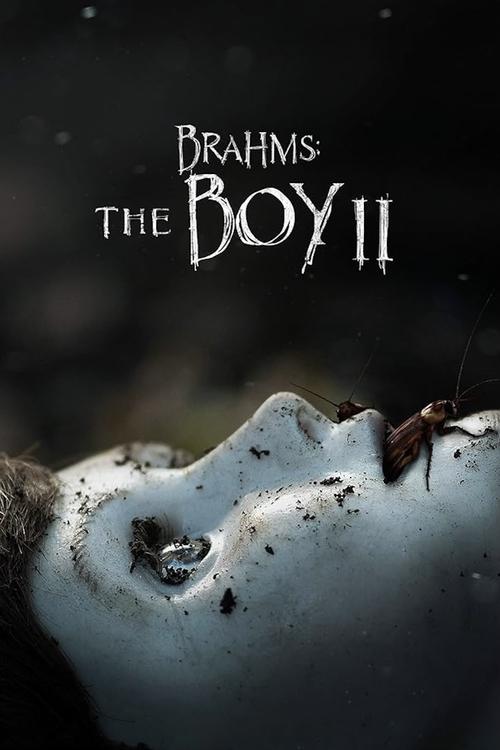
Brahms: The Boy II (2020)
Directed by William Brent Bell
No — Brahms: The Boy II is not woke, scoring 0 out of 100 on our wokeness meter.
Brahms: The Boy II arrives as the second entry in a franchise about a porcelain doll, which is a sentence that carries its own verdict.
Consciousness Markers
The cast includes a South Asian actress in a supporting therapist role, but the film makes no narrative point of representation or identity.
There are no LGBTQ+ characters, themes, or subtext in the film.
The film centers on a mother protecting her son, but it does not advance or engage with feminist themes or gender politics.
Race is not a thematic concern, and no racial commentary or consciousness is present.
The film contains no environmental or climate-related themes.
There is no critique of capitalism, wealth, or class structures in the story.
The film does not engage with body image, body positivity, or related themes.
The child's muteness is presented as trauma-induced, not as neurodivergence or a neurodiversity narrative.
The film is a fictional supernatural horror story and does not revise or reinterpret historical events.
The film is a conventional horror sequel and does not contain preachy or lecture-like messaging.
Why it received this score
Brahms: The Boy II arrives as the second entry in a franchise about a porcelain doll, which is a sentence that carries its own verdict. Katie Holmes plays Liza, a mother recovering from a home invasion, who moves with her husband and her mute son to a remote estate. The son finds a doll in the woods. The doll has opinions. The house has history. The groundskeeper has a grievance. We have seen this film before, and so has the film.
The diligent classifier finds the absence of agenda striking. The child's silence is trauma, plainly stated, never recast as a neurodiversity narrative. The mother protects her son because mothers in horror films do, not because the screenplay has anything to say about gender. A therapist appears, played by Anjali Jay, and is permitted to simply be a therapist. Race, class, climate, and the body all go unexamined, and the film does not appear to notice it has left them alone. There is no sermon, no lesson, no moment where the audience is asked to examine its own complicity in anything. The doll wants what it wants.
The craft is thin. Critics were unkind, the Rotten Tomatoes tally settled at eleven percent, and Katie Holmes earned a Razzie nomination for her trouble. The film opened fifth and vanished. It is, in the end, a rare specimen: popular entertainment with no cultural program whatsoever, asking nothing of us but a ticket and ninety minutes we will not recover. A clean zero. We do not often encounter such purity.
Analysis generated by our Consciousness Algorithm


Synopsis
After a family moves into the Heelshire Mansion, their young son soon makes friends with a life-like doll called Brahms.
Questions about Brahms: The Boy II
Is Brahms: The Boy II woke?
No — Brahms: The Boy II is not woke, scoring 0 out of 100 on our wokeness meter. That earns it a verdict of Ultra Based.
Does Brahms: The Boy II have any woke elements?
No. All 10 markers score zero.
How does Brahms: The Boy II compare to other 2020 movies?
It ranks #210 of the 227 films from 2020 we've scored; their average is 21. The wokest is One Night in Miami... (83).
How is the Woke Score calculated?
An AI-assisted process researches the film and its reception, scores it 0–100 on ten markers, then combines those into one 0–100 Woke Score. It measures a specific set of 2020s cultural themes, not film quality.