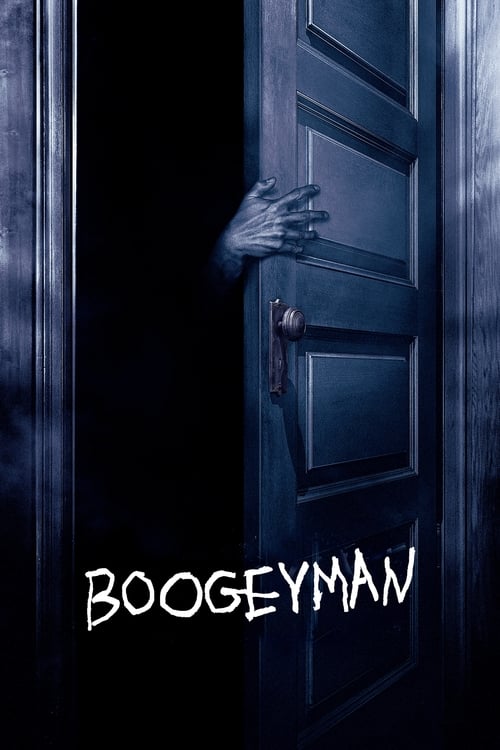
Boogeyman (2005)
Directed by Stephen Kay
No — Boogeyman is not woke, scoring 0 out of 100 on our wokeness meter.
Boogeyman arrives from 2005 with the confidence of a film that knows precisely what it is and has no intention of being anything else.
Consciousness Markers
The cast is overwhelmingly white with no diverse casting choices made or commented upon; the film is a generic supernatural horror with no representational agenda.
No LGBTQ+ characters, themes, or subtext appear anywhere in the film.
Female characters (Jessica, Kate, Franny) exist as supporting figures and victims of the monster, with no feminist themes or commentary.
The film engages with no racial themes or consciousness whatsoever.
No environmental or climate-related content exists in the film.
No economic critique or anti-capitalist messaging is present.
No body positivity themes or messaging appear in the film.
The psychiatric ward and psychotherapy elements are deployed as horror atmosphere and trauma backstory, not as positive neurodivergence representation.
The film makes no historical claims or revisions; it is a fictional monster story.
The film delivers no social or political messaging; it is a straightforward creature-feature horror with no preaching.
Why it received this score
Boogeyman arrives from 2005 with the confidence of a film that knows precisely what it is and has no intention of being anything else. A young man named Tim, having watched his father swallowed by a closet monster sixteen years prior, sleeps on a mattress on the floor and keeps his clothes in a dresser drawer. Sam Raimi produced. Eric Kripke wrote the story. The resulting picture was panned by nearly every critic alive and still topped the domestic box office in its opening weekend, which tells us something about the American public that sociologists have yet to fully process.
We searched this film for a cultural agenda and found only a monster. The psychiatric ward where Tim grew up functions as set dressing and backstory, not as advocacy for mental health. The female characters, Jessica and Kate and the strange girl Franny, exist chiefly to be frightened or dragged into bathtubs. The cast is uniformly white, and the film never notices. There is no economic critique, no environmental anxiety, no historical revision, no examination of the body, no queerness, implied or otherwise. The film's only thesis is that closets are dangerous, a position that cuts across every demographic.
This is a creature feature assembled from borrowed parts, and it carries no message beyond the one printed on the poster. Its cultural footprint is a shrug, followed by two direct-to-video sequels nobody requested. We classify it accordingly: a zero on every ledger we keep. The boogeyman, at least, has the decency not to lecture us before he strikes.
Analysis generated by our Consciousness Algorithm


Synopsis
Every culture has one – the horrible monster fueling young children's nightmares. But for Tim, the Boogeyman still lives in his memories as a creature that devoured his father 16 years ago. Is the Boogeyman real, or did Tim make it up to explain why his father abandoned his family?
Questions about Boogeyman
Is Boogeyman woke?
No — Boogeyman is not woke, scoring 0 out of 100 on our wokeness meter. That earns it a verdict of Ultra Based.
Does Boogeyman have any woke elements?
No. All 10 markers score zero.
How does Boogeyman compare to other 2005 movies?
It ranks #160 of the 181 films from 2005 we've scored; their average is 13. The wokest is The Constant Gardener (72).
How is the Woke Score calculated?
An AI-assisted process researches the film and its reception, scores it 0–100 on ten markers, then combines those into one 0–100 Woke Score. It measures a specific set of 2020s cultural themes, not film quality.