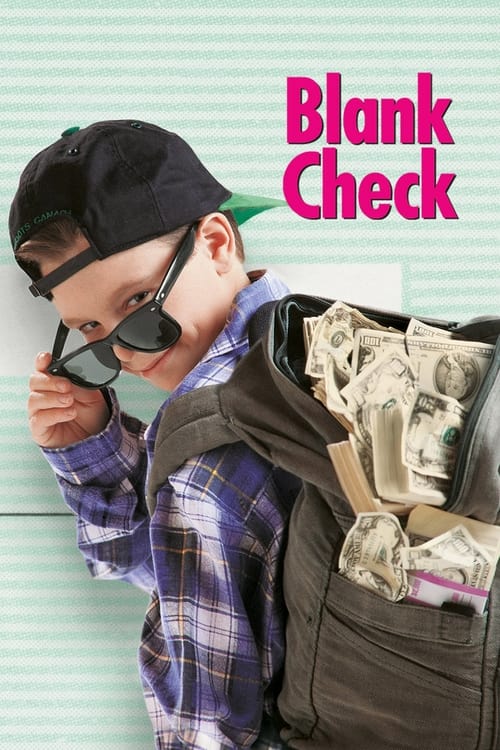
Blank Check (1994)
Directed by Rupert Wainwright
No — Blank Check is not woke, scoring 0 out of 100 on our wokeness meter.
Blank Check arrives from 1994 with the confidence of a film that has nothing on its mind and no intention of pretending otherwise.
Consciousness Markers
The cast is overwhelmingly white, with Tone Lōc and Debbie Allen in incidental supporting roles that are not framed as representational casting.
There are no LGBTQ+ characters, themes, or subtext.
Shay is a capable undercover FBI agent, but the film offers no feminist thesis, gender-conscious critique, or deliberate empowerment messaging.
The film does not engage with race, racism, or racial identity as themes.
There is no environmental or climate-related content.
The film ends with a mild money-cannot-buy-happiness moral, but it otherwise celebrates spending and product placement rather than mounting an anti-capitalist critique.
There is no body-positivity messaging or body-diversity theme.
There is no exploration of neurodivergence or neurodiverse characters.
The film is a contemporary fictional comedy with no historical revisionism.
The only lesson is a generic family-values moral, not modern social or political preaching.
Why it received this score
Blank Check arrives from 1994 with the confidence of a film that has nothing on its mind and no intention of pretending otherwise. A boy is handed a blank check by a panicking criminal, writes himself a million dollars, and buys a castle. The title is the thesis. Where a modern studio might have attached a lesson about inequality or the corrupting pull of wealth, this one attaches a montage of purchases and a limousine. The film's moral, delivered in the final minutes, is that money cannot buy happiness and family matters most. That is a sentiment available in greeting cards and in no way a piece of contemporary social messaging.
The cast is white and content to remain so. Tone Loc and Debbie Allen appear in supporting turns that the film never frames as anything but staffing. Karen Duffy's Shay is an undercover FBI agent, competent and central to the plot's resolution, yet the screenplay grants her no gender-conscious arc and asks no questions about her place in a male-dominated bureau. She is a plot device with a badge. The film's engagement with race, sexuality, environmental concern, body image, and neurological difference is total in its absence. There is no sermon here. There is product placement.
The most discussed element in later years is a kiss between an eleven-year-old boy and a thirty-one-year-old actress, which critics have revisited with discomfort. That controversy is about propriety, not politics. Blank Check remains a curious artifact: a Disney comedy that grossed thirty million dollars, offended the Chicago Tribune with its shilling, and taught a generation nothing whatsoever. We score it accordingly. Some vintages are simply empty.
Analysis generated by our Consciousness Algorithm
Part of


Synopsis
Bullied by his siblings and nagged by his parents, 11-year-old Preston Waters is fed up with his family — especially their frugality. But he gets his chance to teach them a lesson when a money-laundering criminal nearly bulldozes Preston with his car and compensates the boy with a blank check. Preston makes the check out for $1 million and goes on a spending spree he'll never forget.
Questions about Blank Check
Is Blank Check woke?
No — Blank Check is not woke, scoring 0 out of 100 on our wokeness meter. That earns it a verdict of Ultra Based.
Does Blank Check have any woke elements?
No. All 10 markers score zero.
How does Blank Check compare to other 1994 movies?
It ranks #77 of the 86 films from 1994 we've scored; their average is 10. The wokest is On Deadly Ground (75).
How is the Woke Score calculated?
An AI-assisted process researches the film and its reception, scores it 0–100 on ten markers, then combines those into one 0–100 Woke Score. It measures a specific set of 2020s cultural themes, not film quality.