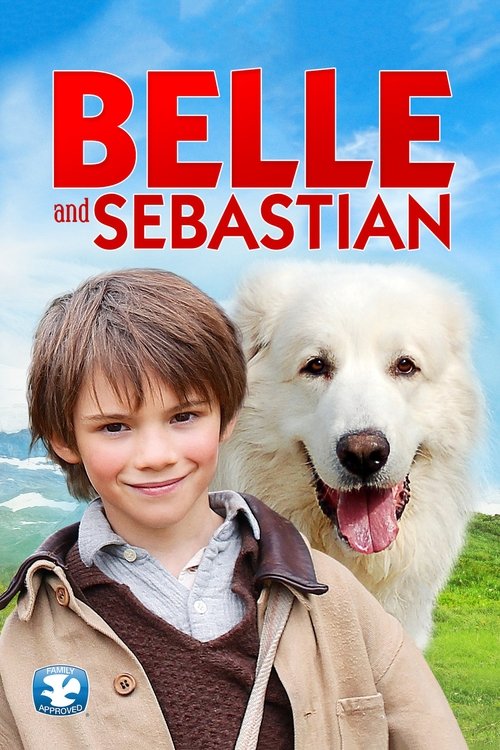
Belle and Sebastian (2013)
Directed by Nicolas Vanier
No — Belle and Sebastian is not woke, scoring 0 out of 100 on our wokeness meter.
Belle and Sebastian presents a charming, if somewhat predictable, tapestry woven high into the French Alps.
Consciousness Markers
The cast is entirely white European, with no deliberate diverse or inclusive casting choices; characters exist naturally in the story without comment.
No LGBTQ+ characters, themes, or subtext are present.
While Angélina shows courage, the film does not advance a modern feminist agenda or critique patriarchy.
The film depicts Jewish refugees fleeing the Holocaust, but this is a humanist rescue narrative, not a modern racial consciousness or systemic racism critique.
The Alpine setting is backdrop, not a climate crusade or environmental message.
No critique of capitalism or wealth inequality; the story is about wartime survival and friendship.
No body positivity themes or diverse body representations.
No neurodivergent characters or themes.
The film is a fictional children's story set in WWII, not a revisionist historical narrative.
The film has gentle moral lessons about friendship and courage, but no preachy modern lecture energy.
Why it received this score
Belle and Sebastian presents a charming, if somewhat predictable, tapestry woven high into the French Alps. We find a young orphan named Sébastien, whose life is defined by his relationship with a wild mountain dog, Belle. Set against the backdrop of the Second World War, the film is a picture of traditional, uncomplicated adventure. It is a well-crafted, sentimental piece of cinema, achieving its goals without making any effort to engage with the specific cultural anxieties of our current era.
From a perspective focused on contemporary progressive sensibilities, the film is remarkably barren. The narrative leans heavily into a straightforward humanist rescue story, focusing on courage and loyalty. While the setting involves Jewish refugees escaping German forces, this depiction functions as a classic, earnest melodrama, not as a critique of systemic injustice. The cast, entirely monochromatic, exists within a clear, uncomplicated framework of good versus evil. We are presented with a pastoral fable where the challenges are mostly physical, like an avalanche or tracking a beast. The film offers gentle moral lessons about friendship, but it provides none of the sharp, didactic commentary we see in modern progressive narratives.
It is a perfectly pleasant experience, a throwback to a simpler mode of storytelling. The film successfully delivers its story of survival and companionship. However, for those of us tasked with classifying contemporary cultural output, it registers as culturally inert. It contains no overt demands for social reevaluation, no complex deconstruction of power dynamics, and no sudden bursts of modern ideological urgency. It is simply a beautiful, old-fashioned story about a boy, a dog, and a wartime peril.
Analysis generated by our Consciousness Algorithm


Synopsis
Belle and Sebastian is set high in the snowy Alps during the Second World War. The resourceful Sebastian is a lonely boy who tames and befriends a giant, wild mountain dog, Belle – even though the villagers believe her to be ‘the beast’ that has been killing their sheep.
Questions about Belle and Sebastian
Is Belle and Sebastian woke?
No — Belle and Sebastian is not woke, scoring 0 out of 100 on our wokeness meter. That earns it a verdict of Ultra Based.
Does Belle and Sebastian have any woke elements?
No. All 10 markers score zero.
How does Belle and Sebastian compare to other 2013 movies?
It ranks #249 of the 274 films from 2013 we've scored; their average is 14. The wokest is Belle (76).
How is the Woke Score calculated?
An AI-assisted process researches the film and its reception, scores it 0–100 on ten markers, then combines those into one 0–100 Woke Score. It measures a specific set of 2020s cultural themes, not film quality.