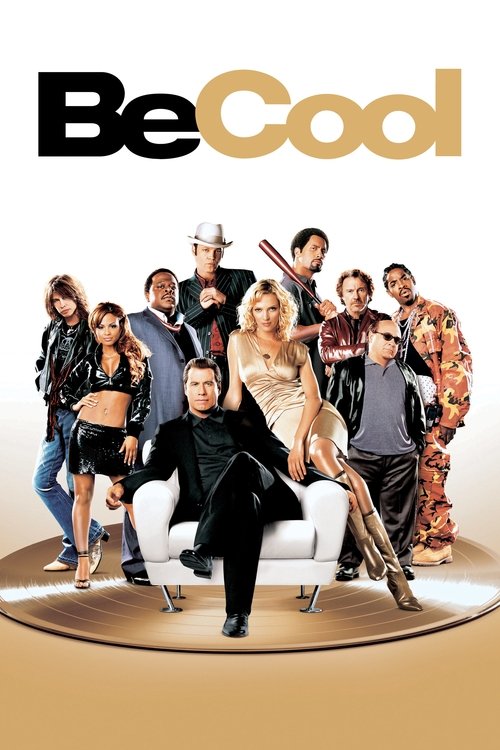
Be Cool (2005)
Directed by F. Gary Gray
No — Be Cool is not especially woke, scoring 26 out of 100 on our wokeness meter.
Twenty years after Get Shorty made the shakedown of Hollywood look like a brisk business expense, Be Cool moves Chili Palmer into the record industry, a milieu where the contracts are just as crooked and the suits are louder.
Consciousness Markers
The narrative heavily critiques the exploitative nature of the music industry, focusing on contract disputes and crooked producers.
The film features a gay Samoan bodyguard, Elliot, providing a specific, if minor, instance of racial and sexual representation within the cast.
It features a gay character, Elliot, whose identity is used in the plot as a source of conflict and ridicule from the antagonists.
The film includes a hip-hop producer and features a scene where the Russian boss makes racist remarks, leading to his violent demise.
Edie Athens demonstrates agency by managing her late husband's failing business, but the film lacks a strong feminist agenda beyond this single instance.
The film relies on dialogue and action rather than didactic speeches to convey its themes.
The film focuses entirely on the music and crime industries and contains no commentary on environmental issues.
There is no discernible focus on body positivity or diverse body types within the film's narrative.
No characters are portrayed with or discuss neurodivergent traits.
The film is a fictional crime comedy and does not attempt to revise any established historical accounts.
Why it received this score
Twenty years after Get Shorty made the shakedown of Hollywood look like a brisk business expense, Be Cool moves Chili Palmer into the record industry, a milieu where the contracts are just as crooked and the suits are louder. F. Gary Gray directs with a shrug. The film is not a parody so much as a hangout, and the hangout is at a club that closed an hour ago.
The picture does maintain a modest inventory of social awareness. Elliot, a Samoan bodyguard with acting ambitions, is openly gay, and the film lets his employers mock him for it before he defects to the winning side. Edie Athens, the widow left holding a label three hundred thousand dollars in the red, runs the business and negotiates its survival. Sin LaSalle and his crew bring a hip-hop economy into the frame, and when the Russian boss Bulkin starts making racist remarks, the response is immediate and lethal. The script's real animus, though, is aimed at the machinery of the music business: the predatory producers, the contracts built to trap young singers, the vig. It is a crime comedy that regards the record label as a slightly classier form of loan sharking, and it is not wrong.
What the film declines to do is lecture. There are no speeches about the environment, no meditation on body image, no neurodivergent subplot, no attempt to correct the historical record. The themes arrive through double crosses and a metal baseball bat. This restraint is admirable and also the reason the film feels so weightless. It has opinions but no pulse, and it ends with a billboard gag, which is roughly the level of ambition on display throughout.
Analysis generated by our Consciousness Algorithm


Synopsis
Disenchanted with the movie industry, Chili Palmer tries the music industry, meeting and romancing a widow of a music executive along the way.
Questions about Be Cool
Is Be Cool woke?
No — Be Cool is not especially woke, scoring 26 out of 100 on our wokeness meter. That earns it a verdict of Based.
Does Be Cool have any woke elements?
4 of the 10 markers register at 30 or above, led by Eat the Rich (55), Representation Casting (40) and LGBTQ+ Themes (35). On Eat the Rich: The narrative heavily critiques the exploitative nature of the music industry, focusing on contract disputes and crooked producers.
How does Be Cool compare to other 2005 movies?
It ranks #23 of the 181 films from 2005 we've scored; their average is 13. The wokest is The Constant Gardener (72).
How is the Woke Score calculated?
An AI-assisted process researches the film and its reception, scores it 0–100 on ten markers, then combines those into one 0–100 Woke Score. It measures a specific set of 2020s cultural themes, not film quality.