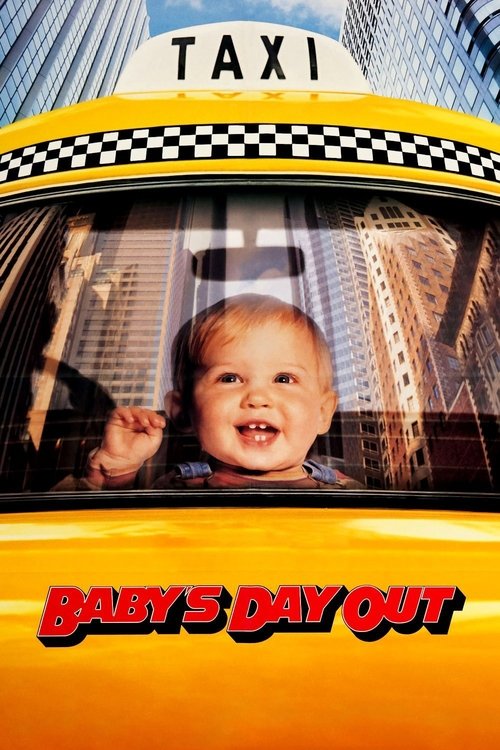
Baby's Day Out (1994)
Directed by Patrick Read Johnson
No — Baby's Day Out is not woke, scoring 0 out of 100 on our wokeness meter.
The 1994 caper Baby's Day Out concerns a nine-month-old heir, Bennington Austin Cotwell IV, who is abducted from his family's Chicago mansion by three photographers-turned-kidnappers and then proceeds to outwit them across the city, treating each hazard as a page from his favorite storybook.
Consciousness Markers
The cast is overwhelmingly white, with no meaningful representation casting choices or diverse ensemble to speak of.
No LGBTQ+ characters, themes, or subtext whatsoever.
The mother and nanny are present but purely as maternal/domestic figures; no feminist themes or commentary.
No engagement with race or racial consciousness; the film is a straightforward slapstick chase comedy.
No environmental or climate themes present.
The wealthy Cotwell family and the ransom plot are not framed as class critique; the criminals are bumbling buffoons, not anti-capitalist avatars.
A character is literally credited as 'Obese Woman' and played for a gag, which runs counter to any body-positivity sensibility.
No neurodivergent characters or themes.
No historical revisionism; the film is a contemporary (1994) fictional caper.
A pure slapstick family comedy with no preachy messaging or moralizing of any kind.
Why it received this score
The 1994 caper Baby's Day Out concerns a nine-month-old heir, Bennington Austin Cotwell IV, who is abducted from his family's Chicago mansion by three photographers-turned-kidnappers and then proceeds to outwit them across the city, treating each hazard as a page from his favorite storybook. The machinery is entirely slapstick: a department store, a zoo, a gorilla with paternal instincts, a construction site. John Hughes wrote it. Patrick Read Johnson directed it. The film asks nothing of its audience beyond a willingness to watch grown men fall down.
The social ledger here is blank. The cast is white and the narrative has no interest in the fact, which means the question of representation never arises. No character is queer, no one discusses race, and the mother and nanny occupy the domestic frame without a single gesture toward autonomy or critique. The wealthy Cotwells are robbed and ransomed, yet the film treats their money as scenery, not as a subject, so no class reading is available. There is no climate anxiety, no neurodivergent interiority, no revisionist account of anything. The year is 1994 and the film is content to stay there.
One cast member is credited as Obese Woman and deployed as a visual punchline, which places the film in active opposition to contemporary body discourse. As for sermonizing, there is none. No lesson is delivered, no audience is scolded, no moral is appended to the chase. This is a film that wants only to be a cartoon with a real baby in it, and by that narrow standard it succeeds well enough for the audiences in South Asia who made it a phenomenon. Measured against the cultural markers of the present decade, it registers as a clean, uninflected zero, an artifact from before the conversation began.
Analysis generated by our Consciousness Algorithm


Synopsis
Baby Bink couldn't ask for more: he has adoring (if somewhat sickly-sweet) parents, lives in a huge mansion, and he's just about to appear in the social pages of the paper. Unfortunately, not everyone in the world is as nice as Baby Bink's parents—especially the three enterprising kidnappers who pretend to be photographers from the newspaper. Successfully kidnapping Baby Bink, they have a harder time keeping hold of the rascal, who not only keeps one step ahead of them, but seems to be more than a little bit smarter than the three bumbling criminals.
Questions about Baby's Day Out
Is Baby's Day Out woke?
No — Baby's Day Out is not woke, scoring 0 out of 100 on our wokeness meter. That earns it a verdict of Ultra Based.
Does Baby's Day Out have any woke elements?
No. All 10 markers score zero.
How does Baby's Day Out compare to other 1994 movies?
It ranks #77 of the 86 films from 1994 we've scored; their average is 10. The wokest is On Deadly Ground (75).
How is the Woke Score calculated?
An AI-assisted process researches the film and its reception, scores it 0–100 on ten markers, then combines those into one 0–100 Woke Score. It measures a specific set of 2020s cultural themes, not film quality.