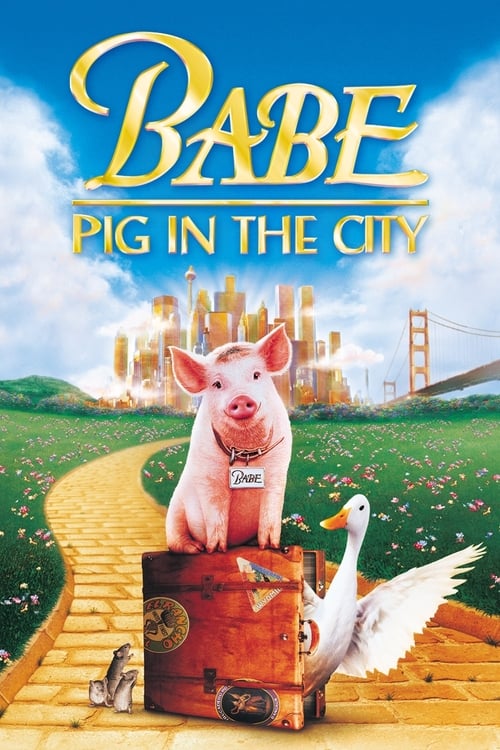
Babe: Pig in the City (1998)
Directed by George Miller
No — Babe: Pig in the City is not woke, scoring 5 out of 100 on our wokeness meter.
George Miller's 1998 sequel arrives with a somber, damp-eyed grandeur that its predecessor only hinted at, and it remains a strange artifact: a children's film in which a pig nearly drowns, a clown act collapses into chaos, and the city itself looms like a threat.
Consciousness Markers
Esme Hoggett takes on the load of running the farm and drives the rescue plot, but she is simply a competent female lead rather than a vehicle for an articulated feminist thesis.
Animal exploitation (the clown act, animal control roundups) and the farm mortgage plot carry faint undercurrents of sympathy for the disenfranchised, but there is no coherent eat-the-rich critique.
The human cast is overwhelmingly white and the voice cast is drawn from a standard late-90s comic and character-actor pool; no deliberate diversity-casting agenda is present.
Babe is a whimsical, dark-edged fable that delivers whimsy rather than moral instruction; there is almost no preachy messaging.
No LGBTQ+ characters, relationships, or themes appear anywhere in the film.
The film contains no commentary on race, racial identity, or racial justice.
No environmental, climate, or ecological theme is present.
Fugly's size and food coma are played for comedy, and Flealick's disability is a matter-of-fact trait; neither is framed through a body-positivity lens.
No characters or themes involving neurodivergence appear in the film.
The film invents an original fantasy city and original animal storyline; it makes no revisionist claims about real historical events.
Why it received this score
George Miller's 1998 sequel arrives with a somber, damp-eyed grandeur that its predecessor only hinted at, and it remains a strange artifact: a children's film in which a pig nearly drowns, a clown act collapses into chaos, and the city itself looms like a threat. The farm mortgage plot sets Esme Hoggett to work, and she does carry the rescue machinery on her back with a grim competence. That is a female lead doing the labor, not a thesis about it. Nobody in this film stops to explain what Esme's burden signifies, and the picture is better for the silence.
The animal cast is a menagerie of strays, chimps, an orangutan, a disabled terrier, and a bull terrier who reforms after being fished from a canal. Flealick's disability is simply a fact of his body, deployed for jokes and mobility, never for a lesson. Fugly's food coma is played for broad comedy. The exploitation of performing animals and the looming eviction gesture toward sympathy for the dispossessed, though the film never organizes that sympathy into an argument about money or power. It is too busy being odd.
What lingers is the whimsy, dark and unearned by any sermon. Miller builds a fantasy San Francisco of canals and impossible architecture and lets his pig wander through it, and the result asks nothing of the audience except attention. There is no lecture here, no moral accounting, no contemporary grievance dressed in period clothing. Just a talking pig, a hotel full of strays, and a narrator who knows when to stay quiet. The film was a commercial disappointment and has since been reassessed. That reassessment is deserved, and it has nothing to do with virtue.
Analysis generated by our Consciousness Algorithm
Part of


Synopsis
Babe, fresh from his victory in the sheepherding contest, returns to Farmer Hoggett's farm, but after Farmer Hoggett is injured and unable to work, Babe has to go to the big city to save the farm.
Questions about Babe: Pig in the City
Is Babe: Pig in the City woke?
No — Babe: Pig in the City is not woke, scoring 5 out of 100 on our wokeness meter. That earns it a verdict of Ultra Based.
Does Babe: Pig in the City have any woke elements?
Very few. None of the 10 markers reaches 30, the level where a marker counts as present; the highest is Feminist Agenda at 12.
How does Babe: Pig in the City compare to other 1998 movies?
It ranks #82 of the 118 films from 1998 we've scored; their average is 12. The wokest is Show Me Love (60).
How is the Woke Score calculated?
An AI-assisted process researches the film and its reception, scores it 0–100 on ten markers, then combines those into one 0–100 Woke Score. It measures a specific set of 2020s cultural themes, not film quality.