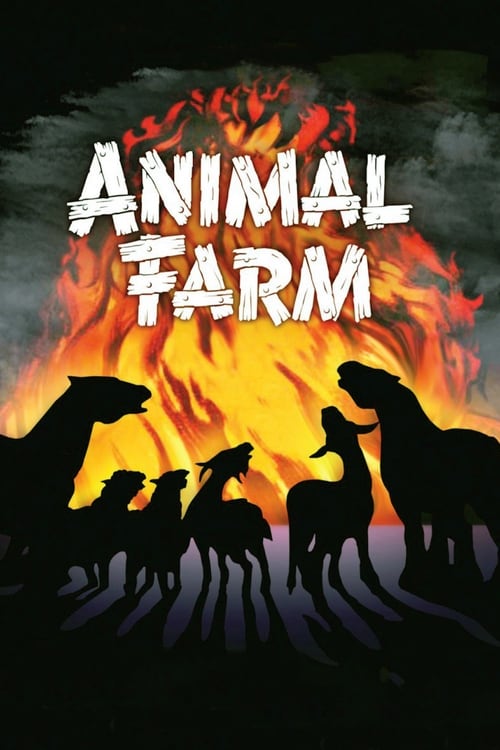
Animal Farm (1954)
Directed by Joy Batchelor
No — Animal Farm is not woke, scoring 0 out of 100 on our wokeness meter.
Animal Farm arrives in 1954 as a British animated feature, adapted from George Orwell's novella by John Halas and Joy Batchelor, narrated by Gordon Heath, with Maurice Denham supplying every animal voice and barnyard noise in the picture.
Consciousness Markers
Voice cast is almost entirely Maurice Denham and narrator Gordon Heath; no modern diversity casting or representation commentary.
No LGBTQ+ characters or themes.
Female animals appear incidentally; no feminist agenda or gender-justice commentary.
No racial themes or racial consciousness.
No climate or environmental crusade.
The film critiques totalitarian corruption and exploitation, but as an anti-communist/anti-authoritarian allegory, not modern anti-capitalist 'eat the rich' politics.
No body positivity themes.
No neurodivergence themes.
It is a political allegory of Soviet history, not a modern revisionist-history project.
It is didactic, but its moral is anti-totalitarian rather than modern progressive social-justice lecturing.
Why it received this score
Animal Farm arrives in 1954 as a British animated feature, adapted from George Orwell's novella by John Halas and Joy Batchelor, narrated by Gordon Heath, with Maurice Denham supplying every animal voice and barnyard noise in the picture. It is a solemn piece of work. It was also funded in part by the Central Intelligence Agency, which rewrote the ending so the animals rise up and topple the pigs. The result is a fable about the corruption of a revolution, delivered with the flat certainty of a public information film. It sermonizes from the first frame to the last, and the sermon is anti-totalitarian, not a modern progressive catalogue.
We ran the full ledger against it and found the shelves bare. Two credited voices, both men, offer no occasion for representation casting. The female animals exist to be counted, not to carry a gender argument. Race, sexuality, climate, body image, neurodivergence: the film has no interest in any of them, which is unsurprising for a 1954 production and no mark against it. Its economic critique lands on the pigs who skim the milk and trade the hens' eggs for whisky, and the target is the betrayal of a collective, not the market itself. The villainy is specific: Napoleon, the dogs, the show trials, the edited commandments. This is anti-authoritarian storytelling, and it predates the vocabulary we now apply to such things.
The film lingers in classrooms, a fate earned through clarity, and it took fifteen years to turn a profit, which tells us something about the market for animated political allegory. The animation has been called Disney-turned-serious. Matyas Seiber's score is admired. We are left with a grim, effective piece of Cold War instruction aimed squarely at the Soviet experiment. It is morally serious and culturally alert in a 1954 register, and it registers almost nothing on the contemporary scale. The animals end the film free. The ledger ends the film empty.
Analysis generated by our Consciousness Algorithm


Synopsis
Animals on a farm lead a revolution against the farmers to put their destiny in their own hands. However this revolution eats their own children and they cannot avoid corruption.
Questions about Animal Farm
Is Animal Farm woke?
No — Animal Farm is not woke, scoring 0 out of 100 on our wokeness meter. That earns it a verdict of Ultra Based.
Does Animal Farm have any woke elements?
No. All 10 markers score zero.
How does Animal Farm compare to other 1954 movies?
It ranks #14 of the 14 films from 1954 we've scored; their average is 4. The wokest is Seven Brides for Seven Brothers (12).
How is the Woke Score calculated?
An AI-assisted process researches the film and its reception, scores it 0–100 on ten markers, then combines those into one 0–100 Woke Score. It measures a specific set of 2020s cultural themes, not film quality.