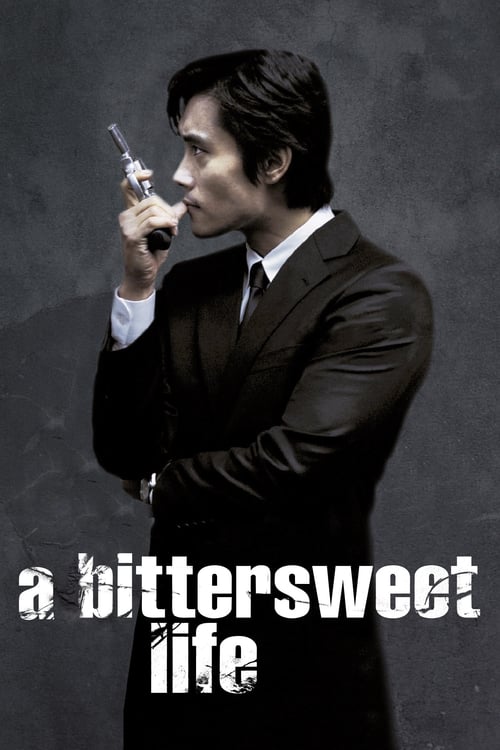
A Bittersweet Life (2005)
Directed by Kim Jee-woon
No — A Bittersweet Life is not woke, scoring 0 out of 100 on our wokeness meter.
A Bittersweet Life arrives from 2005, which is to say from before the culture decided that a hitman's loneliness required footnotes.
Consciousness Markers
The cast is entirely Korean, which is natural to the film's setting rather than a modern inclusive-casting statement.
No LGBTQ+ themes, characters, or subtext are present.
The mistress subplot is a noir plot device, not a feminist critique or agenda.
The film does not engage with racial politics or racial consciousness.
No environmental or climate-related themes appear.
The crime-world hierarchy and revenge narrative do not constitute an eat-the-rich critique.
No body-positivity themes or messaging are present.
No neurodivergence themes or characters are present.
The film is not engaged in historical revisionism.
The film is a genre noir focused on loyalty and revenge, with no didactic social lecture.
Why it received this score
A Bittersweet Life arrives from 2005, which is to say from before the culture decided that a hitman's loneliness required footnotes. Kim Sun-woo enforces for a crime boss named Kang, manages a hotel, wears excellent suits, and is handed one errand: watch the boss's young mistress while the boss is away, and kill her and her lover if the watching turns up anything. It turns up something. He spares them. This decision costs him everything, and the film has no interest in explaining why beyond the simple fact that a man who has spent years being a tool has, for one moment, chosen not to be one. There is no thesis attached. There is no lesson offered. The camera simply watches him pay.
The revenge that follows is patient and brutal and beautifully staged, and it never pauses to instruct the audience on the moral architecture of organized crime, the exploitation of labor, or the emotional lives of women in the orbit of powerful men. Hee-soo, the mistress, is a plot device in the noir tradition and is treated as one. The cast is Korean because the film is Korean. Nobody in the frame is there to represent anybody. The film's concerns are loyalty, humiliation, and the specific weight of a gift-wrapped lamp delivered to a woman who wanted it and could not afford it. That lamp does more narrative work than most films manage with an entire third act of speeches.
The final image stays with us: Sun-woo alone at a window, shadowboxing his own reflection, grinning like a man who has finally found something worth hitting. It is a genre picture, made with craft and no sermon. We classify it, we file it, and we move on to the next one.
Analysis generated by our Consciousness Algorithm
Synopsis
Kim Sun-woo is an enforcer and manager for a hotel owned by a cold, calculative crime boss, Kang who assigns Sun-woo to a simple errand while he is away on a business trip; to shadow his young mistress, Hee-soo, for fear that she may be cheating on him with a younger man with the mandate that he must kill them both if he discovers their affair.
Questions about A Bittersweet Life
Is A Bittersweet Life woke?
No — A Bittersweet Life is not woke, scoring 0 out of 100 on our wokeness meter. That earns it a verdict of Ultra Based.
Does A Bittersweet Life have any woke elements?
No. All 10 markers score zero.
How does A Bittersweet Life compare to other 2005 movies?
It ranks #160 of the 181 films from 2005 we've scored; their average is 13. The wokest is The Constant Gardener (72).
How is the Woke Score calculated?
An AI-assisted process researches the film and its reception, scores it 0–100 on ten markers, then combines those into one 0–100 Woke Score. It measures a specific set of 2020s cultural themes, not film quality.