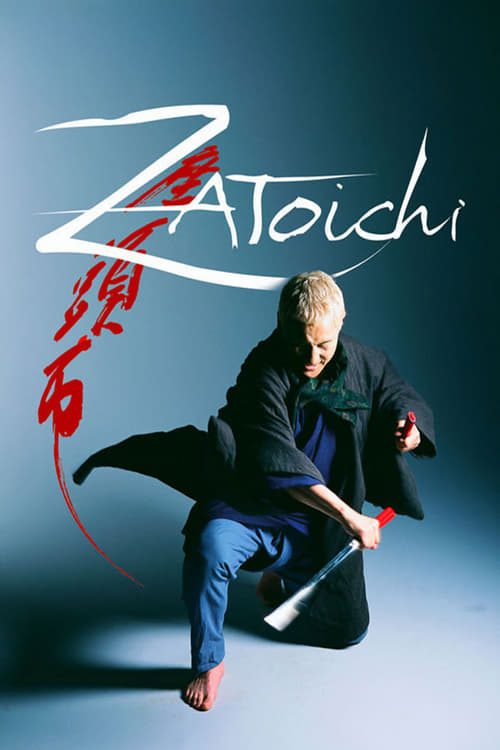
Zatoichi (2003)
Directed by Takeshi Kitano
No — Zatoichi is not woke, scoring 0 out of 100 on our wokeness meter.
Takeshi Kitano was approached by others to make this film, and he has said as much, which explains the unusual sight of a director subordinating his own temperament to the demands of pure entertainment.
Consciousness Markers
The cast is entirely Japanese, which is natural to the jidaigeki setting rather than a deliberate diversity-casting choice. No modern representation-casting intent is present.
One geisha sibling is revealed to be a man in disguise, but this is a traditional revenge-plot device, not an exploration of LGBTQ+ identity or themes.
The revenge-seeking geisha siblings and the farmer O-ume are present, but the film offers no feminist critique or agenda; it is a conventional samurai narrative.
No engagement with racial consciousness or racial justice themes; the film is a period samurai drama set in a homogeneous Edo-era Japan.
No environmental or climate themes appear anywhere in the film.
The yakuza's protection racket is a genre staple of gang conflict, not a modern anti-capitalist or 'eat the rich' polemic.
No body-positivity themes or messaging are present.
Zatoichi's blindness is a physical disability central to the character, not a depiction of neurodivergence, and it carries no advocacy framing.
The film is a straightforward revival of a classic fictional samurai series with no historical revisionism.
Kitano's film is pure entertainment and action spectacle with no didactic or preachy messaging directed at the audience.
Why it received this score
Takeshi Kitano was approached by others to make this film, and he has said as much, which explains the unusual sight of a director subordinating his own temperament to the demands of pure entertainment. The result is a jidaigeki revival that moves with the efficiency of a well-honed blade: a blind masseur wanders into a village, a yakuza protection racket squeezes the townspeople, and two geisha siblings nurse a decade-old grievance about their murdered parents. Kitano shoots the violence with digital arterial spray and stages the whole thing to Keiichi Suzuki's percussion, which thumps along like a second heartbeat. It is a machine built for pleasure, and it works.
What it is not, and this deserves saying plainly in an age that reads sermons into everything, is a vessel for contemporary social messaging. The cast is entirely Japanese, as the Edo-period setting requires. One of the geisha siblings is revealed to be a man in disguise, a device as old as the revenge tragedy itself, deployed here to complicate a vendetta and nothing more. Zatoichi's blindness is a physical condition that governs how he fights and how he is underestimated. It is not framed as advocacy, nor as metaphor. The yakuza's extortion is the genre's standard engine of conflict, not an indictment of markets. The farmer O-ume and her gambling nephew exist to give the wandering swordsman somewhere to rest his feet.
The film closes with a tap dance number performed by The Stripes, an eruption of anachronism that most directors would not dare, and Kitano follows it with his hero tripping over a rock and observing that even with his eyes wide open he can see nothing. That is the register here: mischief, craft, and a punchline. Nothing is being taught. Nobody is being corrected. The picture won the Silver Lion at Venice for direction, which suggests the festival's jury understood what it was looking at. A film can be serious about swordplay and unserious about everything else. This one is.
Analysis generated by our Consciousness Algorithm


Synopsis
Blind traveler Zatoichi is a master swordsman and a masseur with a fondness for gambling on dice games. When he arrives in a village torn apart by warring gangs, he sets out to protect the townspeople.
Questions about Zatoichi
Is Zatoichi woke?
No — Zatoichi is not woke, scoring 0 out of 100 on our wokeness meter. That earns it a verdict of Ultra Based.
Does Zatoichi have any woke elements?
No. All 10 markers score zero.
How does Zatoichi compare to other 2003 movies?
It ranks #131 of the 150 films from 2003 we've scored; their average is 12. The wokest is Mona Lisa Smile (60).
How is the Woke Score calculated?
An AI-assisted process researches the film and its reception, scores it 0–100 on ten markers, then combines those into one 0–100 Woke Score. It measures a specific set of 2020s cultural themes, not film quality.