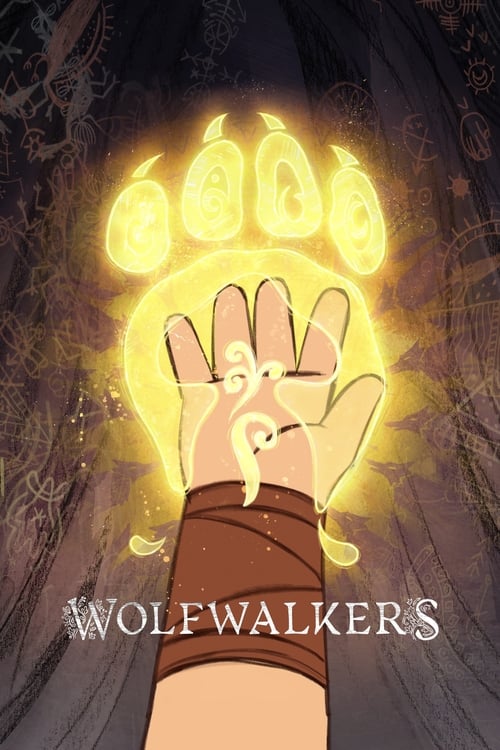
Wolfwalkers (2020)
Directed by Tomm Moore
No — Wolfwalkers is not especially woke, scoring 33 out of 100 on our wokeness meter.
Tomm Moore and Ross Stewart return to the Irish Folklore Trilogy with a hand-drawn tale set in 1650 Kilkenny, where a young apprentice hunter named Robyn Goodfellowe follows her father into the woods to exterminate the last wolf pack.
Consciousness Markers
The central conflict is the Lord Protector's campaign to 'tame nature' by burning the forest and exterminating the wolves, giving the film a sustained environmentalist and anti-deforestation message.
Robyn chafes against being relegated to scullery work and insists on becoming a hunter like her father, and the story centers female agency, a mother-daughter bond, and the free-spirited Mebh, though it never articulates an explicit feminist thesis.
A female protagonist and female co-lead anchor the film, with an authentically Irish voice cast suited to the 1650 Kilkenny setting, but the casting reflects cultural authenticity rather than deliberate modern diversity mandates.
Themes of tolerance, empathy for the wild, and resisting authoritarian fear are present but woven into the adventure rather than delivered as direct moralizing.
The Lord Protector's English colonial authority oppressing the native Irish and their wild lands carries an anti-imperial undercurrent, but it is framed as colonialism and folklore rather than modern racial-justice consciousness.
The villain is an authoritarian theocrat and colonizer rather than a capitalist, so the film critiques tyranny and control of nature, not wealth or class.
The Lord Protector is a thinly veiled Cromwell figure whose 1650 campaign against Ireland is dramatized, but the film is openly fantasy folklore rather than a revisionist historical account.
No LGBTQ+ characters, themes, or subtext appear anywhere in the film.
No body-positivity themes or messaging are present.
No neurodivergent characters or themes are depicted.
Why it received this score
Tomm Moore and Ross Stewart return to the Irish Folklore Trilogy with a hand-drawn tale set in 1650 Kilkenny, where a young apprentice hunter named Robyn Goodfellowe follows her father into the woods to exterminate the last wolf pack. The film places a girl at its center and gives her a female co-lead in Mebh, a feral Wolfwalker child, and the voice cast carries a genuine Irish lilt suited to the setting. This is cultural authenticity as craft, not a casting mandate, and the distinction is worth keeping in mind for the ledger.
The engine of the plot is a Lord Protector who wants to tame nature itself, and he pursues this by burning the forest and erasing the wolves inside it. The environmental argument here is sustained and unmistakable, an anti-deforestation sermon dressed in folklore. The same figure reads as a Cromwell stand-in, an English colonial authority grinding down the native Irish and their wild lands, though the film treats this as history-flavored fantasy instead of a modern reckoning with race. Robyn chafes at scullery duty and demands to hunt like her father. Female agency, a mother-daughter bond, and Mebh's untamed spirit all carry the story, but no thesis gets spoken aloud.
For a film this politically loaded, the restraint is notable. Sympathy for the wild and contempt for authoritarian fear arrive as adventure, not lecture. The villain is a theocrat and a colonizer, which keeps the class warfare angle dormant. There are no LGBTQ+ threads, no body-positive messaging, no neurodivergent characters, and nothing that bends actual history to a contemporary purpose. A handsomely drawn fable with progressive weather and no megaphone. The sort of thing that used to be called a children's movie.
Analysis generated by our Consciousness Algorithm

Synopsis
In a time of superstition and magic, when wolves are seen as demonic and nature an evil to be tamed, a young apprentice hunter comes to Ireland with her father to wipe out the last pack. But when she saves a wild native girl, their friendship leads her to discover the world of the Wolfwalkers and transform her into the very thing her father is tasked to destroy.
Questions about Wolfwalkers
Is Wolfwalkers woke?
No — Wolfwalkers is not especially woke, scoring 33 out of 100 on our wokeness meter. That earns it a verdict of Based.
Does Wolfwalkers have any woke elements?
3 of the 10 markers register at 30 or above, led by Climate Crusade (55), Feminist Agenda (42) and Representation Casting (30). On Climate Crusade: The central conflict is the Lord Protector's campaign to 'tame nature' by burning the forest and exterminating the wolves, giving the film a sustained environmentalist and anti-deforestation message.
How does Wolfwalkers compare to other 2020 movies?
It ranks #48 of the 227 films from 2020 we've scored; their average is 21. The wokest is One Night in Miami... (83).
How is the Woke Score calculated?
An AI-assisted process researches the film and its reception, scores it 0–100 on ten markers, then combines those into one 0–100 Woke Score. It measures a specific set of 2020s cultural themes, not film quality.