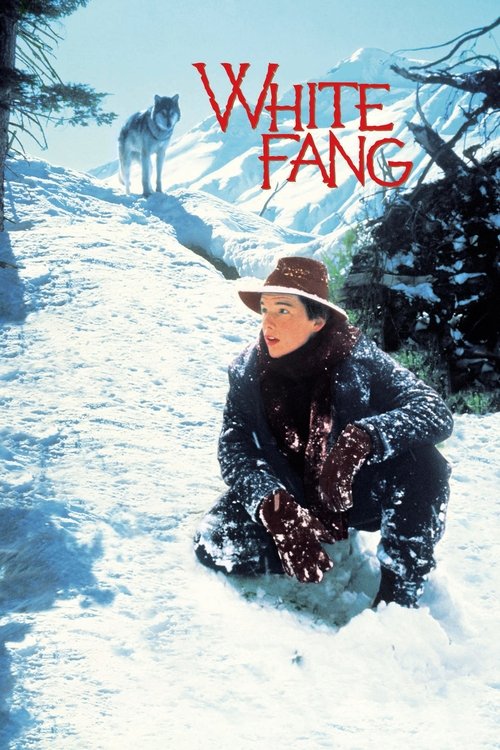
White Fang (1991)
Directed by Randal Kleiser
No — White Fang is not woke, scoring 6 out of 100 on our wokeness meter.
This 1991 Disney adaptation of Jack London's novel arrives with snow on its boots and no agenda in its satchel.
Consciousness Markers
The Hän band and Grey Beaver appear as natural inhabitants of the Klondike setting, played by Native actors, but the film makes no point of their casting as a statement.
Carries a gentle animal-welfare undercurrent (it won a Genesis Award) and Ebert-style reverence for the natural world, but it preaches nothing at the audience.
Indigenous characters are present and respectfully rendered, but the film never engages racial themes, injustice, or consciousness; they are scenery and plot function.
Belinda Larson exists as a supportive wife and Kiche as a mother wolfdog; neither carries any feminist argument or agency-driven arc.
No LGBTQ+ characters, themes, or subtext of any kind.
No environmental or climate theme; the Yukon wilderness is backdrop for adventure, not an ecological sermon.
Beauty Smith is a cruel dogfighter and thief, but the film frames him as a personal villain rather than a critique of capital or class.
No body-positivity messaging present.
No neurodivergent characters or themes.
A straightforward Disney adaptation of Jack London's 1906 novel that trims the book's brutality rather than rewriting history for ideological ends.
Why it received this score
This 1991 Disney adaptation of Jack London's novel arrives with snow on its boots and no agenda in its satchel. Randal Kleiser films the Klondike with a wide lens and a straight face, following a young prospector (Ethan Hawke) and the wolfdog he tames across a landscape that exists to be photographed, not interpreted. The Hän band and Grey Beaver wander through the story as residents of a place, played by Native performers, and the film declines to make a speech about it. They are simply there. That restraint now reads as almost quaint.
Beauty Smith, the dogfighter, is a personal villain with a personal grudge, and the film never suggests his cruelty is a symptom of markets, class, or empire. Susan Hogan's Belinda Larson keeps house and offers encouragement, and the screenplay asks nothing else of her. No character wrestles with identity, ecology, or the body. The wilderness is scenery. The gold is a MacGuffin. Nobody delivers a monologue about the sins of the age, because in 1991 nobody thought to write one.
What lingers is a soft animal-welfare hum. The film won a Genesis Award, and Roger Ebert admired its awe before the natural world, and those instincts are genuine. But the sermonizing is absent. White Fang wants us to love a dog and fear a bear, and it accomplishes both with workmanlike grace. The picture carries an old-fashioned reverence for creatures and country, and it never once turns to the audience to explain why that reverence is correct. A cultural artifact from a less anxious era, and it shows in every frame of unbothered snow. We classify it accordingly, with mild admiration and no note of protest.
Thematic tags: book_adaptation.
Analysis generated by our Consciousness Algorithm
Part of


Synopsis
Jack London's classic adventure story about the friendship developed between a Yukon gold hunter and the mixed dog-wolf he rescues from the hands of a man who mistreats him.
Questions about White Fang
Is White Fang woke?
No — White Fang is not woke, scoring 6 out of 100 on our wokeness meter. That earns it a verdict of Ultra Based.
Does White Fang have any woke elements?
Very few. None of the 10 markers reaches 30, the level where a marker counts as present; the highest is Representation Casting at 18.
How does White Fang compare to other 1991 movies?
It ranks #40 of the 68 films from 1991 we've scored; their average is 14. The wokest is Paris Is Burning (77).
How is the Woke Score calculated?
An AI-assisted process researches the film and its reception, scores it 0–100 on ten markers, then combines those into one 0–100 Woke Score. It measures a specific set of 2020s cultural themes, not film quality.