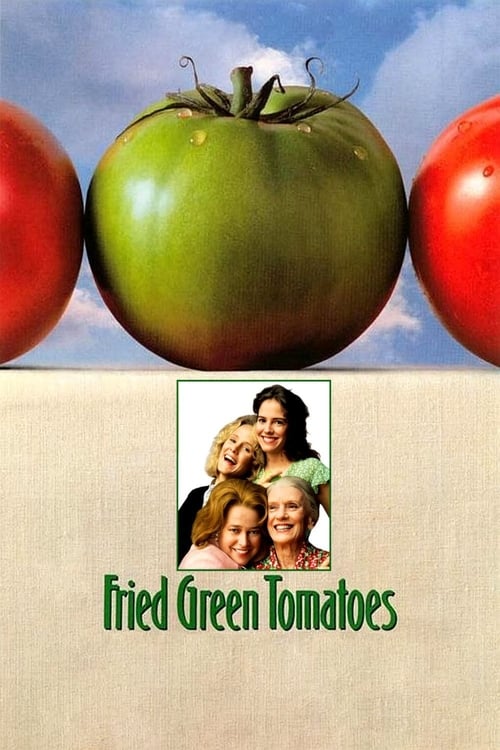
Fried Green Tomatoes (1991)
Directed by Jon Avnet
No — Fried Green Tomatoes is not especially woke, scoring 36 out of 100 on our wokeness meter.
Released in 1991, Fried Green Tomatoes arrives from an era when a film could center a multi-generational cast of women and a Black supporting family without anyone reaching for a clipboard.
Consciousness Markers
The Idgie–Ruth relationship is a central emotional bond, adapted from an explicitly lesbian novel, though the film keeps it largely subtextual; it won a GLAAD award for lesbian content.
It celebrates female friendship, independence, and a housewife's self-assertion, with women running a business and escaping an abusive marriage.
The film centers a multi-generational female cast and includes prominent Black supporting roles, but this reflects the source material's Southern setting rather than a modern diversity checklist.
Black characters are important to the story and Idgie refuses to scapegoat Big George, but the film does not foreground systemic racism or racial justice as a theme.
The film delivers gentle life lessons about friendship and standing up for oneself, but it is not structured as a preachy modern sermon.
No environmental or climate themes are present.
The Whistle Stop Cafe is a small business, and the film offers no critique of capitalism or wealth inequality.
Evelyn's self-improvement arc is about confidence and assertiveness, not body acceptance or size positivity.
No neurodivergent characters or themes are present.
The film is a period drama based on a novel, not a revisionist historical narrative.
Why it received this score
Released in 1991, Fried Green Tomatoes arrives from an era when a film could center a multi-generational cast of women and a Black supporting family without anyone reaching for a clipboard. The picture concerns Evelyn Couch, a Birmingham housewife suffocating beneath her own passivity, and the stories Ninny Threadgoode feeds her from a nursing home waiting room. Those stories drift back to Whistle Stop, Alabama, where Idgie and Ruth run a cafe, raise a child, and share something the screenplay declines to name outright. Fannie Flagg's novel was explicit about the romance. The film is not. It leaves the bond in gestures, in a food fight the director cheerfully labels a love scene, in a jar of honey left on a grave. GLAAD honored it anyway.
The cast is notably female and notably Southern in its demographics. Cicely Tyson and Stan Shaw give Sipsey and Big George a lived-in dignity, and the script grants Idgie a genuine moral beat when she refuses to let the sheriff pin a murder on her Black cook's son to save her own neck. That is decency, not a thesis on structural racism. The film has no interest in the larger machinery of Jim Crow, and it never suggests it should. What it does champion is female self-assertion: Evelyn takes up exercise, talks back to strangers, remodels her house, and eventually announces she is bringing Ninny home whether her husband likes it or not. Her transformation is about spine, not silhouette.
What the film does not contain is instructive. There is no climate anxiety, no reckoning with capital, no meditation on body acceptance, no neurodivergent character, no revisionist reading of history. The Whistle Stop Cafe is a small business and nobody proposes seizing it. The lessons arrive gently, folded into barbecue and bee charming, and the sermonizing stays light enough to miss. This is a warm, manipulative, effective piece of Southern storytelling, and it asks almost nothing of an audience beyond a willingness to cry.
Analysis generated by our Consciousness Algorithm


Synopsis
Amidst her own personality crisis, a southern housewife meets an outgoing old woman who tells her the story of Idgie Threadgoode and Ruth Jamison, two young women who experienced hardships and love in 1920s Whistle Stop, Alabama.
Questions about Fried Green Tomatoes
Is Fried Green Tomatoes woke?
No — Fried Green Tomatoes is not especially woke, scoring 36 out of 100 on our wokeness meter. That earns it a verdict of Based.
Does Fried Green Tomatoes have any woke elements?
3 of the 10 markers register at 30 or above, led by LGBTQ+ Themes (65), Feminist Agenda (50) and Representation Casting (40). On LGBTQ+ Themes: The Idgie–Ruth relationship is a central emotional bond, adapted from an explicitly lesbian novel, though the film keeps it largely subtextual; it won a GLAAD award for lesbian content.
How does Fried Green Tomatoes compare to other 1991 movies?
It ranks #7 of the 68 films from 1991 we've scored; their average is 14. The wokest is Paris Is Burning (77).
How is the Woke Score calculated?
An AI-assisted process researches the film and its reception, scores it 0–100 on ten markers, then combines those into one 0–100 Woke Score. It measures a specific set of 2020s cultural themes, not film quality.