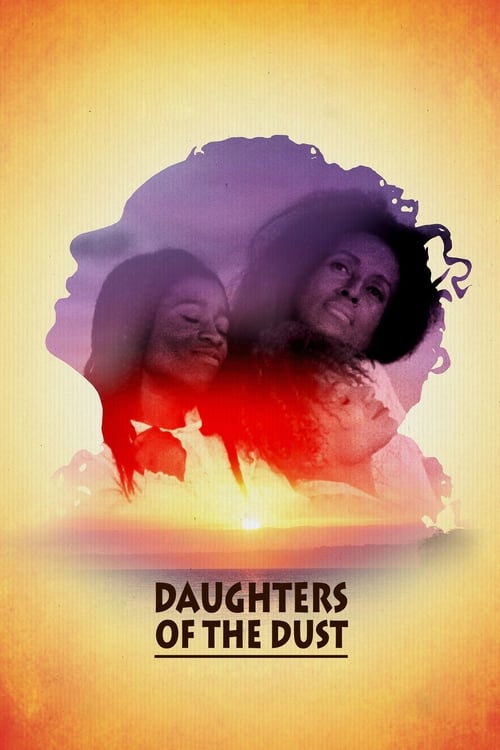
Daughters of the Dust (1991)
Directed by Julie Dash
Yes · Woke
How we score movies →Consciousness Markers
The entire cast is Black, drawn largely from the Gullah community itself, representing authentic cultural casting rather than tokenistic inclusion. The film centers Black women across all age groups in roles of complexity and agency.
The film demonstrates sophisticated engagement with racial identity, cultural heritage, and the specific history of Gullah communities. It foregrounds Black cultural continuity and the complexities of migration and assimilation.
The film privileges female voices, perspectives, and interiority throughout, with particular emphasis on the wisdom of older women and the agency of younger women. Family decisions center on female autonomy and choice.
The film presents a specific historical community with attention to cultural detail, but it does not engage in revisionist reinterpretation of major historical events or figures. It documents a particular experience rather than rewriting history.
While the film depicts economic pressures driving migration northward, it does not articulate an explicit critique of capitalism or systemic economic exploitation. Economic struggle is presented as context rather than ideological target.
The film communicates its themes through visual storytelling, poetry, and lived experience rather than explicit exposition or preachy messaging. It trusts the audience to interpret meaning without instructional overlay.
The film contains no explicit LGBTQ+ themes or representation. The narrative focuses on heterosexual family dynamics and romantic relationships without engaging with queer identities or issues.
The film contains no engagement with environmental themes, climate consciousness, or ecological concerns. The setting and historical period predate modern environmental discourse.
The film contains no contemporary body positivity messaging or critique of beauty standards. Bodies are presented naturally within the narrative without commentary on body image or acceptance.
The film contains no representation of neurodivergence, disability, or mental health conditions. These concerns are not addressed within the narrative framework.


Synopsis
In 1902, an African-American family living on a sea island off the coast of South Carolina prepares to move to the North.
Why it received this score
Julie Dash's "Daughters of the Dust" occupies a peculiar position in the genealogy of contemporary cultural consciousness. Released in 1991, the film predates the crystallization of modern progressive sensibilities by well over a decade, yet it exhibits several markers of what we now recognize as contemporary social awareness. The film centers the experiences of Black women with unusual depth and visual sophistication, prioritizing their interior lives, family bonds, and cultural heritage during a moment of historical transition. The casting is uniformly Black, drawn from the Gullah community itself, which represents an authenticity of representation that extends beyond mere inclusion into genuine cultural specificity.
The film's formal innovations serve its thematic commitments without bludgeoning the audience with preachiness. The nonlinear narrative structure, the emphasis on female interiority, and the careful attention to the transmission of cultural knowledge between generations all suggest a cinematic vocabulary aligned with contemporary feminist and culturally conscious filmmaking. Yet the film remains primarily a work of artistic ambition rather than social messaging. The story unfolds through lived experience and visual poetry, not through the apparatus of lecture. This is a film about a specific historical moment and community, not about instructing viewers on how to think about that moment.
The most significant limitation in scoring this film is its temporal displacement. While it exhibits progressive sensibilities by contemporary standards, it does so from a position before those sensibilities were codified into the particular form we now measure. The film is neither cynically manufactured to appeal to contemporary audiences nor calculated to hit predetermined cultural checkboxes. It is, rather, a work of genuine artistic vision that happens to align with certain progressive values. Whether this counts as modern cultural consciousness or simply as good filmmaking with humanist commitments remains a matter for interpretation.
Analysis generated by our Consciousness Algorithm
Critic Reviews
“There’s nothing derivative about Dash’s work; every image, every moment is a full creation.”
“In the hands of director Julie Dash and photographer Arthur Jafa, this nonlinear film becomes visual poetry, a wedding of imagery and rhythm that connects oral tradition with the music video. It is an astonishing, vivid portrait not only of a time and place, but of an era's spirit.”
“"Daughters" has a gorgeous, overwhelming sense of place. It is almost startlingly beautiful, blessed with deep fiery hues and a poetic sensibility. It is a film made stronger by its belief in itself, and it challenges its audience to believe also.... But because "Daughters" is so gloriously textured, its rewards are many. [20 Mar 1992, p.30]”
“Writer/director Julie Dash pours on sounds, music and costuming for a tone more impressionistic than dramatic - and more somnambulant than either. She might have gotten away with it for 80 minutes, but merciless Dust closes in on the two-hour mark, a structural shambles in the too-earnest American Playhouse tradition. [1 April 1992, p.6D]”