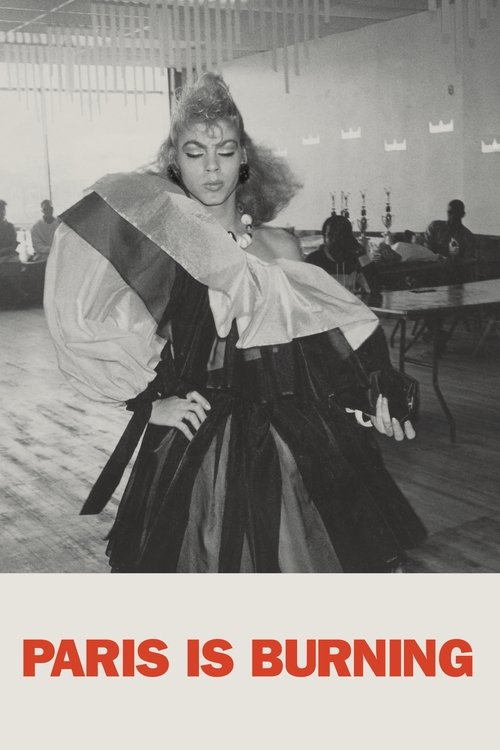
Paris Is Burning (1991)
Directed by Jennie Livingston
Yes — Paris Is Burning is woke, scoring 77 out of 100 on our wokeness meter.
Paris Is Burning arrives from 1990 with the patience of a film that took seven years to make and the confidence of a film that knows its subjects are more interesting than any thesis imposed on them.
Consciousness Markers
The documentary is explicitly about gay, transgender, and drag ball culture, including voguing, chosen families, and the AIDS crisis.
The film's entire cast consists of Black and Latinx gay, trans, and drag subjects from the Harlem ball scene, placing marginalized identities at the center without a white lead.
Race, class, and the 'rich, white world' are central to the subjects' survival strategies and the film's critique of mainstream US culture.
It interrogates gender performance, trans womanhood, house mothers, and misogyny debates, though its feminist content is embedded in queer and racial analysis rather than a standalone agenda.
The film documents poverty, shoplifting, sex work, and aspirations to wealth as survival under a racist and class-stratified system, but it is not an explicit anti-capitalist polemic.
The film explains ballroom terms and social context, but its cinéma vérité style lets subjects speak for themselves rather than delivering a lecture.
No environmental or climate themes appear.
While beauty standards and gender-affirming surgeries are discussed, the film does not advance a body-positivity agenda.
No neurodivergence themes are present.
It is a historical documentary about a real subculture, not a revisionist rewriting of history.
Why it received this score
Paris Is Burning arrives from 1990 with the patience of a film that took seven years to make and the confidence of a film that knows its subjects are more interesting than any thesis imposed on them. Jennie Livingston's camera enters the Harlem ball scene and finds Black and Latinx gay men, trans women, and drag performers who have built houses, families, and entire systems of status from the scraps of a society that would prefer they remain invisible. The film does not explain them into respectability. It lets them walk.
The queer content is not subtext. It is the text, the air, the trophy table. Voguing, shade, reading, realness, house mothers, the AIDS crisis, the violence of the street: all of it is present and specific. Gender performance receives a searching look, and the feminist questions around drag, womanhood, and misogyny are allowed to sit unresolved. Race and class press harder still. The subjects measure their lives against a rich, white world they can imitate but rarely enter. The film records poverty, shoplifting, sex work, and the dream of wealth without turning into an economic sermon. Its politics are embedded in survival, not plastered on a placard. Climate concerns do not appear. Body positivity as a modern campaign does not appear. Neurodivergence does not appear. Historical revisionism does not appear. The film is a document, not a rewrite. A few ballroom terms get explained, but the people on screen carry the explanation themselves.
The film remains a landmark of social consciousness that predates the current vocabulary for such things. It is also a difficult artifact. bell hooks found the spectacle troubling. Judith Butler found the director's offscreen authority troubling. Both objections have merit, and neither erases the film's power. The result is a portrait of a community at a particular moment, preserved with wit, grief, and an unmistakable sense of style. It earns its place in the National Film Registry and in the canon. It does not need our approval. It has already walked.
Analysis generated by our Consciousness Algorithm


Synopsis
Where does voguing come from, and what, exactly, is throwing shade? This landmark documentary provides a vibrant snapshot of the 1980s through the eyes of New York City's African American and Latinx Harlem drag-ball scene. Made over seven years, PARIS IS BURNING offers an intimate portrait of rival fashion "houses," from fierce contests for trophies to house mothers offering sustenance in a world rampant with homophobia, transphobia, racism, AIDS, and poverty. Featuring legendary voguers, drag queens, and trans women — including Willi Ninja, Pepper LaBeija, Dorian Corey, and Venus Xtravaganza.
Questions about Paris Is Burning
Is Paris Is Burning woke?
Yes — Paris Is Burning is woke, scoring 77 out of 100 on our wokeness meter. That earns it a verdict of Woke.
What makes Paris Is Burning woke?
6 of the 10 markers register at 30 or above, led by LGBTQ+ Themes (100), Representation Casting (95) and Racial Consciousness (90). On LGBTQ+ Themes: The documentary is explicitly about gay, transgender, and drag ball culture, including voguing, chosen families, and the AIDS crisis.
How does Paris Is Burning compare to other 1991 movies?
It is the wokest of the 68 films from 1991 we've scored; their average is 14.
How is the Woke Score calculated?
An AI-assisted process researches the film and its reception, scores it 0–100 on ten markers, then combines those into one 0–100 Woke Score. It measures a specific set of 2020s cultural themes, not film quality.