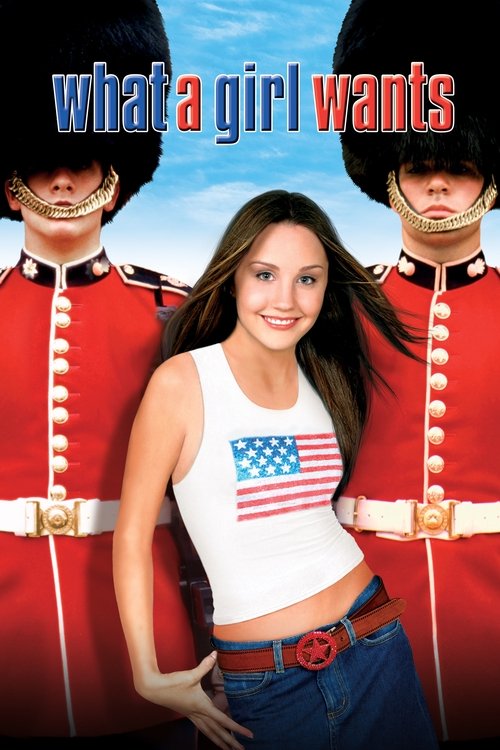
What a Girl Wants (2003)
Directed by Dennie Gordon
No — What a Girl Wants is not woke, scoring 7 out of 100 on our wokeness meter.
Warner Bros.
Consciousness Markers
A female director and two female screenwriters helm a female-led story, and Daphne's 'be yourself' arc has a mild self-actualization streak, but the film's engine is a conventional father-reunion romance, not a feminist agenda.
The villains are materialistic social climbers and the heroine is the authentic, humble outsider, giving a faint anti-snobbery, pro-authenticity class note, but there is no systemic 'eat the rich' critique.
There is a gentle 'be true to yourself' moral, but it is delivered through plot and romance rather than preachy speeches or direct audience lecturing.
The cast is overwhelmingly white and British-aristocratic, with no meaningful diverse casting choices made for representation's sake. The Chinatown setting is mere backdrop, not a vehicle for inclusive casting.
No LGBTQ+ characters, themes, or subtext appear anywhere in this teen Cinderella story.
Race is entirely absent as a theme; the culture clash is American-vs-British and commoner-vs-aristocrat, not racial.
No environmental or climate content whatsoever.
No body-positivity themes or messaging present.
No neurodivergent characters or themes are depicted.
The film is a contemporary-set romantic comedy with no historical revisionism.
Why it received this score
Warner Bros. released What a Girl Wants in 2003, and the studio's promotional instincts were already telling. A peace sign flashed by Amanda Bynes on the poster was airbrushed away before the American release, a small act of political hygiene that says more about the moment than the film manages in ninety minutes. The plot concerns Daphne Reynolds, a Manhattan teenager who flies to London in search of the father she has never met, only to find an earl, a fiancee-in-waiting, and a debutante circuit that treats her wardrobe as a national emergency.
On the ledger of modern social consciousness, this is a modest entry. A woman directed it, two women wrote it, and a young woman carries it, which counts for something in a genre that usually hands the reins to men. Daphne's arc lands on the familiar instruction to be true to herself, delivered through plot mechanics and a debutante ball instead of any sermonizing. The class politics are equally gentle. The villains are grasping social climbers obsessed with titles and appearances, and the heroine is the authentic outsider who prevails by being genuine. That is snobbery getting its comeuppance, not a systemic critique of wealth.
The rest of the checklist sits undisturbed. Race never enters the frame; the friction here is American against British, commoner against aristocrat, and the Chinatown apartment above the restaurant is set dressing. There is no queer presence, no body-positive message, no neurodivergent character, no environmental concern. The film wants only to reunite its heroine's parents and get her into Oxford. It is a harmless, syrupy artifact, and it has the good manners not to lecture anyone about it.
Analysis generated by our Consciousness Algorithm
Part of


Synopsis
American Daphne Reynolds heads to Europe in search of the father she's never met. But instead of finding a British version of her boho mother, she learns the love of her mom's life is an uptight politician. The only problem now is that her long-lost father is engaged to a fiercely territorial social climber with a daughter who makes Daphne's life miserable.
Questions about What a Girl Wants
Is What a Girl Wants woke?
No — What a Girl Wants is not woke, scoring 7 out of 100 on our wokeness meter. That earns it a verdict of Ultra Based.
Does What a Girl Wants have any woke elements?
Very few. None of the 10 markers reaches 30, the level where a marker counts as present; the highest is Feminist Agenda at 15.
How does What a Girl Wants compare to other 2003 movies?
It ranks #88 of the 150 films from 2003 we've scored; their average is 12. The wokest is Mona Lisa Smile (60).
How is the Woke Score calculated?
An AI-assisted process researches the film and its reception, scores it 0–100 on ten markers, then combines those into one 0–100 Woke Score. It measures a specific set of 2020s cultural themes, not film quality.