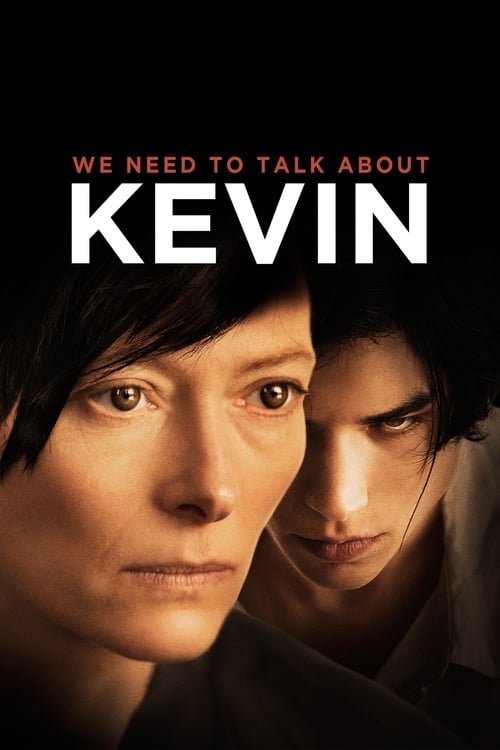
We Need to Talk About Kevin (2011)
Directed by Lynne Ramsay
No — We Need to Talk About Kevin is not woke, scoring 11 out of 100 on our wokeness meter.
This 2011 adaptation of Lionel Shriver's novel arrives as a chilly, precise piece of British filmmaking, directed by Lynne Ramsay with an eye for domestic dread.
Consciousness Markers
Directed by Lynne Ramsay and centered on a woman's unromanticized experience of reluctant motherhood, the film offers a complex female interiority, though it advances no explicit feminist thesis.
The cast is overwhelmingly white, with Tilda Swinton playing the Armenian-American protagonist Eva Khatchadourian without any ethnic specificity. No meaningful diverse or inclusive casting choices are present.
There are no LGBTQ+ characters, relationships, or themes anywhere in the narrative.
The film engages no racial themes or commentary whatsoever; its concerns are psychological and familial.
No environmental or climate themes appear in the film.
The film contains no critique of capitalism, wealth, or class structures.
Body image and body positivity are not themes of this film.
Kevin's sociopathy is framed as malevolent evil rather than as neurodivergence to be understood or destigmatized; the film offers no neurodiversity awareness.
The film is a contemporary psychological drama with no historical subject matter to revise.
Ramsay's film is a cold, ambiguous character study that refuses to moralize or deliver a message, offering no preachy lecture energy.
Why it received this score
This 2011 adaptation of Lionel Shriver's novel arrives as a chilly, precise piece of British filmmaking, directed by Lynne Ramsay with an eye for domestic dread. Tilda Swinton plays Eva, a travel writer whose son has committed a school massacre, and the film tracks her memories of raising him through a haze of flashbacks. It is serious, well-made, and deeply uncomfortable. It is also, by the standards of our current cultural taxonomy, a quiet specimen. Ramsay's camera stays close to Eva's face, and the film's power comes from what it withholds.
The film's only faint pulse of progressive sensibility comes from its unromanticized portrait of reluctant motherhood, a woman's interior life rendered with complexity and without apology. That is a female perspective, and Ramsay's direction gives it weight. But the film advances no thesis. It does not organize its sympathies into an argument. Eva's suffering is psychological, not political. The cast is white, the concerns are familial, and the film has no interest in racial commentary, climate, class critique, body image, or LGBTQ lives. Kevin's malevolence is presented as evil, not as neurodivergence to be understood. There is no historical revision on offer, because there is no history to revise. The film is set in contemporary Connecticut and stays there.
Above all, Ramsay refuses to lecture. The film is cold, ambiguous, and content to let us sit with unease. It does not tell us how to feel about Eva or Kevin. It does not moralize. It simply observes. This is not a film that wants to be congratulated for its politics. It wants to be endured. The result is a somber, gripping character study that earns its discomfort honestly. It is the kind of film that reminds us that serious art can be quiet, and that quiet is not the same as empty. It is also, for our purposes, a notably low-yield specimen.
Analysis generated by our Consciousness Algorithm


Synopsis
After her son Kevin commits a horrific act, troubled mother Eva reflects on her complicated relationship with her disturbed son as he grew from a toddler into a teenager.
Questions about We Need to Talk About Kevin
Is We Need to Talk About Kevin woke?
No — We Need to Talk About Kevin is not woke, scoring 11 out of 100 on our wokeness meter. That earns it a verdict of Ultra Based.
Does We Need to Talk About Kevin have any woke elements?
Very few. None of the 10 markers reaches 30, the level where a marker counts as present; the highest is Feminist Agenda at 18.
How does We Need to Talk About Kevin compare to other 2011 movies?
It ranks #81 of the 245 films from 2011 we've scored; their average is 11. The wokest is Paul (68).
How is the Woke Score calculated?
An AI-assisted process researches the film and its reception, scores it 0–100 on ten markers, then combines those into one 0–100 Woke Score. It measures a specific set of 2020s cultural themes, not film quality.