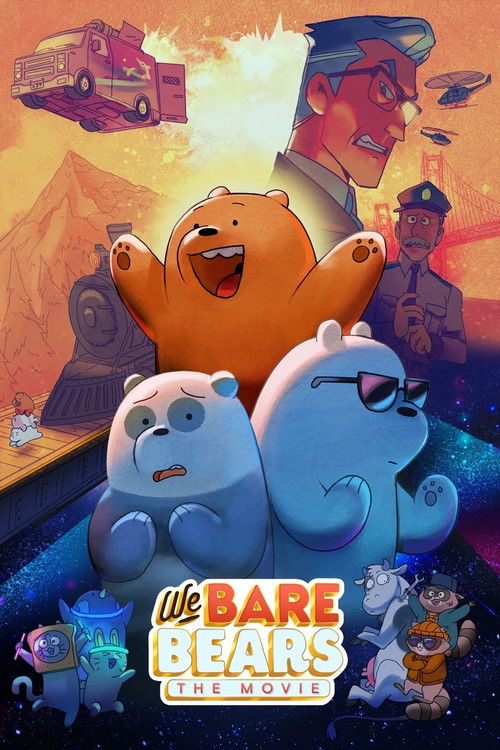
We Bare Bears: The Movie (2020)
Directed by Daniel Chong
Yes — We Bare Bears: The Movie is woke, scoring 60 out of 100 on our wokeness meter.
A feature-length farewell to three bears who stack themselves into a single column and trundle through the San Francisco Bay Area in search of poutine.
Consciousness Markers
The film is explicitly framed by its creators as an allegory for being a minority in America, with themes of racial discrimination, family separation inspired by ICE policy, and Grizz's climactic denunciation of Agent Trout's 'human supremacy' and fear of difference.
The creators openly stated they wanted to address intolerance and family separation, and the film ends with explicit appeals about standing up for those who look different and not 'putting up these walls,' delivered with earnest moral clarity.
Series creator Daniel Chong is Asian American and drew the bears' alienation directly from his own experience as a minority in Orange County and the Bay Area; the voice cast includes openly gay comedian Cameron Esposito and Latino actor Mel Rodriguez, though the leads are animated bears voiced by white men.
The climax features a forest fire inspired by the 2018 California wildfires, but it functions as a perilous set piece rather than a climate-crisis message.
The film is a brotherly road-trip comedy with no discernible feminist agenda or gender-focused commentary.
No LGBTQ+ characters, relationships, or themes appear in the film; Cameron Esposito's presence in the cast is not reflected in any queer content.
The bears' love of food trucks and viral-video fame is played for comedy; there is no critique of wealth, capitalism, or class.
The bears' round shapes are a design choice, not a body-positivity statement; no such theme is present.
No neurodivergent characters or themes are depicted or implied.
The film is a contemporary fictional adventure with no historical revisionism.
Why it received this score
A feature-length farewell to three bears who stack themselves into a single column and trundle through the San Francisco Bay Area in search of poutine. This is the setup, and it is charming. The film concerns itself, however, with weightier matters. Grizz, Panda, and Ice Bear are hounded from their home by a wildlife agent named Trout, separated from one another, caged, and scheduled for deportation to China and the Arctic respectively. The creators have been candid that the family separation is drawn from the immigration enforcement policies of the period, and that the bears themselves function as a stand-in for the minority experience in America, an allegory the series creator built from his own time as an Asian American in Orange County and the Bay Area. The result is a children's road comedy that ends with a rousing denunciation of human supremacy.
One can admire the ambition while noting the tonal seams. The film wants to be a lark about food trucks and viral videos, and it also wants to say something about who gets to belong. It mostly manages both, which is no small feat for eighty minutes of animation. The climax arrives with a forest fire, lifted from the 2018 California wildfires though deployed strictly as peril, and a speech about not building walls around people who look different. The moral is delivered plainly and without apology, aimed squarely at the young audience and their parents.
As a piece of cultural instruction, it is earnest and well-meaning. The representation behind the camera is genuine, and the allegory is coherent. The film never quite forgets it is entertainment, which keeps the sermon short. It is a gentle, decent, somewhat overstuffed send-off, and it believes firmly in the importance of being understood. We have seen worse lessons, delivered with far less charm.
Analysis generated by our Consciousness Algorithm


Synopsis
When Grizz, Panda, and Ice Bear's love of food trucks and viral videos get out of hand, the brothers are now chased away from their home and embark on a trip to Canada, where they can live in peace.
Questions about We Bare Bears: The Movie
Is We Bare Bears: The Movie woke?
Yes — We Bare Bears: The Movie is woke, scoring 60 out of 100 on our wokeness meter. That earns it a verdict of Woke.
What makes We Bare Bears: The Movie woke?
3 of the 10 markers register at 30 or above, led by Racial Consciousness (80), Lecture Energy (60) and Representation Casting (50). On Racial Consciousness: The film is explicitly framed by its creators as an allegory for being a minority in America, with themes of racial discrimination, family separation inspired by ICE policy, and Grizz's climactic denunciation of Agent Trout's 'human supremacy' and fear of difference.
How does We Bare Bears: The Movie compare to other 2020 movies?
It ranks #14 of the 227 films from 2020 we've scored; their average is 21. The wokest is One Night in Miami... (83).
How is the Woke Score calculated?
An AI-assisted process researches the film and its reception, scores it 0–100 on ten markers, then combines those into one 0–100 Woke Score. It measures a specific set of 2020s cultural themes, not film quality.