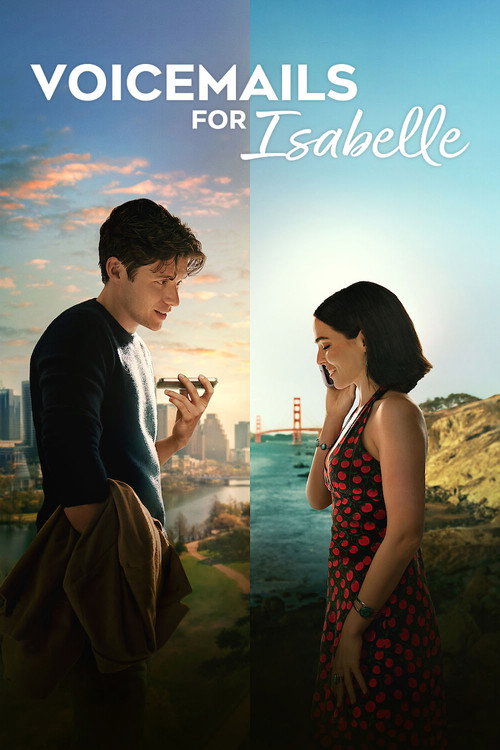
Voicemails for Isabelle (2026)
Directed by Leah McKendrick
No — Voicemails for Isabelle is not woke, scoring 15 out of 100 on our wokeness meter.
Voicemails for Isabelle arrives with a premise engineered for maximum tenderness: a grieving baker named Jill keeps leaving messages on her dead sister's phone number, and the number now belongs to a stranger named Wes, who listens, becomes invested, and eventually falls in love from a comfortable distance.
Consciousness Markers
A female writer-director centers a woman's grief, ambition, and self-assertion, including quitting an abusive chef and publicly calling out a man who ghosted her, though the framework remains a conventional romcom.
The cast includes Harry Shum Jr., Megan Danso, and Tanis Dolman in supporting roles, but their presence is natural to the story and never framed as a representational statement.
The abusive Chef Bastien and his unfair promotion of Arthur provide a mild bad-boss beat, but the arc resolves into entrepreneurship with a dessert taco food truck rather than any critique of capital.
The tone is lighthearted and confessional rather than preachy; the only mild soapbox moment is Jill confronting Tyler at his podcast taping, which is played for character rather than message.
No LGBTQ+ characters, relationships, or themes appear in the plot or cast descriptions.
Race is never addressed or thematized; the diverse casting carries no commentary on racial identity or injustice.
No environmental or climate themes are present in the story.
No body-image or body-positivity themes appear in the film.
No neurodivergent characters or themes are depicted; the sister's illness is cystic fibrosis, a physical condition, not a neurodivergence narrative.
The film is a contemporary fictional romance with no historical subject matter to revise.
Why it received this score
Voicemails for Isabelle arrives with a premise engineered for maximum tenderness: a grieving baker named Jill keeps leaving messages on her dead sister's phone number, and the number now belongs to a stranger named Wes, who listens, becomes invested, and eventually falls in love from a comfortable distance. Leah McKendrick writes and directs, and she casts herself as Breeda, one of Wes's engaged friends, a detail we file away without judgment. The film is set in San Francisco and Austin, shot in Vancouver, and released by Netflix, which is to say it looks expensive and costs the viewer nothing but an evening.
The progressive sensibilities on display are modest and mostly structural. A woman wrote and directed it, and she centers a woman's grief, ambition, and eventual self-assertion. Jill endures an abusive chef, watches a raw souffle earn a colleague a promotion, and quits in a rage. Later she crashes a live podcast taping to confront the man who ghosted her. These are satisfying beats, and they are played as character, not as argument. The film's politics stop at the edge of the plate. The abusive kitchen resolves into a dessert taco food truck, which is entrepreneurship, not a critique of anything larger.
Elsewhere the film simply declines to participate. Race is never a subject, despite a cast that includes Harry Shum Jr., Megan Danso, and Tanis Dolman in supporting roles; they exist in the story without comment, which is the older way of doing things. There is no queer thread, no climate anxiety, no body-image discourse, no neurodivergent framing, and no history to revise. The sister's illness is cystic fibrosis, a physical condition, and the film treats it as such. The closest thing to a sermon is Jill's podcast confrontation, and even that is over in a scene. The result is a romance that trusts its own sentiment, which in this climate reads as almost quaint.
Analysis generated by our Consciousness Algorithm
Part of


Synopsis
A young woman's hilariously confessional voicemails to her late sister are unknowingly redirected to a stranger, who begins to fall in love from afar.
Questions about Voicemails for Isabelle
Is Voicemails for Isabelle woke?
No — Voicemails for Isabelle is not woke, scoring 15 out of 100 on our wokeness meter. That earns it a verdict of Ultra Based.
Does Voicemails for Isabelle have any woke elements?
1 of the 10 markers register at 30 or above, led by Feminist Agenda (35). On Feminist Agenda: A female writer-director centers a woman's grief, ambition, and self-assertion, including quitting an abusive chef and publicly calling out a man who ghosted her, though the framework remains a conventional romcom.
How does Voicemails for Isabelle compare to other 2026 movies?
It ranks #399 of the 800 films from 2026 we've scored; their average is 23. The wokest is Between Us (89).
How is the Woke Score calculated?
An AI-assisted process researches the film and its reception, scores it 0–100 on ten markers, then combines those into one 0–100 Woke Score. It measures a specific set of 2020s cultural themes, not film quality.