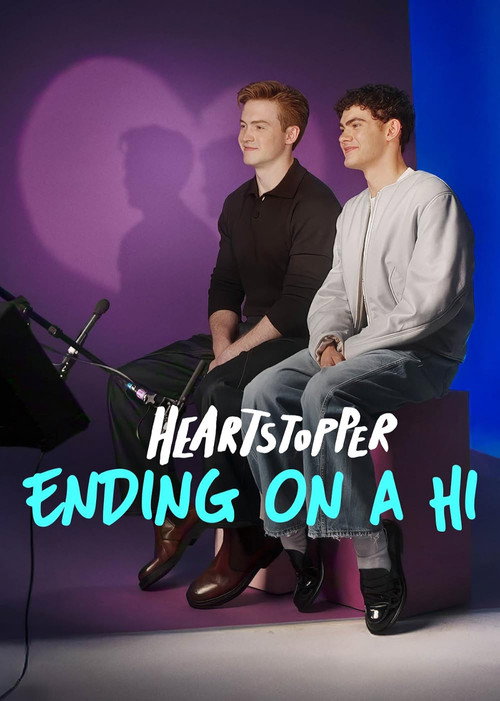
Is Heartstopper: Ending on a Hi (2026) Woke?
Heartstopper: Ending on a Hi · 2026 · Directed by Luke Hyams
Woke Score
CriticCritic Score
Peak Woke
Critics rated this 13 points below its woke score. Among Peak Woke films, this critic score ranks #3 of 6.
Answer: Yes
Woke Score 88/100 · Verdict: Peak Woke
Strongest markers: LGBTQ+ Themes (98) · Representation Casting (92) · Lecture Energy (75)
Representation Casting
Score: 92/100
The documentary's entire premise celebrates the franchise's commitment to authentic LGBTQ+ casting, including a Black transgender actress in a lead role. Representation is not incidental here; it is the subject matter.
LGBTQ+ Themes
Score: 98/100
LGBTQ+ identity, visibility, and youth self-acceptance are not subthemes but the documentary's explicit and singular focus. Queer journalists, advocates, and fan testimonials are woven throughout as primary voices.
Feminist Agenda
Score: 28/100
Creator Alice Oseman's prominent authorial voice and the presence of female cast members in leadership-adjacent roles carry a mild feminist undercurrent, though the documentary does not foreground gender politics as a distinct agenda.
Racial Consciousness
Score: 40/100
Yasmin Finney's intersectional identity as a Black transgender woman is noted within the cultural commentary on representation, making race a conscious element of the documentary's diversity thesis, if not its central argument.
Climate Crusade
Score: 0/100
No climate-related content, imagery, or messaging appears anywhere in the documentary or its surrounding cultural context.
Eat the Rich
Score: 0/100
The documentary is a Netflix-produced celebration of a Netflix franchise. Critiques of capital are conspicuously absent.
Body Positivity
Score: 15/100
The broader Heartstopper franchise has touched on body image and eating disorders; the documentary's cultural commentary may briefly acknowledge this, but it is not a focal point of the special itself.
Neurodivergence
Score: 22/100
Alice Oseman and the production team have explicitly cited neurodiversity representation as a creative priority across the franchise, and this documentary retrospective touches on that legacy within its broader impact discussion.
Revisionist History
Score: 0/100
The documentary is a contemporary behind-the-scenes retrospective with no historical subject matter to revise.
Lecture Energy
Score: 75/100
The special moves freely between nostalgic footage and earnest testimony about the documentary's own cultural importance. Fan contributors and queer journalists deliver extended reflections on identity and visibility that cross comfortably from celebration into sermon.


Synopsis
After the ending of the hit Netflix series "Heartstopper", this special combines never-before-seen behind-the-scenes footage, cast and crew interviews, larger cultural commentary, and fan input.
Why it received this score
A documentary about a television show explaining why the television show mattered is a genre with a very specific energy, and *Heartstopper: Ending on a Hi* arrives fully committed to that energy. Director Luke Hyams assembles behind-the-scenes footage, cast interviews, queer journalists, and fan testimonials into a 35-minute argument that the franchise was important. The film does not entertain the possibility that the audience already agrees. It makes the case repeatedly, from multiple angles, with the thoroughness of a legal brief filed in a court where the verdict was never in doubt.
The documentary's LGBTQ+ credentials are not merely present; they are the load-bearing walls of the entire structure. Every interview, every fan letter read aloud, every knowing glance between Kit Connor and Joe Locke is framed as evidence in a larger cultural thesis. Yasmin Finney's presence as a Black transgender actress is treated with the reverence of a civic monument, which is sincere and not entirely unwarranted, but the documentary's insistence on narrating its own significance does give the proceedings a slightly airless quality. The Kit Connor forced-outing incident of 2022 hovers over the proceedings as the franchise's defining martyrdom story, a real and genuinely troubling episode that the special deploys with practiced solemnity.
Creator Alice Oseman appears throughout as the moral anchor, a role she performs with quiet conviction. Her statement that knowing the show made a "positive impact" kept the team motivated is the documentary's thesis in miniature: the art was made, the art helped people, and now we are all going to sit together and feel good about that. This is a perfectly reasonable thing for a documentary to do. It is also, by any honest accounting, a victory lap dressed as a cultural reckoning. Netflix, to its credit, funded the victory lap. To its further credit, it did not pretend otherwise.
Analysis generated by our Consciousness Algorithm
Critic Reviews
“Ending on a Hi turns the camera toward that audience, and lets four named fans sit in the chair the actors usually occupy.”
“A heartfelt behind-the-scenes look at the beloved 'Heartstopper' franchise, offering fans a touching farewell.”
Related rankings
Consciousness Markers
The documentary's entire premise celebrates the franchise's commitment to authentic LGBTQ+ casting, including a Black transgender actress in a lead role. Representation is not incidental here; it is the subject matter.
LGBTQ+ identity, visibility, and youth self-acceptance are not subthemes but the documentary's explicit and singular focus. Queer journalists, advocates, and fan testimonials are woven throughout as primary voices.
Creator Alice Oseman's prominent authorial voice and the presence of female cast members in leadership-adjacent roles carry a mild feminist undercurrent, though the documentary does not foreground gender politics as a distinct agenda.
Yasmin Finney's intersectional identity as a Black transgender woman is noted within the cultural commentary on representation, making race a conscious element of the documentary's diversity thesis, if not its central argument.
No climate-related content, imagery, or messaging appears anywhere in the documentary or its surrounding cultural context.
The documentary is a Netflix-produced celebration of a Netflix franchise. Critiques of capital are conspicuously absent.
The broader Heartstopper franchise has touched on body image and eating disorders; the documentary's cultural commentary may briefly acknowledge this, but it is not a focal point of the special itself.
Alice Oseman and the production team have explicitly cited neurodiversity representation as a creative priority across the franchise, and this documentary retrospective touches on that legacy within its broader impact discussion.
The documentary is a contemporary behind-the-scenes retrospective with no historical subject matter to revise.
The special moves freely between nostalgic footage and earnest testimony about the documentary's own cultural importance. Fan contributors and queer journalists deliver extended reflections on identity and visibility that cross comfortably from celebration into sermon.