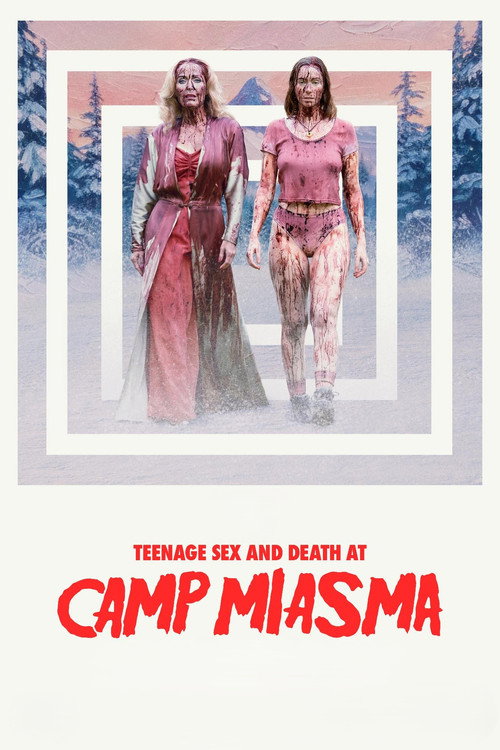
Teenage Sex and Death at Camp Miasma (2026)
Directed by Jane Schoenbrun · $3.6M domestic
Yes · Peak Woke
How we score movies →Consciousness Markers
Trans identity, gender dysphoria, and queer desire are not subtext here; they are the text, the pretext, and the post-text. Directed by a prominent trans filmmaker who has publicly described the film as an exploration of inhabiting one's body after transition, the entire sapphic psychosexual narrative exists as a vehicle for this discourse.
The film is led by an out bisexual actor and a queer cultural icon, with the cast populated by openly LGBTQ+ performers. The casting is not incidental but architecturally load-bearing: the identities of the actors are part of the film's explicit cultural argument.
The film systematically deconstructs the Final Girl archetype and other slasher tropes coded as patriarchal, reclaiming them through a sapphic lens. The central relationship between two women displaces the male gaze so thoroughly that the genre machinery itself becomes a feminist object lesson.
Multiple critics, including Jacobin and Salon, noted the film's tendency toward theory-head satire and metaphor at the expense of narrative. When critics describe a horror film as drowning in academic subtext and self-important intellectualism, the lecture energy has been detected and documented.
The film's entire premise is a meta-revisionist project: the protagonist is hired specifically to correct the transphobic and problematic tropes of the original 1980s slasher franchise. The film is not just set in genre history; it is actively re-litigating and rewriting it.
The film's reported focus on inhabiting one's body after gender transition maps directly onto body acceptance discourse, even if it arrives via a trans-specific rather than a size-politics framework. Bodily autonomy is described by the director as a central thematic concern.
The meta-narrative explicitly concerns a studio system that produces slapdash sequels for profit, and the director character is hired to rehabilitate a franchise degraded by commercial cynicism. Schoenbrun publicly noted A24 passed on the film, framing corporate gatekeeping as a structural antagonist to queer art.
The research notes no specific racial justice themes in the film's narrative, and the cast, while diverse, is not assembled around a racial consciousness argument. The score reflects the presence of non-white cast members in visible roles without any evidence of the film foregrounding race as a thematic concern.
No evidence of climate or environmental themes in the film's narrative, setting, or reported thematic content.
No evidence of neurodivergence as a thematic or representational element in the film's narrative or reported cultural context.
Synopsis
After years of slapdash sequels and waning fandom, the Camp Miasma slasher franchise is handed over to an enthusiastic young director for resurrection. But when she visits the original's star, a now-reclusive actress shrouded in mystery, the two women fall into a blood-soaked world of desire, fear, and delirium.
Why it received this score
Jane Schoenbrun's *Teenage Sex and Death at Camp Miasma* arrives as perhaps the most thoroughly self-annotated horror film ever committed to celluloid. The premise, in which a queer Sundance wunderkind is tasked with rehabilitating a slasher franchise burdened by its own transphobic history, functions less as a story and more as a mission statement that has been granted a runtime. This is not a criticism, exactly. It is an observation. The film knows precisely what it is doing, and it would like you to know that it knows.
The sapphic psychosexual dynamic between Hannah Einbinder's director character and Gillian Anderson's reclusive Final Girl is the film's genuine beating heart, and when it functions as cinema rather than as illustrated theory, it is reported to be genuinely unsettling and tender in equal measure. Schoenbrun, whose previous work in *I Saw the TV Glow* demonstrated a rare ability to weaponize genre aesthetics against the audience's comfort, brings the same dissociative dreamlogic to the slasher form here. The casting of Anderson is a piece of cultural judo: a queer icon playing a character who is herself a cultural artifact being reclaimed. The film is aware of this. The film is aware of everything. That awareness is both its greatest strength and its most persistent liability.
Where *Camp Miasma* strains is precisely where several critics have located the strain: the film occasionally mistakes the map for the territory, offering elaborate frameworks for discussing gender dysphoria, bodily autonomy, and the violence encoded in genre convention, but sometimes forgetting to also be frightening. A horror film that is primarily a seminar on horror films occupies an interesting but narrow ecological niche. Still, as cultural artifacts go, this one has done its homework, filed the relevant paperwork, and arrived at the festival circuit with a Queer Palm and a full bibliography. We have seen less organized attempts at the same project. We have seen more entertaining ones too.
Analysis generated by our Consciousness Algorithm
Critic Reviews
“It's an endlessly engaging and often very funny film equipped with arresting imagery, gorgeous design (including some beautiful matte paintings) and no shortage of gleeful gore. Or to put it another way, this is another instant cult classic from Schoenbrun, and it's already fascinating to ponder what they might do next.”
“It is a film that feels movingly personal while speaking to the ubiquitous tussle between duty and desire, and that does so through the gnarling of fresh and guts and bones to find what is buried deep within one’s being: a throbbing vein of wanting, undeniably alive, and that, once freed, will not stop until its thirst is quenched.”
“What happens to these spaces when we feel comfortable in our bodies again? Does resurrection always have to require a type of death first? Is there ever a point in our lives where it’s too late to transform? That the film manages to make room for these ideas while lacing it all with enough tacky genre thrills to make it all palatable and thought-provoking is a miraculous feat in its own right.”
“The film is so unrelentingly, unrewardingly self-reflexive that even the climactic slasher sequence, as the worlds of reality and “Camp Miasma” start to intermingle and Billy tries to guide Kris to sexual satisfaction, is played with wan, off-base comedy, resurfacing the film’s attempts at sardonic show-business commentary.”