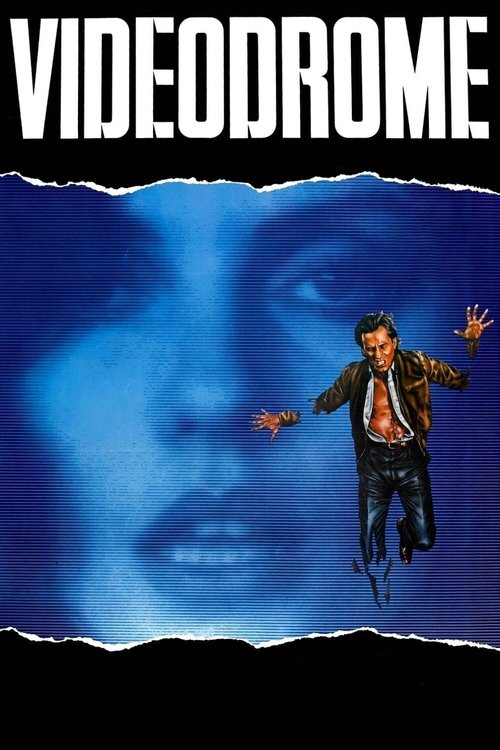
Videodrome (1983)
Directed by David Cronenberg
No — Videodrome is not woke, scoring 14 out of 100 on our wokeness meter.
David Cronenberg's Videodrome arrives from 1983 with a confidence that borders on insolence.
Consciousness Markers
The film critiques corporate media manipulation and a weapons company operating behind an eyeglasses front, but this is a media-theory satire rather than a coherent eat-the-rich polemic.
Brian O'Blivion's McLuhan-inspired media monologues carry a faint didactic charge, but the film remains surreal and cryptic rather than preachy.
The cast is uniformly white, with no diverse or representative casting choices made or commented upon.
No LGBTQ+ characters, themes, or subtext are present in the film.
Nicki Brand is a sadomasochistic radio host and the film's psychosexual dynamics are exploitative rather than feminist in intent.
The film engages no racial themes or commentary whatsoever.
No environmental or climate concerns appear in the narrative.
As a body horror film centered on mutilation, tumors, and abdominal slits, it is the antithesis of body positivity.
Hallucination and insanity are deployed as horror plot devices, not as neurodivergent representation.
The film is a fictional near-future media parable with no historical revisionism.
Why it received this score
David Cronenberg's Videodrome arrives from 1983 with a confidence that borders on insolence. Max Renn runs a Toronto UHF station devoted to sensationalist filler, stumbles onto a pirate broadcast of torture, and spends the remainder of the running time losing his mind to it. The film is a body horror proposition first and a media parable second, and it makes no apology for either. There is a stomach slit here that accepts Betamax cassettes. There is a handgun that fuses to a palm. There is Debbie Harry. The enterprise is grimy, psychosexual, and entirely uninterested in instructing us on how to live.
On the matter of social consciousness, the record is thin and we should say so plainly. The cast is uniformly white and the film has no comment to make about it. No queer themes, no racial reckoning, no environmental anxiety, no gentle regard for the body as a site of dignity. Nicki Brand exists to be whipped and then to reappear as a television apparition, which is exploitation dressed as philosophy, not feminism. Madness functions here as a plot mechanism, a way to make the walls breathe, not as an invitation to understand anyone. What does register, faintly, is a suspicion of corporate power: Spectacular Optical sells eyeglasses while running an arms concern, and a weapons-grade broadcast signal is being deployed to purge North America of its appetites. It is media theory wearing a trench coat, not a coherent cry against wealth, and it never pretends otherwise.
The lecture energy is present but mercifully diluted. Brian O'Blivion, a McLuhan figure who appears mostly on cathode-ray tubes, delivers his sermons about television replacing reality, and the film has the good sense to keep him flickering and half-mad instead of letting him win. Cronenberg builds a labyrinth and declines to hand out a map. The result is cryptic, unpleasant, and durable, a cult artifact that has aged into influence without ever having learned to preach. We classify it, we note the absence of uplift, and we move on to the next screening.
Analysis generated by our Consciousness Algorithm


Synopsis
As the president of a trashy TV channel, Max Renn is desperate for new programming to attract viewers. When he happens upon "Videodrome," a TV show dedicated to gratuitous torture and punishment, Max sees a potential hit and broadcasts the show on his channel. However, after his girlfriend auditions for the show and never returns, Max investigates the truth behind Videodrome and discovers that the graphic violence may not be as fake as he thought.
Questions about Videodrome
Is Videodrome woke?
No — Videodrome is not woke, scoring 14 out of 100 on our wokeness meter. That earns it a verdict of Ultra Based.
Does Videodrome have any woke elements?
Very few. None of the 10 markers reaches 30, the level where a marker counts as present; the highest is Eat the Rich at 20.
How does Videodrome compare to other 1983 movies?
It ranks #10 of the 38 films from 1983 we've scored; their average is 10. The wokest is Sans Soleil (68).
How is the Woke Score calculated?
An AI-assisted process researches the film and its reception, scores it 0–100 on ten markers, then combines those into one 0–100 Woke Score. It measures a specific set of 2020s cultural themes, not film quality.