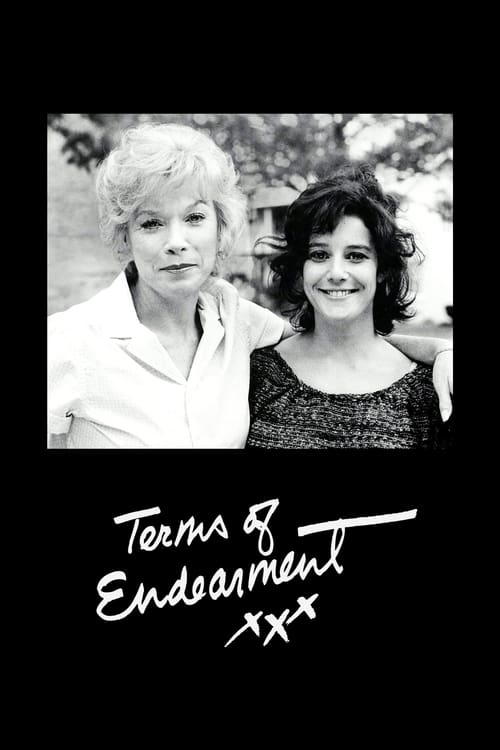
Terms of Endearment (1983)
Directed by James L. Brooks
No · Based
How we score movies →Consciousness Markers
Female leads with significant screen time and character development. However, the cast remains predominantly white and the supporting roles follow conventional patterns for the era.
Centers female characters and their autonomy, but does not critique patriarchal systems. Female independence is treated as personal quirk rather than social statement.
Occasionally preachy about emotional honesty and personal growth, but primarily focused on naturalistic dialogue and character interaction rather than explicit messaging.
Aurora's eccentricity and particular behaviors could be read as neurodivergent coding, but the film does not engage with this as a concept or identity.
No LGBTQ+ themes, characters, or representation present in the film.
No racial themes or consciousness evident. The film exists in an entirely white social world without acknowledgment or commentary.
No environmental or climate-related themes present.
No critique of capitalism or wealth systems. Characters exist comfortably within consumer culture without comment.
No body positivity messaging or celebration of diverse body types. The film adheres to conventional beauty standards of its era.
No historical revisionism present. The film does not engage with historical narratives.


Synopsis
Aurora, a finicky woman, is in search of true love while her daughter faces marital issues. Together, they help each other deal with problems and find reasons to live a joyful life.
Why it received this score
Terms of Endearment presents itself as a sensitive portrait of mother-daughter dynamics and female experience, yet it remains a product of its 1980s sensibilities. The film centers two women as complex protagonists with agency and inner lives, which was progressive for mainstream cinema of the era. However, the narrative ultimately revolves around their romantic entanglements and maternal bonds rather than any critique of the systems that constrain them. The film asks us to sympathize with their plights, not to question the structures producing those plights.
The supporting male characters exist in a curious state of semi-irrelevance, which might appear progressive on the surface. Jack Nicholson's retired astronaut is presented as emotionally stunted and ultimately dispensable to Aurora's personal growth. Yet the film's treatment of gender feels incidental rather than intentional. We are not meant to contemplate why women's worth is tied to romantic validation or why Aurora's independence is coded as neurotic eccentricity. The film invites emotional identification but not political consciousness.
The work demonstrates genuine emotional sophistication that predates many of the cultural markers we now associate with progressive filmmaking. It simply has no interest in race, class, sexuality, or systemic critique. It is humanist in the most traditional sense, concerned with individual emotional truth rather than collective social awareness. For this reason, it scores modestly on contemporary measures of cultural consciousness, not because it offends but because it exists in a different register entirely.
Analysis generated by our Consciousness Algorithm
Critic Reviews
“This is a wonderful film. There isn't a thing that I would change.”
“Terms of Endearment is the rare commercial picture that sets audiences to laughing hysterically and crying unashamedly, sometimes within consecutive seconds, and then shoos them out of the theatre in contented emotional exhaustion. [23 Nov 1983]”
“No film since Preston Sturges was a pup has so shrewdly appreciated the way the eccentric plays hide-and-seek with the respectable in the ordinary American landscape; no comedy since Annie Hall or Manhattan has so intelligently observed not just the way people live now but what's going on in the back of their minds; and finally, and in full knowledge that one may be doing the marketing department's job for them, it is the best movie of the year.”
“The dual-track plot, with constant cutting between mother and daughter, seems less an attempt to establish meaningful parallels between the two stories than the nervous twitches of a compulsive channel changer.”