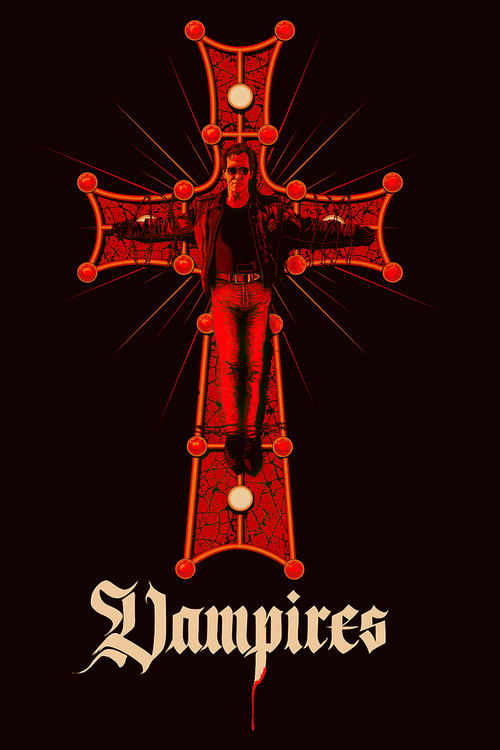
Vampires (1998)
Directed by John Carpenter
No — Vampires is not woke, scoring 3 out of 100 on our wokeness meter.
John Carpenter's Vampires arrives from 1998 with a hangover, a shotgun, and no interest in improving anyone's moral education.
Consciousness Markers
The cast is overwhelmingly white and male, with Cary-Hiroyuki Tagawa and Gregory Sierra appearing in minor supporting roles. There is no deliberate diversity-casting agenda at work.
Sheryl Lee's Katrina is a prostitute turned vampire who functions largely as a psychic plot device and victim. No feminist critique or empowerment narrative is present.
The film is a grungy action-horror western with no didactic messaging or moral lecturing to the audience.
No LGBTQ+ characters, themes, or subtext appear anywhere in the film.
The film engages no racial themes or commentary whatsoever; it is a straightforward vampire western.
No environmental or climate themes appear in the film.
The Vatican-sponsored vampire hunters are a mercenary outfit, but the film offers no critique of capitalism or wealth.
No body-positivity themes are present; the film trades in gore and conventional physicality.
No neurodivergent characters or themes are depicted.
Valek's backstory as a rebellious priest is fictional vampire lore, not a revisionist reframing of real historical events.
Why it received this score
John Carpenter's Vampires arrives from 1998 with a hangover, a shotgun, and no interest in improving anyone's moral education. Adapted from John Steakley's novel, it follows James Woods as Jack Crow, a Vatican-funded slayer who leads a crew of mercenaries through the New Mexico desert in pursuit of a master vampire named Valek. The cast is white and male to a degree that suggests a casting call posted at a bowling alley. Cary-Hiroyuki Tagawa and Gregory Sierra appear in minor supporting roles, present but unremarked upon. Nothing in the film's construction indicates an interest in representation as a project. The vampire hunters are paid killers, a western cliché Carpenter has acknowledged chasing, and the film never pauses to interrogate the economics of that arrangement.
Sheryl Lee's Katrina, a prostitute bitten during the motel massacre, becomes a psychic tracking device and a victim of her own transformation. She is not granted agency, and the film does not pretend to offer her any. There is no feminist argument here, no critique of the men who use her. LGBTQ themes are absent entirely. So are racial themes, which the film declines to engage despite its southwestern setting. The Catholic Church functions as a bureaucratic employer of violence, and the film has no interest in what that might say about capital or faith. It is, in the end, a movie about staking things.
Environmental concerns do not surface. Body positivity does not surface. Neurodivergence does not surface. Valek's backstory, a disgraced priest who rebelled against the church, is invented vampire mythology, not a reframing of real history. As for sermonizing, the film has none. It is too busy with gore, tequila, and the mechanical winch used to drag vampires into daylight. The picture opened at number one, made its money, and spawned two direct-to-video sequels nobody asked for. We are left with a lean, mean, and ideologically inert piece of genre filmmaking, which is its own kind of honesty.
Analysis generated by our Consciousness Algorithm


Synopsis
The church enlists a team of vampire-hunters to hunt down and destroy a group of vampires searching for an ancient relic that will allow them to exist in sunlight.
Questions about Vampires
Is Vampires woke?
No — Vampires is not woke, scoring 3 out of 100 on our wokeness meter. That earns it a verdict of Ultra Based.
Does Vampires have any woke elements?
Very few. None of the 10 markers reaches 30, the level where a marker counts as present; the highest is Representation Casting at 12.
How does Vampires compare to other 1998 movies?
It ranks #104 of the 118 films from 1998 we've scored; their average is 12. The wokest is Show Me Love (60).
How is the Woke Score calculated?
An AI-assisted process researches the film and its reception, scores it 0–100 on ten markers, then combines those into one 0–100 Woke Score. It measures a specific set of 2020s cultural themes, not film quality.