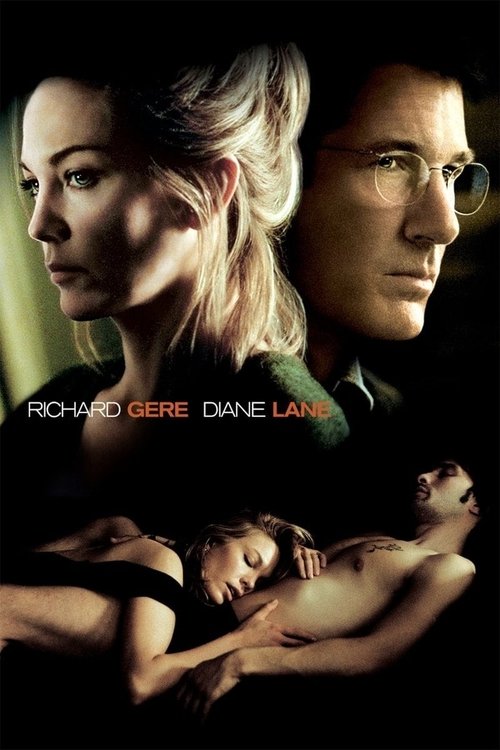
Unfaithful (2002)
Directed by Adrian Lyne
No — Unfaithful is not woke, scoring 0 out of 100 on our wokeness meter.
Adrian Lyne's Unfaithful arrives from 2002, a moment when a studio could still release an erotic thriller about a bored Westchester wife and let the audience sit with the discomfort.
Consciousness Markers
The cast is overwhelmingly white and the film makes no deliberate effort at diverse or inclusive casting.
There are no LGBTQ+ characters, themes, or subtext in the film.
While the film centers on a woman's affair and desire, it does not advance a feminist agenda or critique patriarchal structures.
The film does not engage with race, racial identity, or racial politics in any meaningful way.
There is no environmental or climate-related content in the film.
The film depicts an affluent suburban lifestyle without any critique of capitalism or wealth inequality.
The film does not promote body positivity or challenge conventional beauty standards.
There is no representation or discussion of neurodivergence in the film.
The film is a contemporary domestic drama and does not revise or reinterpret historical events.
The film is an ambiguous moral drama and does not contain preachy or lecture-like messaging.
Why it received this score
Adrian Lyne's Unfaithful arrives from 2002, a moment when a studio could still release an erotic thriller about a bored Westchester wife and let the audience sit with the discomfort. Diane Lane plays Connie Sumner, who collides with a Frenchman in SoHo and, across three visits to his loft, quietly dismantles a good marriage. The picture is a remake of Claude Chabrol's La Femme infidele and it keeps the older film's refusal to explain itself. Lyne has said he wanted two people who were perfectly happy, with the infidelity arriving arbitrarily. That choice denies us a villain. It also denies us a lesson. The studio reportedly pushed for a gray marriage and unsatisfying sex, the better to make the wife sympathetic. Lyne fought it, and the result is a film that declines to instruct anybody about anything.
What the film does contain: an affluent suburban household, a snow globe, a body in a landfill, a child nearly forgotten at his school gate. What it does not contain is any argument about the society that produced these people. The Sumners have money and a handsome house. The film regards all of it as scenery. Nobody proposes a wealth tax. Race never enters the frame, and neither does any other category of identity. The cast is white, the concerns are marital, the moral questions are entirely private. There is no sermon and no third-act speech about how we ought to live. Gere's Edward delivers a bitter monologue near the end, but it is a confession of rage, not a thesis.
Decades of cultural criticism have trained us to hunt for the message in the frame. Unfaithful offers none. It is a chamber piece about guilt and jealousy and the arbitrary nature of desire, and it treats its audience as adults capable of holding an unresolvable ending without a handout. The final traffic light, the police station just visible, the fantasy of escape: these are the instruments of ambiguity, not instruction. Lane's performance carries the whole enterprise, her face registering lust and regret in the same breath. By the standards of its own era and of ours, the film is almost aggressively free of social commentary. That is either its limitation or its integrity. The classification holds either way.
Analysis generated by our Consciousness Algorithm


Synopsis
A New York suburban couple's marriage goes dangerously awry when the wife indulges in an adulterous fling.
Questions about Unfaithful
Is Unfaithful woke?
No — Unfaithful is not woke, scoring 0 out of 100 on our wokeness meter. That earns it a verdict of Ultra Based.
Does Unfaithful have any woke elements?
No. All 10 markers score zero.
How does Unfaithful compare to other 2002 movies?
It ranks #129 of the 150 films from 2002 we've scored; their average is 12. The wokest is Far from Heaven (78).
How is the Woke Score calculated?
An AI-assisted process researches the film and its reception, scores it 0–100 on ten markers, then combines those into one 0–100 Woke Score. It measures a specific set of 2020s cultural themes, not film quality.