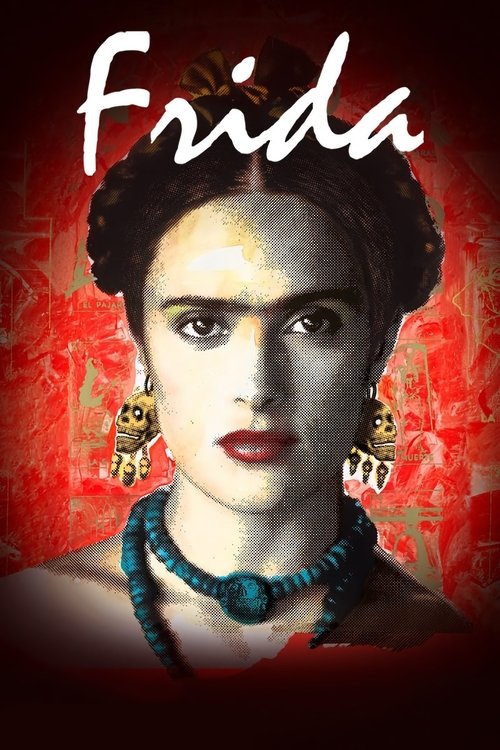
Frida (2002)
Directed by Julie Taymor
Partly — Frida is somewhat woke, scoring 41 out of 100 on our wokeness meter.
Frida arrives from 2002, directed by Julie Taymor and carried on the shoulders of Salma Hayek, who spent roughly a decade dragging the project out of development limbo.
Consciousness Markers
Kahlo's bisexuality is depicted directly, including affairs with women such as Tina Modotti and Josephine Baker, and the film treats her fluid sexuality as central to her life and art.
A predominantly Mexican and Latino cast plays Mexican and Latino historical figures, with Salma Hayek championing authentic casting after earlier non-Hispanic casting attempts drew protests. The representation is genuine but largely inherent to the subject matter.
A woman-directed biopic of a female artist framed as a tale of a woman torn between marriage and career, centering Kahlo's agency and artistic ambition. It is more character study than explicit feminist polemic.
Diego Rivera's communism and his refusal to compromise his revolutionary mural for Nelson Rockefeller are dramatized, including the destruction of the Rockefeller Center work. The anti-capitalist content is historical rather than preachy.
The film is steeped in Mexican identity, culture, and history, and its production history engaged with authentic casting debates, but it does not foreground modern racial-justice commentary.
Kahlo's crippling injuries, miscarriages, amputations, and her relationship to her own body are depicted, but the film frames this as biographical suffering rather than a body-positivity message.
The film is a passionate, visually driven biopic that largely shows rather than lectures, with only occasional didactic notes about art and politics.
No environmental or climate themes appear in the film.
No neurodivergence themes are present in the film.
The film is a straightforward biographical account of real events and people, not a revisionist reframing of history.
Why it received this score
Frida arrives from 2002, directed by Julie Taymor and carried on the shoulders of Salma Hayek, who spent roughly a decade dragging the project out of development limbo. It is a visually saturated biopic of the Mexican painter, adapted from Hayden Herrera's 1983 biography, and it took home two Academy Awards for makeup and original score while losing the other four of its six nominations. Hayek secured access to Kahlo's paintings from Dolores Olmedo and shot the whole thing in Mexico. Earlier attempts to cast a non-Hispanic actress had drawn protests, so the final ensemble leans heavily Mexican and Latino. That is representation achieved through attrition, not through manifesto.
On the matter of social consciousness, the film is generous but unhurried. Kahlo's bisexuality is depicted without apology, her affairs with women treated as ordinary furniture of a complicated life. Rivera's communism gets its due, including the destruction of the Rockefeller Center mural when he refuses to soften his politics for Nelson Rockefeller. Mexican history, Day of the Dead, Trotsky in exile, all of it sits in the frame as texture. The film declines to lecture. It shows the miscarriages, the amputations, the ruined spine, and lets them remain biographical facts instead of arguments.
The feminist reading is present but soft: a woman-directed portrait of a woman torn between marriage and her own work, with the men mostly orbiting her. There is no interest here in climate, in neurodivergence, or in revising the historical record. The occasional pronouncements about art and revolution land with the weight of a museum placard. A warm, handsome, faintly exhausting picture, and a straightforward classification. It was ahead of its moment on a few fronts and content to be a period piece on the rest.
Analysis generated by our Consciousness Algorithm
Part of


Synopsis
A biography of artist Frida Kahlo, who channeled the pain of a crippling injury and her tempestuous marriage into her work.
Questions about Frida
Is Frida woke?
Partly — Frida is somewhat woke, scoring 41 out of 100 on our wokeness meter. That earns it a verdict of Woke-Adjacent.
What makes Frida woke?
5 of the 10 markers register at 30 or above, led by LGBTQ+ Themes (65), Representation Casting (55) and Eat the Rich (50). On LGBTQ+ Themes: Kahlo's bisexuality is depicted directly, including affairs with women such as Tina Modotti and Josephine Baker, and the film treats her fluid sexuality as central to her life and art.
How does Frida compare to other 2002 movies?
It ranks #7 of the 150 films from 2002 we've scored; their average is 12. The wokest is Far from Heaven (78).
How is the Woke Score calculated?
An AI-assisted process researches the film and its reception, scores it 0–100 on ten markers, then combines those into one 0–100 Woke Score. It measures a specific set of 2020s cultural themes, not film quality.