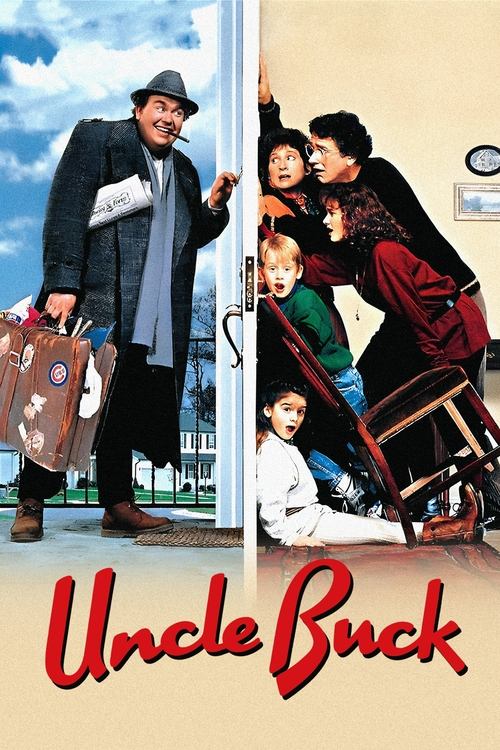
Uncle Buck (1989)
Directed by John Hughes
No — Uncle Buck is not woke, scoring 6 out of 100 on our wokeness meter.
John Hughes wrote, directed, and produced Uncle Buck in 1989, and the film arrived with the confidence of a man who knew his audience.
Consciousness Markers
The film carries gentle moral lessons about growing up and taking responsibility, but they are delivered through character arc rather than direct lecturing.
A woman runs an auto repair shop and the plot has Buck protecting Tia from a predatory boyfriend, but the film's resolution is conventional domesticity rather than a feminist statement.
Buck rejects steady employment and lives off gambling, vaguely thumbing his nose at workaday capitalism, but he ultimately takes a job at the auto shop and the film endorses that as a happy ending.
The cast is entirely white with no deliberate representational casting; background figures add nothing to a diversity ledger.
No LGBTQ+ characters, themes, or subtext of any kind.
No engagement with racial identity, dynamics, or commentary whatsoever.
No environmental or climate-related themes present.
John Candy's slovenly Buck is presented affectionately, but the film makes no argument about body acceptance or self-image.
No neurodivergent characters or themes are depicted.
No historical subject matter is rewritten or reframed.
Why it received this score
John Hughes wrote, directed, and produced Uncle Buck in 1989, and the film arrived with the confidence of a man who knew his audience. John Candy plays the title bachelor, a gambler and heavy smoker deposited into a Chicago suburb to mind three children while their parents attend to a family emergency. It opened at number one and held the position for four weeks. The culture wars had not yet been issued their formal uniforms, and this picture shows it. The cast is white, the suburb is white, and nobody involved appears to have consulted a diversity office before rolling camera.
The film's social consciousness sits at a low simmer. Amy Madigan runs an auto repair shop, which is a job and not a thesis, and Buck's arc concludes with him accepting steady employment there, an ending that endorses the workaday arrangement more than it interrogates it. His earlier aversion to labor amounts to a shrug, not a critique of capital. The screenplay does extend a hand toward Tia, the hostile teenager, protecting her from a predatory boyfriend, though the resolution folds her back into domestic repair with her mother. Elsewhere the ledger is blank. No racial commentary, no environmental concern, no LGBTQ presence, no argument about bodies or minds or history. John Candy's slovenly frame is treated with affection, but affection is not an argument.
What remains is a moral education delivered through behavior. Buck learns responsibility, Tia learns judgment, and the lessons land as story instead of sermon. Hughes had a gift for this, and the film's willingness to instruct by example keeps the preaching to a murmur. Roger Ebert found the whole affair bitter, which is a fair reading of a movie that binds a teenager's boyfriend and locks him in a trunk. The gentleness and the menace share a bed here. For a classification exercise, the picture is quiet, unambitious, and content to be a comedy about a man who grows up.
Analysis generated by our Consciousness Algorithm


Synopsis
Buck Russell, a lovable but slovenly bachelor, suddenly becomes the temporary caretaker of his nephew and nieces after a family emergency. His freewheeling attitude soon causes tension with his older niece Tia, loyal girlfriend Chanice, and just about everyone else who crosses his path.
Questions about Uncle Buck
Is Uncle Buck woke?
No — Uncle Buck is not woke, scoring 6 out of 100 on our wokeness meter. That earns it a verdict of Ultra Based.
Does Uncle Buck have any woke elements?
Very few. None of the 10 markers reaches 30, the level where a marker counts as present; the highest is Lecture Energy at 15.
How does Uncle Buck compare to other 1989 movies?
It ranks #36 of the 68 films from 1989 we've scored; their average is 10. The wokest is Do the Right Thing (72).
How is the Woke Score calculated?
An AI-assisted process researches the film and its reception, scores it 0–100 on ten markers, then combines those into one 0–100 Woke Score. It measures a specific set of 2020s cultural themes, not film quality.