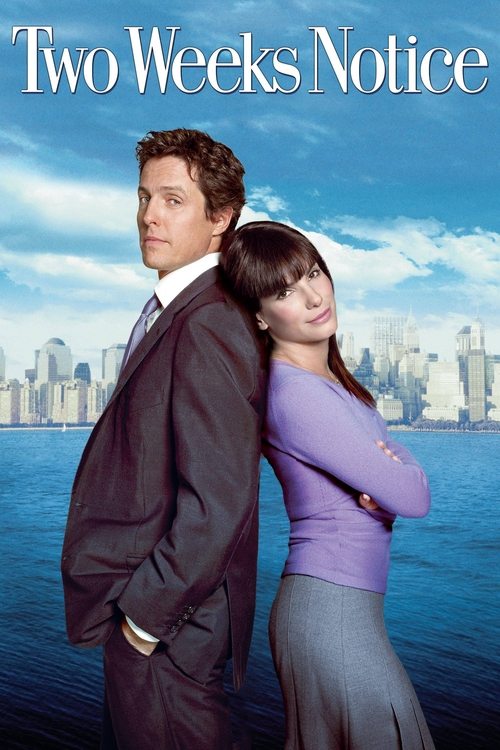
Two Weeks Notice (2002)
Directed by Marc Lawrence
No — Two Weeks Notice is not woke, scoring 12 out of 100 on our wokeness meter.
Two Weeks Notice carries a faint reputation for environmental conscience and suspicion of wealth, which is a generous way to describe a 2002 romantic comedy about a billionaire who needs a lawyer to advise him on clothing.
Consciousness Markers
There is a persistent contrast between the idealistic legal-aid lawyer and the frivolous billionaire developer, with mild jabs at his greed and his scheming brother. However, the rich man is redeemed rather than condemned, softening any class critique.
Lucy is a capable Harvard-educated career woman, but the plot largely revolves around her becoming her boss's indispensable assistant and feeling jealous of a younger female rival. This is a conventional 2002 rom-com heroine, not a feminist program.
Environmental law, historic preservation, and a Greenpeace boyfriend are present as backdrop, but the film never advances a climate-advocacy argument; the environment is a personality trait for the heroine, not a crusade.
The cast is overwhelmingly white, led by Bullock and Grant, with only a few background minority performers (Dorian Missick, Sharon Wilkins) who carry no thematic weight. No deliberate representation agenda is present.
The occasional nods to community centers, pro bono work, and preservation are light romantic-comedy garnish rather than sermonizing. Minimal preachy or didactic energy.
No LGBTQ+ characters, themes, or subtext anywhere in the film.
No engagement with race as a theme or social issue. Minority characters appear incidentally without comment.
No body-positivity themes or messaging present.
No neurodivergent characters or themes are depicted.
No historical revisionism; the film is a contemporary fictional romance.
Why it received this score
Two Weeks Notice carries a faint reputation for environmental conscience and suspicion of wealth, which is a generous way to describe a 2002 romantic comedy about a billionaire who needs a lawyer to advise him on clothing. Lucy Kelson is a Harvard-trained attorney devoted to historic preservation and pro bono work, and her client is a pampered developer who eventually keeps a promise about a community center. The film treats these details as character decoration. Environmental law is Lucy's personality, not a campaign. The rich man is scolded, then redeemed, which keeps the class critique safely inside the gift shop.
On representation, the film is a product of its era: two white stars, a white supporting ensemble, and a few minority performers in roles that carry no thematic weight. There are no LGBTQ characters or themes, no engagement with race as a social issue, no body-positivity message, no neurodivergent framing, and no revisionist history. Lucy is capable and Harvard-educated, but the plot soon makes her an indispensable assistant and then jealous of the younger woman hired to replace her. That is a conventional romantic-comedy arc, not a feminist manifesto.
The lecture energy is minimal. Pro bono work and preservation appear as light garnish, and the film never mounts a sermon. The film remains a polished, predictable star vehicle with a handful of sharp lines and a comfortable faith in the redemptive power of Hugh Grant. The most enduring controversy attached to the picture concerns a missing apostrophe in its title, which tells us most of what we need to know about its appetite for provocation.
Analysis generated by our Consciousness Algorithm


Synopsis
Dedicated environmental lawyer Lucy Kelson goes to work for billionaire George Wade as part of a deal to preserve a community center. Indecisive and weak-willed George grows dependent on Lucy's guidance on everything from legal matters to clothing. Exasperated, Lucy gives notice and picks Harvard graduate June Carter as her replacement. As Lucy's time at the firm nears an end, she grows jealous of June and has second thoughts about leaving George.
Questions about Two Weeks Notice
Is Two Weeks Notice woke?
No — Two Weeks Notice is not woke, scoring 12 out of 100 on our wokeness meter. That earns it a verdict of Ultra Based.
Does Two Weeks Notice have any woke elements?
Very few. None of the 10 markers reaches 30, the level where a marker counts as present; the highest is Eat the Rich at 22.
How does Two Weeks Notice compare to other 2002 movies?
It ranks #45 of the 150 films from 2002 we've scored; their average is 12. The wokest is Far from Heaven (78).
How is the Woke Score calculated?
An AI-assisted process researches the film and its reception, scores it 0–100 on ten markers, then combines those into one 0–100 Woke Score. It measures a specific set of 2020s cultural themes, not film quality.