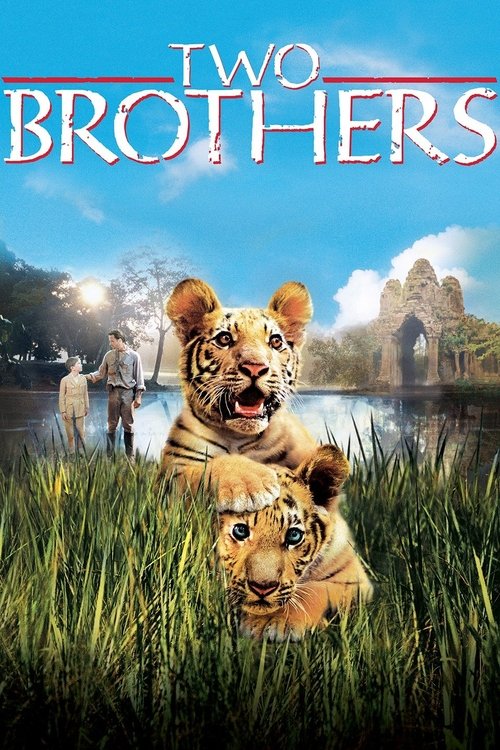
Two Brothers (2004)
Directed by Jean-Jacques Annaud
No — Two Brothers is not especially woke, scoring 22 out of 100 on our wokeness meter.
Jean-Jacques Annaud's Two Brothers arrives with the sober bearing of a nature documentary that wandered into a family matinee and decided to stay.
Consciousness Markers
The story is set in 1920s French colonial Cambodia and gestures toward colonial exploitation and captivity, but race is not examined with modern progressive racial consciousness.
It carries a mild moral about animal captivity and freedom, but it remains a family adventure rather than a preachy message film.
The cast includes actors of Asian descent in roles natural to the colonial Cambodian setting, but there is no modern diversity-casting agenda or commentary on representation.
No LGBTQ+ themes, characters, or subtext are present.
The film features a protective tigress and a few female characters, but it does not advance a feminist agenda or critique patriarchy.
There is no climate-change theme or environmental crusade; the jungle setting serves the animal adventure narrative.
The film criticizes cruelty in a circus and colonial vanity, but it does not mount an anti-capitalist or eat-the-rich argument.
No body-positivity themes or body-image commentary are present.
No neurodivergence themes or neurodiverse representation are present.
The film is a fictional animal adventure set against a historical backdrop, not a revisionist historical narrative.
Why it received this score
Jean-Jacques Annaud's Two Brothers arrives with the sober bearing of a nature documentary that wandered into a family matinee and decided to stay. Two Indochinese tiger cubs, Kumal and Sangha, are separated in 1920s French colonial Cambodia, endure circuses and menageries, and reunite as adults forced to fight for a vain prince's amusement. The tigers, roughly thirty of them by the production's own accounting, are the actual stars, and the human players exist chiefly to move the plot between enclosures. Guy Pearce wears a linen suit and a troubled conscience, which is the correct costume for this sort of enterprise.
The film gestures at colonial exploitation and the cruelty of captivity, and there the social consciousness begins and ends. The Cambodian setting supplies texture and a Khmer prince supplies mild satire of royal vanity, but nobody stops the narrative to instruct us on empire. The circus is cruel because circuses in these films are always cruel, not because the screenplay has read any theory. A tigress protects her young, which is biology, not a feminist thesis. The jungle is beautiful and threatened only insofar as tigers are beautiful and hunted. We are not being lectured. We are being shown a wounded ear and asked to feel something about it.
What we have, then, is a sturdy animal adventure with a soft moral about freedom, delivered without a pulpit. It is well made, occasionally moving, and entirely content to let its four-legged leads carry the argument. The camera lingers on whiskers and paws with genuine affection, and the sentiment lands because it is earned rather than announced. There is no sermon here, no curriculum, no checklist. Just two brothers, a gunshot scar, and a temple in the trees. The sommelier would call it a pleasant vintage, unpretentious, best served to children and the tired.
Analysis generated by our Consciousness Algorithm


Synopsis
Two tigers are separated as cubs and taken into captivity, only to be reunited years later as enemies by an explorer (Pearce) who inadvertently forces them to fight each other.
Questions about Two Brothers
Is Two Brothers woke?
No — Two Brothers is not especially woke, scoring 22 out of 100 on our wokeness meter. That earns it a verdict of Based.
Does Two Brothers have any woke elements?
1 of the 10 markers register at 30 or above, led by Racial Consciousness (30). On Racial Consciousness: The story is set in 1920s French colonial Cambodia and gestures toward colonial exploitation and captivity, but race is not examined with modern progressive racial consciousness.
How does Two Brothers compare to other 2004 movies?
It ranks #28 of the 178 films from 2004 we've scored; their average is 12. The wokest is Tropical Malady (62).
How is the Woke Score calculated?
An AI-assisted process researches the film and its reception, scores it 0–100 on ten markers, then combines those into one 0–100 Woke Score. It measures a specific set of 2020s cultural themes, not film quality.