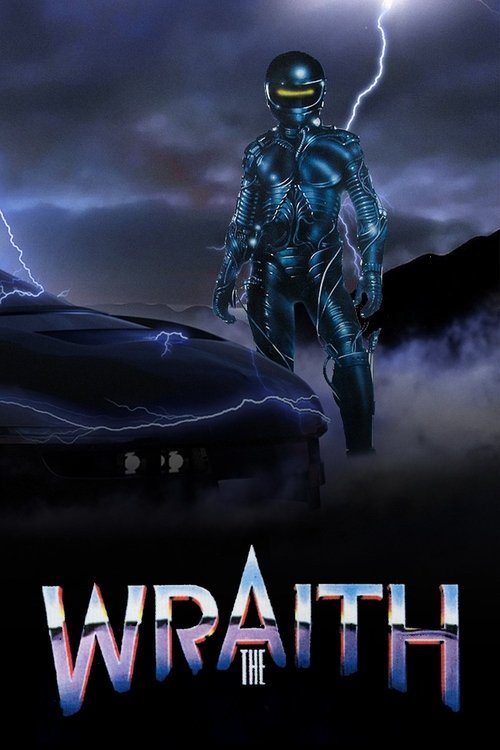
The Wraith (1986)
Directed by Mike Marvin
No — The Wraith is not woke, scoring 0 out of 100 on our wokeness meter.
The Wraith arrives from 1986 with the confidence of a film that has never once been asked to justify itself.
Consciousness Markers
The cast is overwhelmingly white and the film makes no effort at inclusive or representative casting.
There are no LGBTQ+ characters, themes, or subtext in the film.
Keri is treated as Packard's property and a romantic prize, with no feminist framing or agency-driven commentary.
The film has no engagement with race, racial injustice, or racial identity.
Environmental themes are absent; the desert setting and car chases carry no climate message.
The villains are a violent car-theft gang, not a critique of capitalism or wealth inequality.
There is no body-positivity theme or challenge to conventional body standards.
Rughead is a tech-oriented gang member, but the film does not frame him through neurodivergence or mental-health identity.
The film is a supernatural revenge story with no historical revisionism.
The film is a straightforward 1980s action-fantasy and contains no preachy or lecture-like messaging.
Why it received this score
The Wraith arrives from 1986 with the confidence of a film that has never once been asked to justify itself. Charlie Sheen plays Jake Kesey, a mysterious motorcyclist who materializes in a desert town to avenge a murdered teenager, driving a black Dodge M4S Turbo Interceptor that reassembles itself after each explosive crash. Packard Walsh and his gang of car thieves terrorize the locals, Sheriff Loomis watches helplessly, and a girl named Keri waits to be won. It is a revenge fantasy with a synth soundtrack and a body count, and it runs ninety-three minutes.
Auditing the film for contemporary social consciousness is a brief exercise. The cast is white, the women are property, the villains steal cars instead of exploiting labor, and the desert carries no environmental argument. Rughead, the gang's bespectacled technician, is a nerd, not a portrait of neurodivergence. There is no racial reckoning here, no queering of the text, no challenge to beauty standards, and no historical record in need of correction. The film has no interest in instructing anyone. It wants to show a car drive through a warehouse and explode.
We might expect a supernatural revenge story to reach for moral weight. This one does not. Its grievances are personal and its solutions are mechanical. A wronged boy returns, kills the guilty, and rides into the moonlight with his girlfriend. That is the whole sermon. By the standards of the current cultural moment, the film scores nothing at all. It is not a failure of imagination. It is a document from before the audit. There is something restful in that, though the critic's duty is only to record it.
Analysis generated by our Consciousness Algorithm


Synopsis
Packard Walsh and his motorized gang control and terrorize an Arizona desert town where they force drivers to drag-race so they can 'win' their vehicles. After Walsh beats the decent teenager Jamie Hankins to death after finding him with his girlfriend, a mysterious power creates Jake Kesey, an extremely cool motor-biker who has a car which is invincible. Jake befriends Jamie's girlfriend Keri Johnson, takes Jamie's sweet brother Bill under his wing and manages what Sheriff Loomis couldn't; eliminate Packard's criminal gang the hard way...
Questions about The Wraith
Is The Wraith woke?
No — The Wraith is not woke, scoring 0 out of 100 on our wokeness meter. That earns it a verdict of Ultra Based.
Does The Wraith have any woke elements?
No. All 10 markers score zero.
How does The Wraith compare to other 1986 movies?
It ranks #47 of the 62 films from 1986 we've scored; their average is 7. The wokest is Star Trek IV: The Voyage Home (42).
How is the Woke Score calculated?
An AI-assisted process researches the film and its reception, scores it 0–100 on ten markers, then combines those into one 0–100 Woke Score. It measures a specific set of 2020s cultural themes, not film quality.