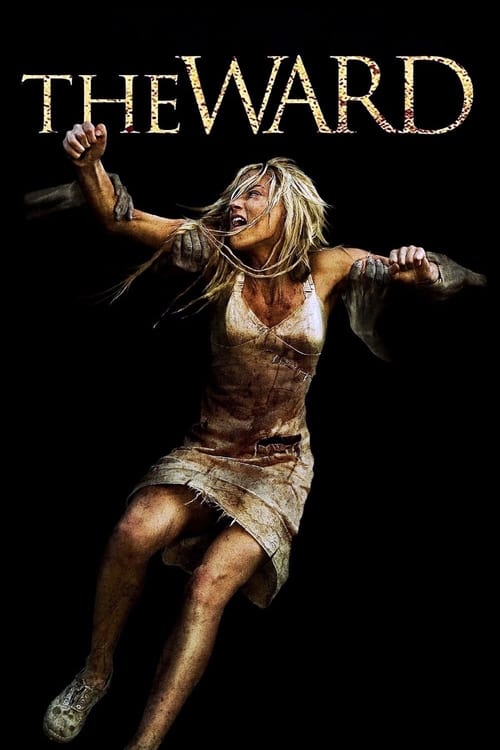
The Ward (2011)
Directed by John Carpenter
No — The Ward is not woke, scoring 9 out of 100 on our wokeness meter.
John Carpenter returned after a decade away with The Ward, a 1966-set psychiatric hospital thriller in which a young woman named Kristen is committed after burning down a farmhouse and promptly finds herself stalked by something pale and unhappy in the corridors.
Consciousness Markers
The film centers on Dissociative Identity Disorder and psychiatric institutionalization, but treats mental illness as a horror device (electroshock, lobotomy, the 'insane asylum' trope) rather than an affirming neurodivergence narrative.
The cast is a predominantly female ensemble, but this reflects the asylum-ward premise rather than any deliberate diversity mandate; no racial or ethnic representation casting is present.
A female-led cast of patients fighting for survival gives a faint feminist reading, but the women are largely victims and horror fodder rather than vehicles for any gender agenda.
The film delivers its twist through plot mechanics rather than moral instruction; there is no preachy messaging.
No LGBTQ+ characters, relationships, or themes appear anywhere in the film.
The entire cast is white and the film engages no racial themes whatsoever.
No environmental or climate content exists in the film.
No economic critique or class commentary is present.
The deformed 'Monster Alice' figure is a conventional horror antagonist, not a body-positive statement; no body-positivity themes are present.
The 1966 setting is period dressing for atmosphere, not a revisionist reframing of historical events.
Why it received this score
John Carpenter returned after a decade away with The Ward, a 1966-set psychiatric hospital thriller in which a young woman named Kristen is committed after burning down a farmhouse and promptly finds herself stalked by something pale and unhappy in the corridors. It is a film of flickering lights, electroshock tables, and a great deal of running. The director's widescreen instincts remain intact. His interest in the material does not, and the reviews at the time said so with unusual unanimity.
The picture arrives with a predominantly female cast, which is a matter of premise more than principle: five patients in a locked ward, plus a doctor and an orderly to keep order. The women are victims and scream cues, and the film asks nothing of them beyond survival and the occasional shriek. Mental illness supplies the engine. Dissociative identity disorder, hypnotherapy, transorbital lobotomy, the whole 1966 catalogue, all deployed as scare machinery. That is the asylum trope doing its traditional work, not an affirming portrait of neurodivergence, and the distinction matters when we tally the ledger. No racial themes. No economic critique. No climate anxiety. No body-positive reading of the deformed figure who stalks the halls, who is a ghost and a plot device and nothing more.
The twist lands as mechanics, not sermon. Alice was chained in a basement, fractured into many selves, and the film resolves her trauma through a fight on a staircase and a fall through a window. There is a faint current of progressive feeling in watching a group of women struggle against institutional cruelty, but it is atmosphere, not argument. Carpenter's swan song is a genre exercise with a female ensemble and a psychiatric setting. It lectures no one. It simply runs out of corridors.
Analysis generated by our Consciousness Algorithm


Synopsis
Kristen, a troubled young woman, is captured by the police after burning down a farmhouse and is locked in the North Bend Psychiatric Hospital. Soon, she begins to suspect that the place has a dark secret at its core and she's determined to find out what it is.
Questions about The Ward
Is The Ward woke?
No — The Ward is not woke, scoring 9 out of 100 on our wokeness meter. That earns it a verdict of Ultra Based.
Does The Ward have any woke elements?
Very few. None of the 10 markers reaches 30, the level where a marker counts as present; the highest is Neurodivergence at 20.
How does The Ward compare to other 2011 movies?
It ranks #96 of the 245 films from 2011 we've scored; their average is 11. The wokest is Paul (68).
How is the Woke Score calculated?
An AI-assisted process researches the film and its reception, scores it 0–100 on ten markers, then combines those into one 0–100 Woke Score. It measures a specific set of 2020s cultural themes, not film quality.