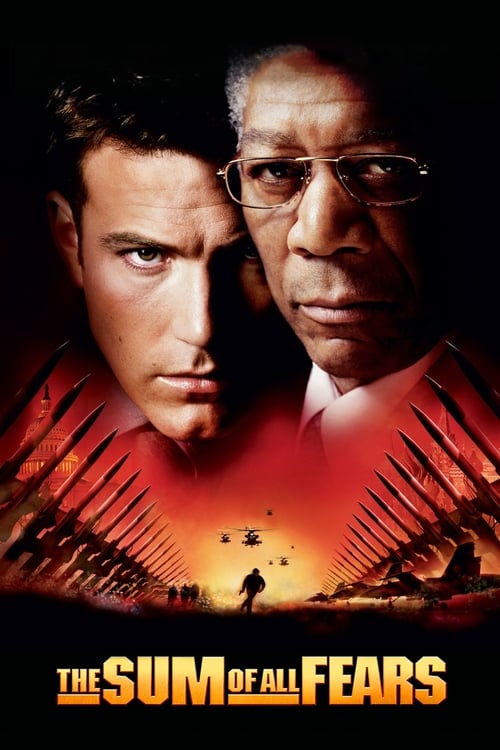
The Sum of All Fears (2002)
Directed by Phil Alden Robinson
No — The Sum of All Fears is not woke, scoring 5 out of 100 on our wokeness meter.
The Sum of All Fears arrives as a curious artifact of 2002, a spy thriller rebooted so that Ben Affleck might play Jack Ryan at an earlier age.
Consciousness Markers
Morgan Freeman appears in a prominent authority role as CIA Director Cabot, but the casting is not framed as a diversity statement and the rest of the principal cast is largely white.
The ending gestures toward nuclear nonproliferation and diplomacy, but the film remains a conventional thriller rather than a preachy lecture.
No LGBTQ+ characters, themes, or subtext are present.
Bridget Moynahan's Catherine Muller is a supportive fiancée figure with little narrative agency; the film has no feminist agenda.
The film avoids Arab terrorist villains in favor of neo-Nazis, but this is a production-level sensitivity choice rather than an on-screen exploration of racial consciousness.
No climate change themes or environmental messaging appear.
The villain is a wealthy neo-Nazi, but his motive is fascist geopolitics rather than an anti-capitalist critique.
No body positivity themes or messaging are present.
No neurodivergence themes or representation are present.
The film is a fictional spy thriller adapted from a novel; it does not engage in historical revisionism.
Why it received this score
The Sum of All Fears arrives as a curious artifact of 2002, a spy thriller rebooted so that Ben Affleck might play Jack Ryan at an earlier age. Its most discussed decision was a swap: the Arab nationalists of Tom Clancy's novel became Austrian neo-Nazis, a change the filmmakers attributed to plot mechanics and the lobbying efforts of advocacy groups. The result is a picture that avoids one set of villains for reasons of market reach, and plays comfortably in Damascus and Riyadh alike. That is a commercial calculation, not an examination of racial politics, and the screen itself offers no comment on the substitution.
Morgan Freeman lends the CIA director's office his usual gravity, and the role is substantial. Nothing in the film treats his presence as a statement, which is to its credit and also to the point. Bridget Moynahan's Catherine Muller exists to be engaged to the hero and to listen to the closing speeches. The picture has no interest in her interior life, and no interest in proposing that it should. What remains is craftsmanship: a bomb in a Baltimore stadium, a president with a heavy heart, a Russian counterpart persuaded to stand down.
The final minutes gesture toward nuclear nonproliferation and the virtues of restraint, a mild sermon delivered over joint speeches at the White House. It is a conventional thriller that would like a little credit for its sobriety, and it earns a little. The cultural awareness on display is the sort that avoids offense without seeking anything else. A well-made, well-intentioned product of its moment, and nothing more.
Analysis generated by our Consciousness Algorithm
Part of


Synopsis
When the president of Russia suddenly dies, a man whose politics are virtually unknown succeeds him. The change in political leaders sparks paranoia among American CIA officials, so CIA director Bill Cabot recruits a young analyst to supply insight and advice on the situation. Then the unthinkable happens: a nuclear bomb explodes in a U.S. city, and America is quick to blame the Russians.
Questions about The Sum of All Fears
Is The Sum of All Fears woke?
No — The Sum of All Fears is not woke, scoring 5 out of 100 on our wokeness meter. That earns it a verdict of Ultra Based.
Does The Sum of All Fears have any woke elements?
Very few. None of the 10 markers reaches 30, the level where a marker counts as present; the highest is Lecture Energy at 10.
How does The Sum of All Fears compare to other 2002 movies?
It ranks #103 of the 150 films from 2002 we've scored; their average is 12. The wokest is Far from Heaven (78).
How is the Woke Score calculated?
An AI-assisted process researches the film and its reception, scores it 0–100 on ten markers, then combines those into one 0–100 Woke Score. It measures a specific set of 2020s cultural themes, not film quality.