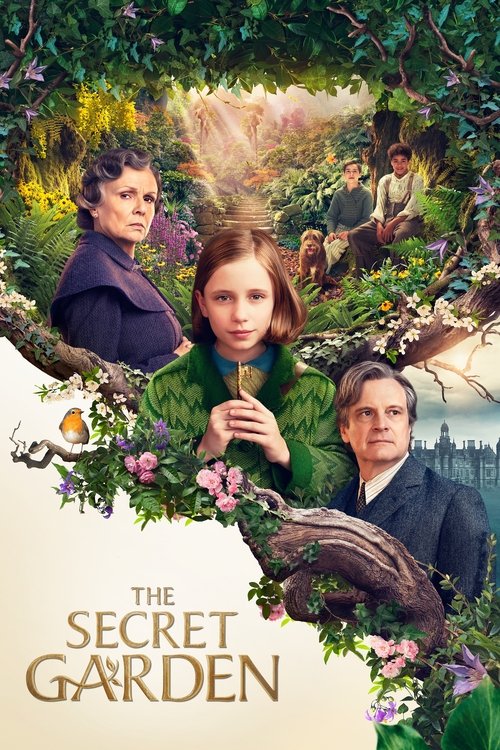
The Secret Garden (2020)
Directed by Marc Munden
No — The Secret Garden is not woke, scoring 19 out of 100 on our wokeness meter.
There is a moment early in this fourth cinematic rendering of Frances Hodgson Burnett's 1911 novel in which young Mary Lennox is discovered abandoned in her Indian home, her parents dead of cholera, the subcontinent convulsing through Partition.
Consciousness Markers
The 2020 adaptation casts Black actors in the roles of Dickon and Martha, a modest diversification of a traditionally white Edwardian cast, though the characters exist naturally in the story without commentary.
The film relocates the story to 1947 and opens amid the chaos of Partition, giving Mary's Raj upbringing and abandonment a post-colonial shading, though it is atmospheric rather than didactic.
The shift to a 1947 Partition-era setting is a deliberate historical reimagining of the 1911 source, adding colonial context not present in the original novel.
Mary is a headstrong girl protagonist, but this derives from the 1911 source novel rather than any modern feminist framing; no explicit gender-justice agenda is present.
The film is a gentle family fantasy drama that prioritizes atmosphere and emotion over moral instruction; any messaging is implicit rather than preached.
No LGBTQ+ characters, themes, or subtext appear anywhere in the film.
No environmental or climate themes are present; the garden is a magical restorative space, not an ecological parable.
No critique of wealth, class, or capitalism; the aristocratic Craven estate is simply the setting.
Colin's immobility and curvature of the spine are treated as an ailment to be cured by the garden, which is the opposite of a body-positivity message.
No neurodivergent characters or themes are depicted.
Why it received this score
There is a moment early in this fourth cinematic rendering of Frances Hodgson Burnett's 1911 novel in which young Mary Lennox is discovered abandoned in her Indian home, her parents dead of cholera, the subcontinent convulsing through Partition. It is a striking relocation, moving the story from the comfortable Edwardian fog of the source to 1947, and it lends the girl's displacement a colonial melancholy the previous adaptations never bothered to earn. The garden itself remains what it always was: a walled restorative, a place where sick children learn to stand. No ecological sermon is offered, no critique of the Craven estate's aristocratic hoarding. The manor is simply the manor.
The casting brings Black performers into the roles of Dickon and Martha, a quiet widening of a traditionally pale Yorkshire household. The characters are not asked to explain themselves, and the film does not pause to congratulate anyone for their presence. Mary remains headstrong because Burnett wrote her that way, not because a committee intervened. Colin's curved spine is presented as a malady to be walked off in the sunshine, which places the film at some distance from contemporary thinking about bodies and their acceptable forms. Nobody in the cast wrestles with identity, and nobody delivers a speech about the correct way to live.
This is a gentle, misty family picture, more interested in candlelight and overgrown stone than in instruction. The post-colonial framing hovers at the edges, atmospheric and unresolved, a mood more than an argument. Colin Firth stares into middle distance with practiced grief. Julie Walters runs a household with clipped efficiency. The whole affair unfolds with the polite exhaustion of a property that has been adapted four times and knows the route. It is a film about healing that never quite decides whom it is healing, and it ends, as these things must, with everyone standing in the garden, damp but improved. The classification is straightforward: a book adaptation, a remake, and a modestly reimagined one at that. Nothing more strident than that, which is its own kind of mercy.
Analysis generated by our Consciousness Algorithm


Synopsis
Mary Lennox is born in India to wealthy British parents who never wanted her. When her parents suddenly die, she is sent back to England to live with her uncle. She meets her sickly cousin, and the two children find a wondrous secret garden lost in the grounds of Misselthwaite Manor.
Questions about The Secret Garden
Is The Secret Garden woke?
No — The Secret Garden is not woke, scoring 19 out of 100 on our wokeness meter. That earns it a verdict of Ultra Based.
Does The Secret Garden have any woke elements?
2 of the 10 markers register at 30 or above, led by Representation Casting (35) and Racial Consciousness (30). On Representation Casting: The 2020 adaptation casts Black actors in the roles of Dickon and Martha, a modest diversification of a traditionally white Edwardian cast, though the characters exist naturally in the story without commentary.
How does The Secret Garden compare to other 2020 movies?
It ranks #85 of the 227 films from 2020 we've scored; their average is 21. The wokest is One Night in Miami... (83).
How is the Woke Score calculated?
An AI-assisted process researches the film and its reception, scores it 0–100 on ten markers, then combines those into one 0–100 Woke Score. It measures a specific set of 2020s cultural themes, not film quality.