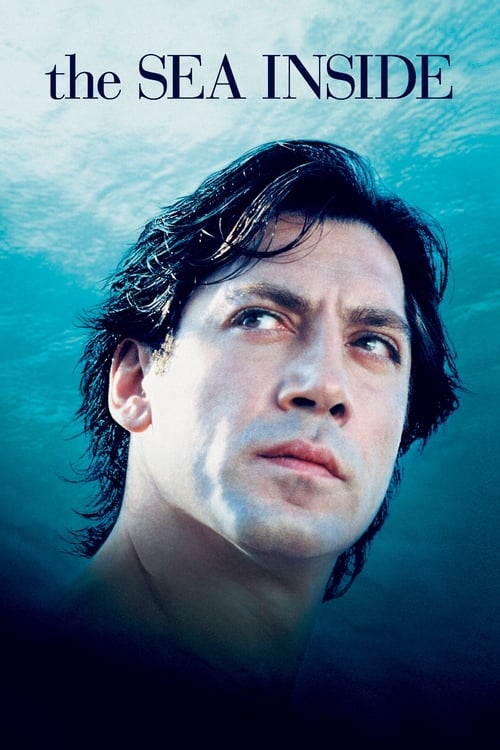
The Sea Inside (2004)
Directed by Alejandro Amenábar
No — The Sea Inside is not woke, scoring 13 out of 100 on our wokeness meter.
The Sea Inside arrives from 2004, which is to say from a period when a film could take up assisted suicide as its central question and expect the audience to argue about it afterward.
Consciousness Markers
The film stages explicit debates over the right to die and clearly sympathizes with its protagonist's cause, though it remains a character drama rather than a sermon.
The film centers a quadriplegic protagonist, but the role is played by able-bodied Javier Bardem, and the entirely Spanish cast reflects no deliberate diversity-casting agenda.
Julia and Rosa are given substantial interior lives and agency, but the film's organizing concern is a man's right to die, not a feminist critique of patriarchy.
No LGBTQ+ characters or themes appear anywhere in the narrative.
The film engages no racial or ethnic-identity themes whatsoever.
There is no environmental or climate content in the film.
The story concerns euthanasia and personal dignity, with no economic or class critique of capitalism.
The film's premise — a disabled man arguing there is no dignity in his paralyzed life — runs contrary to body-positivity messaging rather than advancing it.
No neurodivergent characters or themes are present.
It dramatizes a real-life story faithfully rather than reinterpreting or revising historical record for ideological ends.
Why it received this score
The Sea Inside arrives from 2004, which is to say from a period when a film could take up assisted suicide as its central question and expect the audience to argue about it afterward. Alejandro Amenábar's drama follows Ramón Sampedro, a Galician ship mechanic turned poet who spent twenty-eight years petitioning for the legal right to end a life left quadriplegic by a diving accident. Javier Bardem plays him, an able-bodied actor in the chair, which would now generate a small industry of complaint. The film makes no gesture toward such concerns. Its cast is Spanish, its concerns are Spanish, and its conscience is occupied entirely elsewhere.
Two women orbit the bed. Julia, a lawyer with her own degenerative diagnosis, and Rosa, a local woman determined to talk him out of it. Both are written with real inner weather, real jobs, real disappointments, and the film grants them the dignity of separate lives. This is generosity of craft, not a thesis. Nobody in the film is working through a checklist. The arguments over the right to die are staged openly, the quadriplegic priest comes to make the opposing case, the brother objects, the courts refuse, and Amenábar lets the exchanges run. Sympathy sits plainly with Ramón throughout. It is a character drama with a position, and the position is not disguised.
The historical record is dramatized without adjustment. No racial themes. No climate anxieties. No class critique of the economic order, despite the modest circumstances. No queer subplot, no neurodivergent characters, no body-acceptance counterargument to the premise that a paralyzed life lacks dignity. The film is older than the vocabulary we would now apply to it and does not need updating. A patient, somber vintage. Notes of salt and resignation. Pairs well with silence.
Analysis generated by our Consciousness Algorithm


Synopsis
Ramón Sampedro is a ship mechanic and part-time poet left a quadriplegic following a diving accident. Ramón fought for 30 years for the legal right to end his own life. He develops close relationships with his long-term lawyer Julia and his friend Rosa, who tries to convince him that his life is worth living. Despite his situation, Ramón manages to inspire those around him to live life to the fullest.
Questions about The Sea Inside
Is The Sea Inside woke?
No — The Sea Inside is not woke, scoring 13 out of 100 on our wokeness meter. That earns it a verdict of Ultra Based.
Does The Sea Inside have any woke elements?
Very few. None of the 10 markers reaches 30, the level where a marker counts as present; the highest is Lecture Energy at 25.
How does The Sea Inside compare to other 2004 movies?
It ranks #57 of the 178 films from 2004 we've scored; their average is 12. The wokest is Tropical Malady (62).
How is the Woke Score calculated?
An AI-assisted process researches the film and its reception, scores it 0–100 on ten markers, then combines those into one 0–100 Woke Score. It measures a specific set of 2020s cultural themes, not film quality.