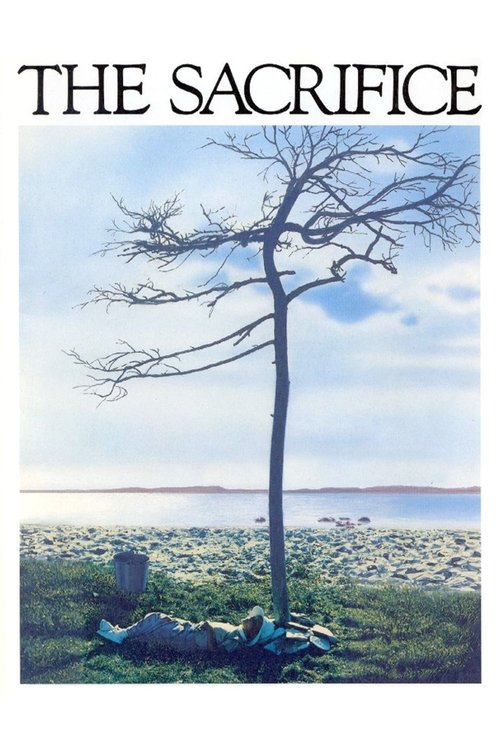
The Sacrifice (1986)
Directed by Andrei Tarkovsky
No — The Sacrifice is not woke, scoring 0 out of 100 on our wokeness meter.
Andrei Tarkovsky's final film arrives with the gravity of a man who knows his time is short, and it spends that time asking whether a middle-aged intellectual can bargain with God to halt a nuclear war.
Consciousness Markers
The film is philosophically didactic, with monologues about modern man and spiritual crisis, but its sermonizing is religious/existential rather than modern social-justice advocacy.
The cast is entirely European, with no modern identity-conscious casting or commentary on representation.
No LGBTQ+ characters, themes, or subtext are present.
Female characters exist within a patriarchal and spiritual framework, but the film advances no feminist agenda.
Race is not a theme or concern in the film.
The nuclear-war threat is existential, not an environmental or climate-crisis allegory.
The film critiques modern spiritual emptiness and technology, not capitalism or wealth inequality in a modern activist sense.
No body-positivity themes or messaging are present.
The child's temporary muteness is medical, not a portrayal of neurodivergence.
The film is a fictional parable and does not revise historical narratives.
Why it received this score
Andrei Tarkovsky's final film arrives with the gravity of a man who knows his time is short, and it spends that time asking whether a middle-aged intellectual can bargain with God to halt a nuclear war. The answer is not encouraging. Alexander, a retired actor turned lecturer on aesthetics, plants a tree with his mute son, delivers a long tirade against the emptiness of modern speech, and then, when jets pass over the house and the television announces the end, offers up everything he loves in exchange for a reprieve. He sleeps with the maid, who may be a witch, burns his house down, and is driven away in an ambulance. The film calls itself a parable, and it means it.
Against the contemporary cultural ledger, this is a desert. The cast is Scandinavian, the concerns are metaphysical, and nobody in the frame is thinking about representation. Race never enters the conversation. Gender enters only insofar as the women weep and are sedated while the men debate the fate of the soul. There is no economic critique, no environmental allegory, no advocacy legible to anyone scanning the frame for content. The child's muteness is a throat operation, not a statement. The women and the servants and the neighbors exist as figures in a religious landscape, not as positions in an argument.
What sermonizing there is, and there is some, comes from a pulpit far older than the modern seminar. Alexander lectures his son about the decay of the age. Otto lectures about inexplicable phenomena. The closing line, spoken by a boy who has found his voice, quotes the opening of the Gospel of John. The film is preachy, certainly, and heavy-handed in its symbolism, but its preaching concerns God, sacrifice, and the spiritual cost of technology. Nobody is being told how to behave in a workplace. It is a somber, beautiful, and entirely pre-modern artifact, which is the closest thing to a clean bill of health this ledger offers.
Analysis generated by our Consciousness Algorithm


Synopsis
Alexander, a journalist, philosopher and retired actor, celebrates a birthday with friends and family when it is announced that nuclear war has begun.
Questions about The Sacrifice
Is The Sacrifice woke?
No — The Sacrifice is not woke, scoring 0 out of 100 on our wokeness meter. That earns it a verdict of Ultra Based.
Does The Sacrifice have any woke elements?
Very few. None of the 10 markers reaches 30, the level where a marker counts as present; the highest is Lecture Energy at 15.
How does The Sacrifice compare to other 1986 movies?
It ranks #47 of the 62 films from 1986 we've scored; their average is 7. The wokest is Star Trek IV: The Voyage Home (42).
How is the Woke Score calculated?
An AI-assisted process researches the film and its reception, scores it 0–100 on ten markers, then combines those into one 0–100 Woke Score. It measures a specific set of 2020s cultural themes, not film quality.