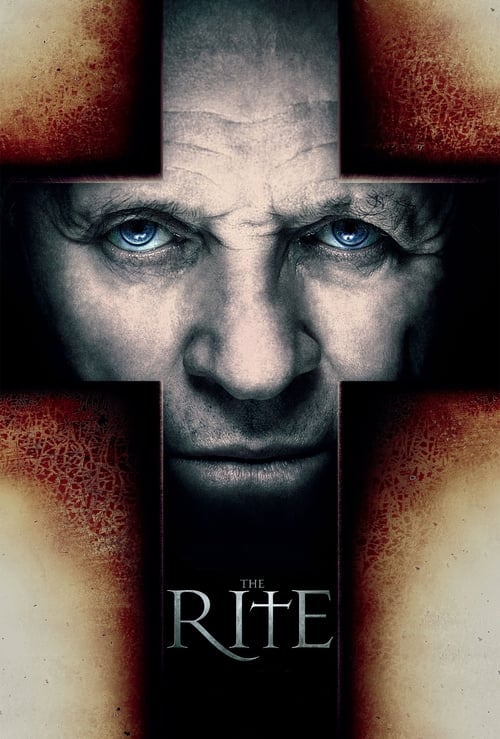
The Rite (2011)
Directed by Mikael Håfström
No — The Rite is not woke, scoring 5 out of 100 on our wokeness meter.
The Rite arrives from 2011, a year in which a major studio could still release a possession thriller whose central question was whether a young man believed in God.
Consciousness Markers
The cast is overwhelmingly white European, with Alice Braga as the lone notable non-white principal. No deliberate diverse-casting push is evident.
The film affirms Catholic faith and priestly vocation, but delivers this through atmosphere and character rather than explicit sermonizing.
Angelina is a working journalist with some professional agency, but the film has no feminist thesis or gender commentary.
The funeral-home business and the Church's financial leverage over Michael's scholarship are minor plot mechanics, not a critique of capitalism.
No LGBTQ+ characters, themes, or subtext whatsoever.
No engagement with race or racial dynamics; the story is entirely concerned with Catholic faith and demonic possession.
No environmental or climate themes present.
No body-positivity themes; the film's physical horror centers on possession and miscarriage.
No neurodivergent characters or themes.
The film is loosely based on real events but makes no revisionist historical claims; it is a faith-based horror story, not a re-reading of history.
Why it received this score
The Rite arrives from 2011, a year in which a major studio could still release a possession thriller whose central question was whether a young man believed in God. Mikael Håfström's film follows Michael Kovak, a seminary student who signs up for the Vatican's exorcism course chiefly to escape a tuition debt, then finds himself apprenticed to a Welsh Jesuit with a flair for the theatrical. Anthony Hopkins plays Father Lucas with the relish of a man who has read the script and decided to enjoy it anyway. The United States Conference of Catholic Bishops praised the picture for resoundingly affirming faith and the value of priestly ministry, which is a fair summary of its ambitions. It sermonizes, but gently, through candlelight and rain and the rattle of a possessed girl's throat. The message is delivered by mood, not by monologue.
Almost every contemporary cultural pressure point is absent here. The story has no interest in race, and its overwhelmingly European cast reflects the setting and little else. Alice Braga's journalist is the lone non-white principal, a reporter with a notebook and a byline, and the film never pauses to consider her. There is no queerness, no climate anxiety, no body politics beyond the physical horror of possession and miscarriage. The possessed girl's suffering is treated as spiritual affliction, not as commentary on anything.
A faint economic grievance flickers in the funeral-home business and the Church's willingness to convert a scholarship into a hundred thousand dollars of debt. This is plot machinery, not an indictment of capital. The film ends where it began, with a young priest hearing confession. It is a modest, sincere, occasionally dull piece of work, and it wants nothing from us but belief.
Analysis generated by our Consciousness Algorithm


Synopsis
Seminary student Michael Kovak reluctantly attends exorcism school at the Vatican. While he’s in Rome, Michael meets an unorthodox priest who introduces him to the darker side of his faith, uncovering the devil’s reach even to one of the holiest places on Earth.
Questions about The Rite
Is The Rite woke?
No — The Rite is not woke, scoring 5 out of 100 on our wokeness meter. That earns it a verdict of Ultra Based.
Does The Rite have any woke elements?
Very few. None of the 10 markers reaches 30, the level where a marker counts as present; the highest is Lecture Energy at 10.
How does The Rite compare to other 2011 movies?
It ranks #165 of the 245 films from 2011 we've scored; their average is 11. The wokest is Paul (68).
How is the Woke Score calculated?
An AI-assisted process researches the film and its reception, scores it 0–100 on ten markers, then combines those into one 0–100 Woke Score. It measures a specific set of 2020s cultural themes, not film quality.