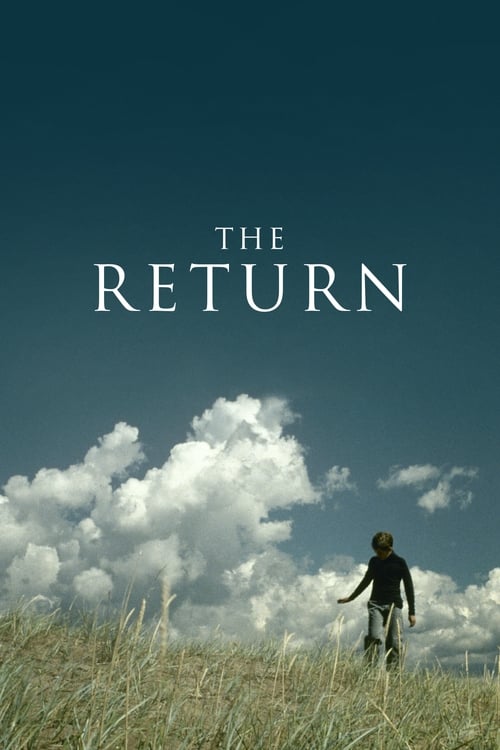
The Return (2003)
Directed by Andrey Zvyagintsev
No — The Return is not woke, scoring 0 out of 100 on our wokeness meter.
Andrey Zvyagintsev's debut arrives from 2003 with the quiet confidence of a film that has nothing to sell us.
Consciousness Markers
The cast is entirely white Russian actors; there is no deliberate multicultural or inclusive casting.
No LGBTQ+ characters, themes, or subtext.
The film centers on father-son masculinity and male authority; it does not advance a feminist agenda.
No engagement with race or racial justice.
The wilderness setting is atmospheric, not an environmentalist crusade.
No critique of capitalism or wealth inequality.
No body-positivity themes or diverse body representation.
No neurodivergent characters or themes.
Fictional contemporary story, no historical revisionism.
The film is ambiguous and mythic rather than preachy or didactic.
Why it received this score
Andrey Zvyagintsev's debut arrives from 2003 with the quiet confidence of a film that has nothing to sell us. Two brothers, Andrei and Ivan, wait out a fatherless childhood until the man himself reappears after twelve years, a stranger known only from a faded photograph. He takes them fishing. What follows is a slow, rain-soaked examination of authority, obedience, and the terrible arithmetic of masculinity. The camera watches. The boys endure. Nobody explains anything, which is the point.
Inventorying this film for contemporary social markers is a brief exercise. The cast is uniformly Russian and uniformly pale, assembled for verisimilitude and not for a diversity spreadsheet. There is no romance, no subtext, no identity to interrogate. Women appear at the margins, chiefly the mother who grants her blessing with visible reluctance, and the film has no interest in correcting the patriarchy it depicts. It simply depicts it, coldly, as weather. The wilderness is a location, not a cause. Nobody mentions the climate, the economy, or their feelings in the therapeutic register. The father's cruelty is never framed as a teachable moment. It is framed as a fact.
It would be easy to mistake this severity for purpose, and the film resists the temptation. It offers no lesson, no thesis, no closing address to the audience. The ending, in which the boat drifts away with the body and the mysterious strongbox aboard, refuses resolution entirely. Grief, silence, and a set of photographs that prove nothing are all that remain. This is a great film. It is also, by any measure available to us, entirely innocent of the cultural currents we are paid to detect. We score it accordingly and move on to the next screening.
{"thematic_tags": []}
Analysis generated by our Consciousness Algorithm


Synopsis
Two young brothers in contemporary Russia are reunited with a father they know only from an old photograph after his sudden return from a long absence. With their mother’s reluctant consent, they set out on a remote trip that quickly becomes an uneasy test of authority, trust, and masculinity. As the journey moves deeper into the wilderness, the fragile bonds between father and sons are pushed to their limits.
Questions about The Return
Is The Return woke?
No — The Return is not woke, scoring 0 out of 100 on our wokeness meter. That earns it a verdict of Ultra Based.
Does The Return have any woke elements?
No. All 10 markers score zero.
How does The Return compare to other 2003 movies?
It ranks #131 of the 150 films from 2003 we've scored; their average is 12. The wokest is Mona Lisa Smile (60).
How is the Woke Score calculated?
An AI-assisted process researches the film and its reception, scores it 0–100 on ten markers, then combines those into one 0–100 Woke Score. It measures a specific set of 2020s cultural themes, not film quality.