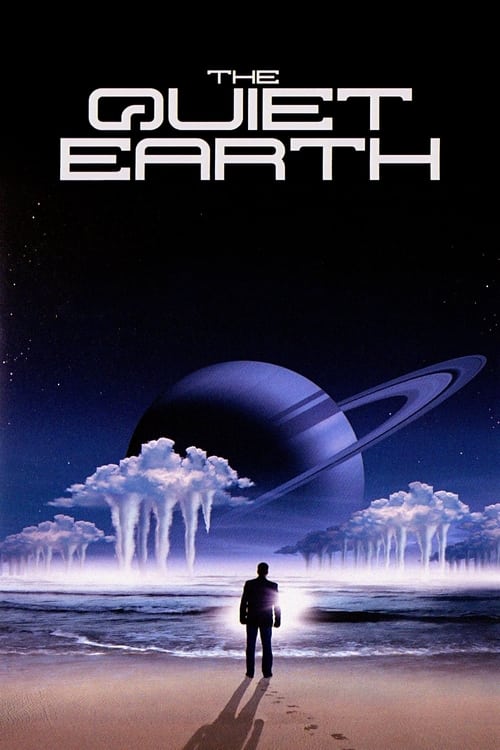
The Quiet Earth (1985)
Directed by Geoff Murphy
No — The Quiet Earth is not woke, scoring 8 out of 100 on our wokeness meter.
Geoff Murphy's The Quiet Earth opens with a scientist waking to an emptied New Zealand, and spends its runtime resisting every temptation to explain itself.
Consciousness Markers
The film features a prominent Māori character (Api) and Māori actors in a New Zealand production, providing some diverse representation, though it is not framed as a modern diversity statement.
Joanne is a female survivor with some agency, but the film does not advance a feminist agenda; she largely serves as a romantic interest in a love triangle.
The inclusion of a Māori character is natural to the setting, but the film does not explore racial consciousness or systemic racism.
No LGBTQ+ themes or characters are present.
The apocalypse stems from a scientific experiment, not climate change; no climate themes.
No critique of capitalism; the disaster is caused by a government energy project, not corporate greed.
No body positivity themes.
Zac's mental instability is a reaction to isolation, not a portrayal of neurodivergence as identity.
Not a historical film; no revisionist history.
The film is meditative and enigmatic, with no preachy or lecture-like messaging.
Why it received this score
Geoff Murphy's The Quiet Earth opens with a scientist waking to an emptied New Zealand, and spends its runtime resisting every temptation to explain itself. Zac Hobson wanders Hamilton, dresses in a woman's nightgown, and declaims to an audience of cardboard cutouts. It is a portrait of isolation, and the film trusts the silence. The apocalypse arrives by way of a government energy project, not a warming planet or a greedy corporation, which spares us the usual sermonizing. The disaster is a physics problem. The dread is existential.
Three survivors gather: Zac, Joanne, and Api, the last a Maori man played by Anzac Wallace. His presence reads as ordinary, a face from the actual New Zealand rather than a casting directive, and the film never pauses to congratulate itself for it. Joanne, played by Alison Routledge, has her moments of competence and resolve, though the screenplay eventually files her into a love triangle where her chief function is to be wanted. The arrangement is of its era. Nobody in the film announces a thesis about it.
The picture is meditative, cryptic, and content to leave its final image unexplained, a beach under unfamiliar stars and a ringed planet climbing the sky. There is no lecture, no moral appended to the credits, no invitation to feel virtuous for having watched. It is a cult object for people who like their science fiction quiet. The film concerns itself with loneliness, entropy, and the small indignity of being the last man alive, a modest and durable set of preoccupations. It does not try to fix the world. It only watches it end.
---
{"thematic_tags": ["book_adaptation"]}
Analysis generated by our Consciousness Algorithm


Synopsis
After a top-secret experiment misfires, a scientist may be the only man left alive in the world.
Questions about The Quiet Earth
Is The Quiet Earth woke?
No — The Quiet Earth is not woke, scoring 8 out of 100 on our wokeness meter. That earns it a verdict of Ultra Based.
Does The Quiet Earth have any woke elements?
1 of the 10 markers register at 30 or above, led by Representation Casting (30). On Representation Casting: The film features a prominent Māori character (Api) and Māori actors in a New Zealand production, providing some diverse representation, though it is not framed as a modern diversity statement.
How does The Quiet Earth compare to other 1985 movies?
It ranks #15 of the 68 films from 1985 we've scored; their average is 8. The wokest is The Color Purple (62).
How is the Woke Score calculated?
An AI-assisted process researches the film and its reception, scores it 0–100 on ten markers, then combines those into one 0–100 Woke Score. It measures a specific set of 2020s cultural themes, not film quality.