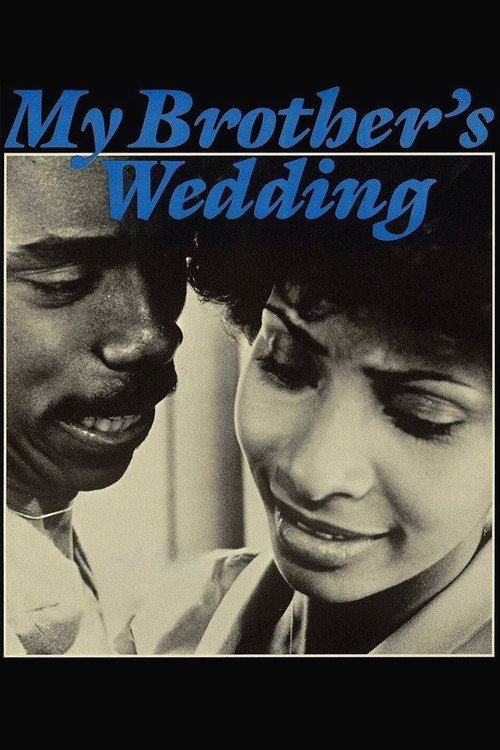
My Brother's Wedding (1985)
Directed by Charles Burnett
Charles Burnett's My Brother's Wedding is a film that arrived in 1985 already fully formed in its moral seriousness, and spent the next several decades being largely unavailable, which is either a great injustice or the universe's way of protecting a quiet masterwork from being conscripted into arguments it never volunteered for.
Consciousness Markers
The film's core concerns systemic forces trapping working-class Black men in South Central L.A., framing economic stagnation and incarceration as structural rather than personal failures. This is genuine social analysis, though rendered in 1985 neorealist terms, not 2020s discourse.
The film is entirely Black-cast, a deliberate counter-Hollywood artistic statement against the industry's erasure of Black working-class life. This is not performative diversity assembly but an organic creative philosophy, which nudges the score modestly above zero.
The tension between Pierce's working-class world and his lawyer brother's upwardly mobile bourgeois ambitions carries a quiet class critique. The affluent family he is marrying into is observed with a cool, skeptical eye. It is understated rather than programmatic.
Charles Burnett's directorial philosophy is famously observational and non-judgmental, the precise opposite of sermonizing. The systemic framing is embedded in character and situation, not delivered from a podium. A residual score acknowledges the film's known critical framing around structural racism.
Female characters exist naturally within the domestic and community fabric of the story. There is no feminist agenda, no consciousness-raising arc, and no structural critique of patriarchy. The score reflects only their presence.
No LGBTQ+ characters, themes, or subtext are present anywhere in the film.
No environmental themes, climate anxiety, or ecological messaging of any kind appear in the film.
No body positivity themes, messaging, or narrative framing are present in the film.
No neurodivergent characters or related themes appear in the film.
The film is a contemporary (for 1985) slice-of-life drama with no historical revisionism or reframing of past events.
Why it received this score
Charles Burnett's My Brother's Wedding is a film that arrived in 1985 already fully formed in its moral seriousness, and spent the next several decades being largely unavailable, which is either a great injustice or the universe's way of protecting a quiet masterwork from being conscripted into arguments it never volunteered for. Pierce Mundy, adrift in South Central Los Angeles, working his parents' dry-cleaning counter and resisting his brother's wedding with the passive intensity of a man who has decided that inertia is itself a philosophy, is not a character designed to make a point. He simply exists, which is rarer in American cinema than it should be.
The film's racial consciousness is real and earned. Burnett frames Pierce's stasis not as a character flaw but as the logical response to a ceiling that is low and structural. His friend Soldier, recently released from prison and carrying the weight of that experience like a coat he cannot take off, is the film's quiet thesis statement: that the machinery of American life grinds certain men down with a consistency that looks, from the outside, like bad luck. This is social critique. It is not, however, a lecture. Burnett's camera watches. It does not instruct.
What separates this film from the progressive cinema of later decades is precisely its restraint. The class tension between Pierce and his upwardly mobile lawyer brother is observed with a dry, tragicomic eye, not weaponized into allegory. Nobody in this film has been written to represent a position. The intra-community class divide, the bourgeois aspirations of the family his brother is marrying into, the grinding routines of working-class dignity: all of it is rendered with a humanist patience that 2020s cinema, in its eagerness to be correct, has largely forgotten how to deploy. This is a film about Black life in South Central L.A. made by a Black filmmaker who trusted his audience enough to show them a world, not a syllabus.
Analysis generated by our Consciousness Algorithm

Synopsis
A young African-American man, living in Los Angeles without direction in his life, reluctantly agrees to be the best man for his brother, an upwardly mobile lawyer.