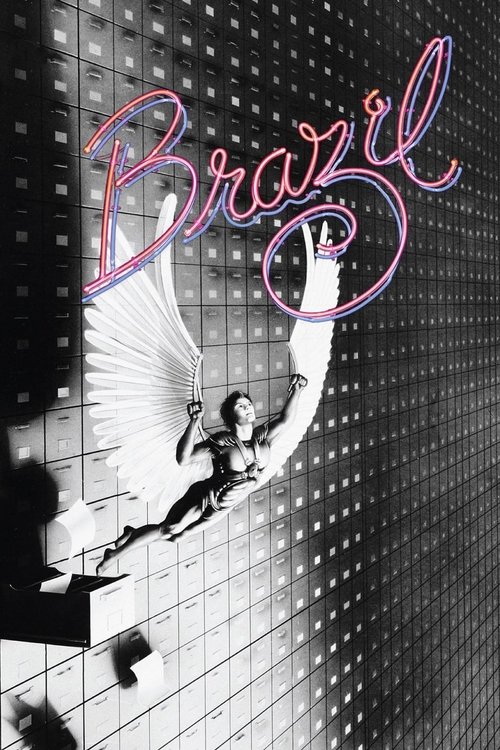
Brazil (1985)
Directed by Terry Gilliam
No — Brazil is not especially woke, scoring 32 out of 100 on our wokeness meter.
Terry Gilliam's Brazil is a retro-futurist nightmare of pneumatic tubes, duct repair, and forms filed in triplicate.
Consciousness Markers
Brazil satirizes corporate statism, state capitalism, hyper-consumerism, and a dehumanizing bureaucracy. Its anti-capitalist energy is real but aimed more at systems of control than at wealth inequality as such.
The film is politically satirical and critical of bureaucracy and authoritarianism, but it delivers its message through surreal comedy and nightmare rather than direct preaching. Its lecture energy is mild and indirect.
The cast is overwhelmingly white and reflects the casting norms of 1980s British cinema. There is no deliberate multicultural or inclusive casting agenda.
The film contains no LGBTQ+ characters, themes, or subtext. Its concerns are bureaucratic dystopia and individual escape, not sexual identity.
Jill is a truck driver with some agency, but the film does not advance a feminist critique or agenda. She functions primarily as the object of Sam's dream and desire.
Race is not a thematic concern in Brazil. The dystopian oppression depicted is bureaucratic and totalitarian, not racialized.
The film's polluted, hyper-consumerist world is an aesthetic and satirical backdrop, not a climate-change crusade. There is no environmentalist message or advocacy.
The film's grotesque cosmetic-surgery satire is not body-positive advocacy. It mocks vanity and consumerist self-modification rather than promoting body acceptance.
Sam's descent into insanity is a tragic dystopian outcome, not a portrayal of neurodivergence as identity or community. The film does not engage with neurodiversity themes.
Brazil is not a historical revisionist work. It is an absurdist, retro-futurist dystopia inspired by Orwell and Kafka, not a re-reading of real historical events.
Why it received this score
Terry Gilliam's Brazil is a retro-futurist nightmare of pneumatic tubes, duct repair, and forms filed in triplicate. It is not a film of modern identity politics. The cast is white and reflects the casting norms of British and American cinema. There are no LGBTQ characters or themes. Jill exists as a truck driver with some agency, but she is also the woman from Sam's dreams and the object of his pursuit, so the film advances no feminist critique. Race is not a thematic concern. The polluted, hyper-consumerist world is an aesthetic and satirical backdrop, not a climate crusade. The cosmetic surgery mocks vanity and consumerist self-modification; it does not promote body acceptance. Sam's descent into insanity is a tragic dystopian outcome, not a portrait of neurodivergence as identity. The film is not a revisionist history. It is absurdist dystopia inspired by Orwell and Kafka.
Where the film does register is in its anti-capitalist energy. The Ministry, Central Services, and the entire apparatus of corporate statism are targets. The satire aims at systems of control, bureaucratic cruelty, and state capitalism. It is less concerned with wealth inequality. The lecture energy is mild and indirect. Gilliam delivers his politics through surreal comedy and nightmare imagery. The film shows the torture chair and the receipts. It does not stand on a soapbox. The message arrives as a joke that curdles into horror, which is the most effective way to deliver a message.
As a cultural artifact, Brazil remains a cult film, voted among the greatest British films by the BFI and Time Out. It is imaginative, audacious, and bleak. Its social consciousness belongs to an older, anarchic tradition of dystopian satire. It does not share the preoccupations of the present. We can admire it without pretending otherwise. The ending, in which Sam is lobotomized and hums the title song while trapped in his delusion, is the point. Escape is a fantasy. The system wins. That is a grim joke, and the film tells it without preaching. It remains a great work, but it is not a document of contemporary cultural awareness.
Analysis generated by our Consciousness Algorithm


Synopsis
Low-level bureaucrat Sam Lowry escapes the monotony of his day-to-day life through a recurring daydream of himself as a virtuous hero saving a beautiful damsel. Investigating a case that led to the wrongful arrest and eventual death of an innocent man instead of wanted terrorist Harry Tuttle, he meets the woman from his daydream, and in trying to help her gets caught in a web of mistaken identities, mindless bureaucracy and lies.
Questions about Brazil
Is Brazil woke?
No — Brazil is not especially woke, scoring 32 out of 100 on our wokeness meter. That earns it a verdict of Based.
Does Brazil have any woke elements?
1 of the 10 markers register at 30 or above, led by Eat the Rich (45). On Eat the Rich: Brazil satirizes corporate statism, state capitalism, hyper-consumerism, and a dehumanizing bureaucracy.
How does Brazil compare to other 1985 movies?
It ranks #3 of the 68 films from 1985 we've scored; their average is 8. The wokest is The Color Purple (62).
How is the Woke Score calculated?
An AI-assisted process researches the film and its reception, scores it 0–100 on ten markers, then combines those into one 0–100 Woke Score. It measures a specific set of 2020s cultural themes, not film quality.