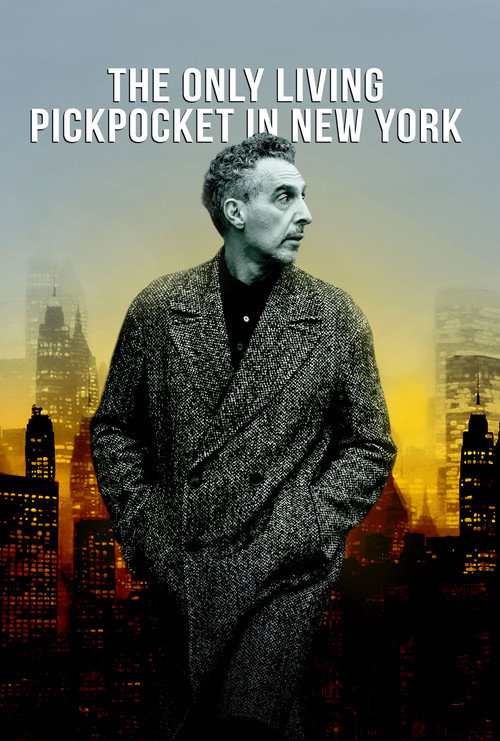
The Only Living Pickpocket in New York (2026)
Directed by Noah Segan · $2.1M domestic
No — The Only Living Pickpocket in New York is not especially woke, scoring 32 out of 100 on our wokeness meter.
Noah Segan's The Only Living Pickpocket in New York arrives at Sundance with the specific energy of a film that has read a great deal of Joan Didion and would like you to know it.
Consciousness Markers
The film's central conflict pits a working-class petty criminal against a wealthy tech-bro crime scion hoarding cryptocurrency, and critics consistently read this as a commentary on income inequality, gentrification, and the cashless economy's cruelty to the poor. This is the film's most legible ideological content, and it is not subtle.
The cast is genuinely diverse, with Giancarlo Esposito, Karina Arroyave, Rob Brown, and Victoria Moroles in notable roles. This reads less as a programmatic diversity mandate and more as a realistic portrait of New York City, which has always looked like this.
The film carries a persistent elegiac tone about technological displacement and the death of analog life, and critics note its critique of digital modernity as a throughline. It sermonizes gently on gentrification and cashlessness, but does so through atmosphere and plot rather than speeches.
The film is set across racially distinct New York neighborhoods including the Bronx and Chinatown, and its stylistic debt to Blaxploitation cinema is noted by critics. None of this rises to the level of racial consciousness as a thematic project; it is atmosphere, not argument.
Tatiana Maslany and Jamie Lee Curtis appear in supporting roles, but no coverage suggests the film frames gender as a thematic concern. The female characters exist in service of a story that is entirely about a man and his wallet.
No LGBTQ+ themes, characters, or subtext are present in the film or in any reviewed coverage. The film's central emotional relationship is a heterosexual marriage defined by caregiving and loyalty.
There is no climate content, environmental messaging, or ecological subtext anywhere in the film or its coverage. The only thing being stolen here is money, not futures.
No body positivity themes are present. The film is not interested in how anyone looks; it is interested in what they can steal.
No neurodivergent characters or themes are present. The disability depicted in the film, Harry's catatonic wife Rosie, is a physical caregiving situation treated with quiet realism, not a neurodivergence narrative.
The film is an original story set in the present day. It engages in nostalgia for old New York but does not revise, reframe, or recontextualize any historical events or figures.
Why it received this score
Noah Segan's The Only Living Pickpocket in New York arrives at Sundance with the specific energy of a film that has read a great deal of Joan Didion and would like you to know it. John Turturro plays Harry Lehman, an aging thief whose professional obsolescence is the film's central metaphor, and the film is quite committed to that metaphor. The cashless economy has made him irrelevant. Gentrification has made his city unrecognizable. A tech-bro villain hoards cryptocurrency on a USB stick while Harry's disabled wife requires round-the-clock care he can barely afford. The film lines up its socioeconomic grievances with the orderly precision of a prosecutor's exhibit, and Turturro, to his great credit, makes you feel them anyway.
The anti-capitalist architecture here is genuine and load-bearing. The antagonist is not merely a criminal but a specific kind of criminal, the entitled heir to digital wealth, and the film takes evident satisfaction in placing him opposite a man whose entire skill set has been rendered useless by the economy this villain represents. Critics at the A.V. Club reached for words like "solidarity" and "community," which are accurate descriptions of what the film is doing and also a reliable indicator of where its sympathies lie. Segan draws on 1970s New Hollywood and Blaxploitation aesthetics with enough craft that the result feels earned rather than costumed, and Gary Lionelli's score does real work in establishing the film's mournful, street-level dignity.
What keeps this film from accumulating a more substantial progressive dossier is that it is, at its core, an old-fashioned character study. The diverse cast inhabits a New York that simply is diverse, without the film pausing to acknowledge its own virtue in depicting this fact. The disability narrative is handled with a tenderness that is the opposite of advocacy cinema. And the lecture energy, while present, stays in the room rather than climbing onto a podium. This is a film with politics, but it wears them the way Harry wears his coat: out of long habit, not to make a point.
Analysis generated by our Consciousness Algorithm
Synopsis
Harry Lehman is an aging pickpocket who plies his trade with ever-diminishing returns in a drastically changed New York. Wallets stuffed with cash have been replaced by easily cancelled credit cards, and Harry struggles to make ends meet as he cares for his disabled wife, Rosie. When he unwittingly purloins and fences a valuable USB stick, Harry finds himself in a race against time to return the loot or face the rage of a vengeful crime family.
Critic Reviews
“Ultimately The Only Living Pickpocket in New York shows us that old school and new school aren’t opposites. Like the city’s many seeming contradictions, they are meant to coexist.”
“I love everything about this movie, from its precision plotting to its autumnal poise—a gentle appreciation for what’s gone, along with acceptance that colder days are coming. It’s also a wonderful throwback to the simple, no-frills 1990s indie filmmaking, strongly associated with New York, in which both Mr. Turturro and Mr. Buscemi made their names.”
““Pickpocket” is to New York what “Coyle” is to Boston; that is, a movie so entrenched in its location that it becomes a living, breathing document of that place.”
“One touching scene in particular revolves around Harry visiting his daughter (played by Tatiana Maslany) after years of being estranged, and it’s in this sequence that the film teases it could become something more. That something never comes, despite Turturro’s best efforts. It’s hard not to wish that his character existed in a film that came together more than this one does.”
Questions about The Only Living Pickpocket in New York
Is The Only Living Pickpocket in New York woke?
No — The Only Living Pickpocket in New York is not especially woke, scoring 32 out of 100 on our wokeness meter. That earns it a verdict of Based.
Does The Only Living Pickpocket in New York have any woke elements?
2 of the 10 markers register at 30 or above, led by Eat the Rich (45) and Representation Casting (30). On Eat the Rich: The film's central conflict pits a working-class petty criminal against a wealthy tech-bro crime scion hoarding cryptocurrency, and critics consistently read this as a commentary on income inequality, gentrification, and the cashless economy's cruelty to the poor.
How does The Only Living Pickpocket in New York compare to other 2026 movies?
It ranks #208 of the 715 films from 2026 we've scored; their average is 23. The wokest is Between Us (89).
How is the Woke Score calculated?
An AI-assisted process researches the film and its reception, scores it 0–100 on ten markers, then combines those into one 0–100 Woke Score. It measures a specific set of 2020s cultural themes, not film quality.