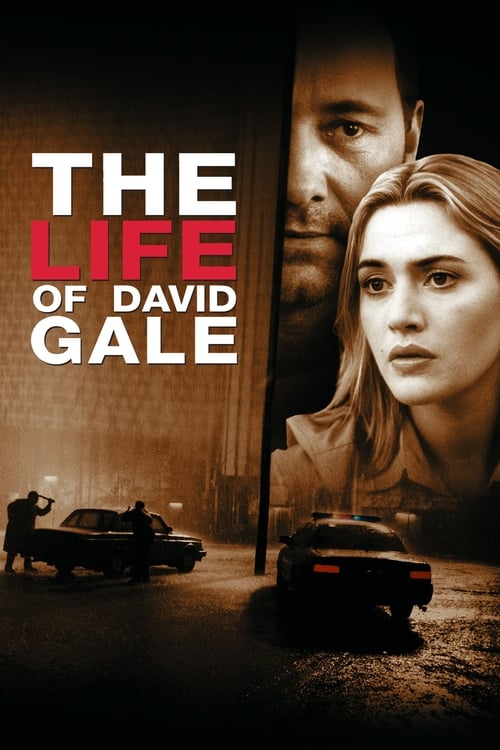
The Life of David Gale (2003)
Directed by Alan Parker
No — The Life of David Gale is not woke, scoring 8 out of 100 on our wokeness meter.
The Life of David Gale arrives from 2003, a moment when a studio thriller could still be assembled around two movie stars and a thesis.
Consciousness Markers
Critics universally noted the film pounds the viewer over the head with its anti-death-penalty message, a textbook case of preachy message-movie construction, though the cause is a pre-2015 liberal one.
Kate Winslet's journalist and Laura Linney's activist are professional women, but the plot hinges on a false rape accusation and a woman's conspiratorial self-sacrifice, offering no feminist thesis.
The cast is overwhelmingly white, with Cleo King in a minor supporting role and no deliberate diversity-casting agenda. A 2003 studio thriller assembled on star power, not representation.
Set in Texas and centered on the death penalty, the film never engages the racial disparities of capital punishment; the condemned and the activists are all white.
No LGBTQ+ characters, themes, or subtext of any kind.
No environmental or climate content whatsoever.
The target is the state's execution apparatus, not capital or class. No eat-the-rich sentiment.
No body-positivity themes or messaging.
No neurodivergent characters or themes.
A wholly fictional story; no historical revisionism involved.
Why it received this score
The Life of David Gale arrives from 2003, a moment when a studio thriller could still be assembled around two movie stars and a thesis. Alan Parker directs Kevin Spacey and Kate Winslet through a Texas death-penalty procedural that believes, sincerely and loudly, that it is saying something. What it says, eventually, is that a pair of activists would conspire to execute an innocent man in order to prove a point about executing innocent people. The film regards this as tragedy. A viewer may regard it as a logic problem.
Austin and Huntsville supply the setting, and the cast is drawn almost entirely from the white professional class. The condemned man is a philosophy professor. The activists are his colleagues. Cleo King appears in a minor supporting role and the film moves on. Capital punishment in Texas carries a racial history so thoroughly documented that ignoring it requires deliberate effort, and this film makes that effort. The women fare little better. Laura Linney's Constance and Winslet's journalist hold jobs and speak in complete sentences, but the plot turns on a fabricated rape accusation, then on a woman's self-immolating sacrifice arranged by the men around her. That is not a thesis. It is a device.
The sermonizing is both engine and flaw. Critics in 2003 described being bludgeoned, and the intervening years have not softened the blow. Roger Ebert gave it zero stars and argued that it accidentally made the case for the other side, which remains the most interesting thing anyone has written about it. The cause here is an older liberal one, abolition of the death penalty, not a newer cultural program, and the film carries no other social freight. It lectures at length, with perfect seriousness, and then it stops.
Analysis generated by our Consciousness Algorithm
Part of


Synopsis
A man against capital punishment is accused of murdering a fellow activist and is sent to death row.
Questions about The Life of David Gale
Is The Life of David Gale woke?
No — The Life of David Gale is not woke, scoring 8 out of 100 on our wokeness meter. That earns it a verdict of Ultra Based.
Does The Life of David Gale have any woke elements?
1 of the 10 markers register at 30 or above, led by Lecture Energy (45). On Lecture Energy: Critics universally noted the film pounds the viewer over the head with its anti-death-penalty message, a textbook case of preachy message-movie construction, though the cause is a pre-2015 liberal one.
How does The Life of David Gale compare to other 2003 movies?
It ranks #74 of the 150 films from 2003 we've scored; their average is 12. The wokest is Mona Lisa Smile (60).
How is the Woke Score calculated?
An AI-assisted process researches the film and its reception, scores it 0–100 on ten markers, then combines those into one 0–100 Woke Score. It measures a specific set of 2020s cultural themes, not film quality.