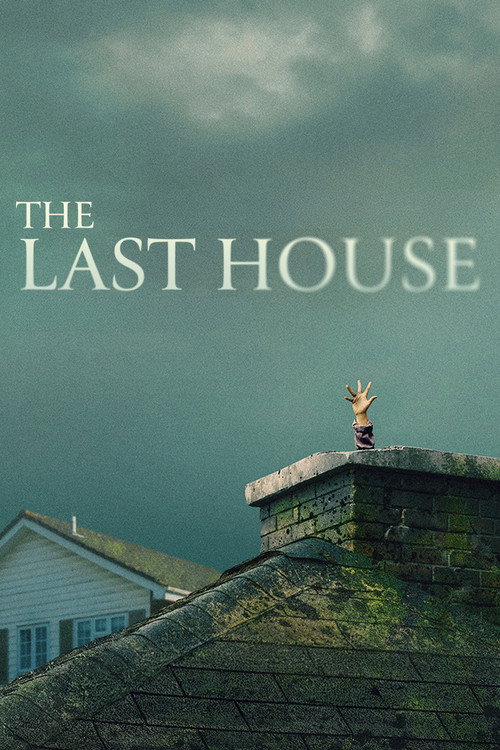
The Last House (2026)
Directed by Louis Leterrier
No — The Last House is not woke, scoring 14 out of 100 on our wokeness meter.
The Last House arrives from Netflix with the quiet confidence of a film that knows exactly how little it intends to say.
Consciousness Markers
The lead family is notably multiethnic — Korean-American Greta Lee and Brazilian Wagner Moura head the cast, with Arden Cho and Gabriel Barbosa in supporting roles. The diversity is present but never commented upon, keeping it a moderate rather than pointed marker.
The premise involves a mysterious storm, rising waters, and a submerged Seattle, giving it an environmental-disaster backdrop, but the film treats this as monster-survival spectacle rather than climate advocacy.
Ann is a competent co-protagonist who builds gardens, water systems, and braves sewage tunnels, but the film offers no explicit feminist thesis or gendered critique.
Critics noted the film lacks thematic depth and delivers its survival story without moralizing or preachy messaging.
No LGBTQ+ characters, relationships, or themes appear anywhere in the survival narrative.
The interracial family exists naturally without any racial commentary, and the film engages no racial themes whatsoever.
No critique of capitalism, wealth, or class structures appears in the film.
No body-positivity themes or messaging are present.
No neurodivergent characters or themes are depicted.
The film is a wholly fictional sci-fi horror scenario with no historical revisionism.
Why it received this score
The Last House arrives from Netflix with the quiet confidence of a film that knows exactly how little it intends to say. Louis Leterrier directs a family sealed inside a Queen Anne home by an unexplained storm, and the script by Matthew Robinson spends five in-story years rationing food, water, and goodwill. Greta Lee and Wagner Moura anchor the household as Ann and Jason, and the casting is notably multiethnic in a way the film never pauses to explain or celebrate. That is, in its fashion, a point in its favor. The Delgados are simply a family, and the movie lets them be one.
Ann builds the garden. Jason builds the water reclamation system. She braves the sewage pipes for antibiotics while he seals the opening behind her, and the screenplay grants her competence without ever arguing for it. Ruth negotiates with the sea creature, the family shows mercy, the creatures depart, the rains stop. What the film does with this material is spectacle, not sermon. Seattle drowns beneath a rising ocean and nobody mentions carbon.
Critics were unkind. Twenty-three percent on Rotten Tomatoes, 42 on Metacritic, and a consensus that the narrative repeats itself into numbness. Brian Tallerico called it frustrating and forgettable. The Guardian allowed that it was just about good enough for a low-stakes click. In the ledger of social consciousness, the film registers as a mild environmental curiosity and little else. It has no thesis to press upon us, no lesson to administer, no scolding to deliver. It is a monster movie about a family in a house. For a certain kind of viewer, that restraint will read as a small mercy. For the rest of us, it reads as nothing at all.
Analysis generated by our Consciousness Algorithm


Synopsis
A family suddenly sealed inside their home must work together to survive against dwindling resources and the ominous threat keeping them trapped.
Questions about The Last House
Is The Last House woke?
No — The Last House is not woke, scoring 14 out of 100 on our wokeness meter. That earns it a verdict of Ultra Based.
Does The Last House have any woke elements?
1 of the 10 markers register at 30 or above, led by Representation Casting (50). On Representation Casting: The lead family is notably multiethnic — Korean-American Greta Lee and Brazilian Wagner Moura head the cast, with Arden Cho and Gabriel Barbosa in supporting roles.
How does The Last House compare to other 2026 movies?
It ranks #423 of the 800 films from 2026 we've scored; their average is 23. The wokest is Between Us (89).
How is the Woke Score calculated?
An AI-assisted process researches the film and its reception, scores it 0–100 on ten markers, then combines those into one 0–100 Woke Score. It measures a specific set of 2020s cultural themes, not film quality.