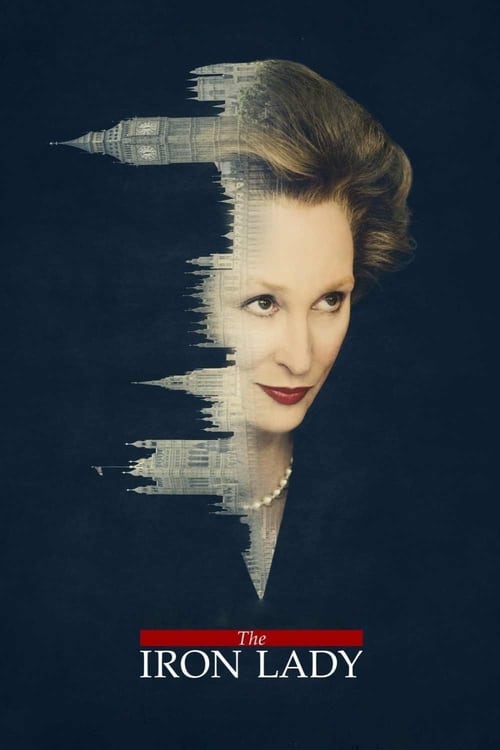
The Iron Lady (2011)
Directed by Phyllida Lloyd
No — The Iron Lady is not especially woke, scoring 20 out of 100 on our wokeness meter.
The Iron Lady arrives in 2011 as prestige awards bait, with Meryl Streep under prosthetics and Phyllida Lloyd directing.
Consciousness Markers
The narrative foregrounds Thatcher's struggle to break into a snobbish, male-dominated Conservative Party and her refusal to be a decorative wife ('I don't want to die cleaning a teacup'), giving it a genuine glass-ceiling angle, though the film remains ambivalent rather than celebratory.
A female-led prestige drama directed by a woman (Phyllida Lloyd) centering the first female British Prime Minister, but the cast is otherwise a uniformly white British ensemble with no meaningful diversity.
The film prominently and sympathetically portrays Thatcher's dementia and cognitive decline, drawing commentary on society's treatment of the condition, though it is framed as tragic aging rather than neurodivergent identity.
The film depicts the human cost of Thatcher's monetarist policies — rising unemployment, the miners' strike, the poll tax riots — but it refuses to editorialize, and critics noted it cannot decide what it wants to say about her, blunting any anti-capitalist thrust.
Documented inaccuracies — omitting all other female MPs, misrepresenting Michael Foot's support for the Falklands task force, and fabricating the Airey Neave farewell — revise the record, though toward a more sympathetic personal portrait rather than a progressive reframing.
A restrained, elegiac character study that observes rather than preaches; its mixed reception stemmed partly from refusing to take a clear moral stance.
No LGBTQ+ characters, themes, or subtext appear anywhere in the film.
The film engages no racial themes or commentary; the 1981 Brixton riot is depicted as backdrop without racial analysis.
No environmental or climate themes are present.
No body-positivity themes or messaging are present.
Why it received this score
The Iron Lady arrives in 2011 as prestige awards bait, with Meryl Streep under prosthetics and Phyllida Lloyd directing. Its most obvious progressive credential is structural: a woman directs a film about the first female British prime minister, and the screenplay follows Thatcher's struggle through a snobbish, male-dominated Conservative Party. She refuses to be a decorative wife, declaring she does not want to die cleaning a teacup. That glass-ceiling angle has genuine force. It is also the film's only sustained social argument. The cast remains a uniformly white British ensemble, and the 1981 Brixton riot drifts past as period wallpaper without racial analysis. There is no LGBTQ presence, no climate concern, no body-positivity thread. The film has other things on its mind.
Those other things include the human cost of monetarism. Unemployment rises, miners strike, poll tax riots fill the screen. The film observes these upheavals with a furrowed brow and then declines to editorialize. Its anti-capitalist impulse is therefore faint, a flicker of conscience in a drawing room. The dementia narrative is more successful and more troubling. Streep's Thatcher sees the ghost of Denis, loses her grip on the present, and the film treats her decline with patience. It is a portrait of tragic aging, not neurodivergent identity, though it does ask uncomfortable questions about how society regards cognitive decline. Historical accuracy takes several liberties. The Airey Neave farewell is fabricated, other female MPs vanish, and Michael Foot's Falklands support is reversed. These revisions bend toward a sympathetic personal portrait instead of a progressive reframing. The film lectures no one. It is an elegy with a budget.
The result is a strange specimen: an Oscar-winning performance in a movie that cannot decide what it thinks. It offers a woman's ambition, a marriage's tenderness, and a long fade into grief. Its cultural awareness is narrow, historical, and personal. Viewers seeking a modern sermon will leave thirsty. Viewers seeking Streep will be served.
Analysis generated by our Consciousness Algorithm


Synopsis
A look at the life of Margaret Thatcher, the former Prime Minister of the United Kingdom, with a focus on the price she paid for power.
Questions about The Iron Lady
Is The Iron Lady woke?
No — The Iron Lady is not especially woke, scoring 20 out of 100 on our wokeness meter. That earns it a verdict of Based.
Does The Iron Lady have any woke elements?
1 of the 10 markers register at 30 or above, led by Feminist Agenda (45). On Feminist Agenda: The narrative foregrounds Thatcher's struggle to break into a snobbish, male-dominated Conservative Party and her refusal to be a decorative wife ('I don't want to die cleaning a teacup'), giving it a genuine glass-ceiling angle, though the film remains ambivalent rather than celebratory.
How does The Iron Lady compare to other 2011 movies?
It ranks #31 of the 245 films from 2011 we've scored; their average is 11. The wokest is Paul (68).
How is the Woke Score calculated?
An AI-assisted process researches the film and its reception, scores it 0–100 on ten markers, then combines those into one 0–100 Woke Score. It measures a specific set of 2020s cultural themes, not film quality.