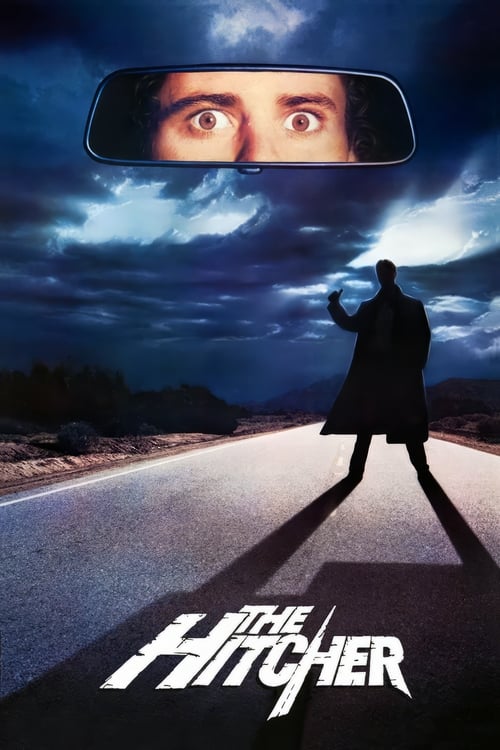
The Hitcher (1986)
Directed by Robert Harmon
No — The Hitcher is not woke, scoring 0 out of 100 on our wokeness meter.
The Hitcher arrives like truck stop coffee at three in the morning: bitter, hot, and served without ceremony.
Consciousness Markers
The cast is overwhelmingly white and the film makes no effort toward inclusive or representative casting.
There are no LGBTQ+ characters, themes, or subtext in the film.
The female character Nash has some agency but is ultimately fridged to motivate the male protagonist; no feminist agenda is present.
The film does not engage with racial consciousness or racial justice themes.
The desert setting and gas station explosion are incidental; there is no climate crusade or environmental messaging.
The film contains no critique of capitalism, wealth inequality, or eat-the-rich themes.
There is no body positivity messaging or celebration of diverse body types.
The killer's psychopathy is not framed through a neurodivergence or mental-health acceptance lens.
The film is a fictional horror thriller and does not revise or reinterpret historical events.
The film is a lean genre exercise and does not lecture the audience on social or political issues.
Why it received this score
The Hitcher arrives like truck stop coffee at three in the morning: bitter, hot, and served without ceremony. Robert Harmon's 1986 film concerns a young man named Jim, a drive-away car, and a hitchhiker called John Ryder who would like, very much, to be stopped. That is the entire proposition. Rutger Hauer plays Ryder with the serenity of a man who has already read the last page. Eric Red's screenplay treats violence as weather, something that simply happens to the people standing outside.
What the film declines to do is instructive. It never pauses to explain itself. It does not assemble a cast to satisfy a demographic chart, nor does it fold in commentary on the oil economy, the prison system, or the spiritual emptiness of the interstate. The desert is a desert. The exploding gas station is an exploding gas station. Jennifer Jason Leigh's Nash is a capable waitress with a spine, and the film destroys her anyway, strung between a Mack truck and its trailer, because the plot needs Jim to suffer. We log this as a hard fact of 1980s genre mechanics, not as an argument about anything.
Ryder's madness goes undiagnosed, uncontextualized, never softened into a case study with a tidy root cause. He kills because the film requires a killer. The result is a lean, occasionally absurd machine, reappraised over the decades by people who enjoy being frightened on a modest budget. It preaches nothing. It represents no constituency. It offers no instruction on how to live, love, eat, or vote. For those of us who keep a careful ledger of such matters, the page remains blank, and the pen stays capped. A film about a man who wants to be stopped and cannot be, until the shotgun runs dry. There is a purity to that. There is also a severed finger in the french fries, which is its own kind of statement, though not one any sociologist has claimed.
Analysis generated by our Consciousness Algorithm

Synopsis
On a stormy night, young Jim, who transports a luxury car from Chicago to California to deliver it to its owner, feeling tired and sleepy, picks up a mysterious hitchhiker, who has appeared out of nowhere, thinking that a good conversation will help him not to fall asleep. He will have enough time to deeply regret such an unmeditated decision.
Questions about The Hitcher
Is The Hitcher woke?
No — The Hitcher is not woke, scoring 0 out of 100 on our wokeness meter. That earns it a verdict of Ultra Based.
Does The Hitcher have any woke elements?
No. All 10 markers score zero.
How does The Hitcher compare to other 1986 movies?
It ranks #47 of the 62 films from 1986 we've scored; their average is 7. The wokest is Star Trek IV: The Voyage Home (42).
How is the Woke Score calculated?
An AI-assisted process researches the film and its reception, scores it 0–100 on ten markers, then combines those into one 0–100 Woke Score. It measures a specific set of 2020s cultural themes, not film quality.