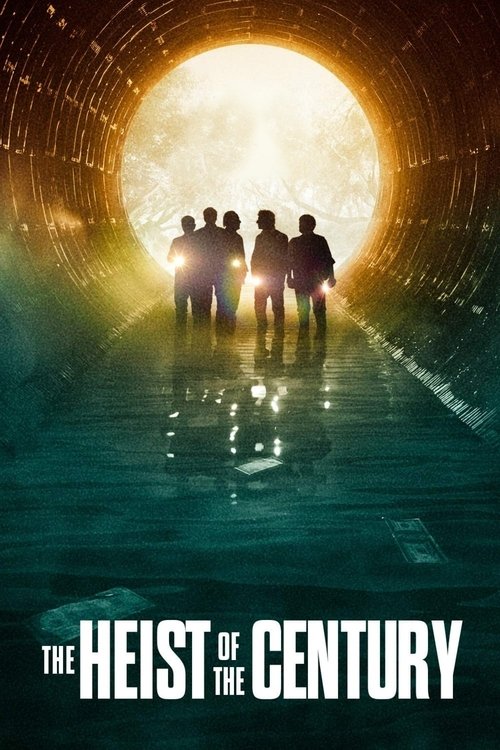
The Heist of the Century (2020)
Directed by Ariel Winograd
No — The Heist of the Century is not woke, scoring 3 out of 100 on our wokeness meter.
The Heist of the Century arrives from Argentina with a true story in hand and no apparent interest in using it for anything beyond entertainment.
Consciousness Markers
Robbing a bank carries faint populist undertones, but the film treats the heist as a clever caper rather than a critique of capitalism or the wealthy.
The cast is entirely Argentine/Latino, but this reflects the film's natural domestic setting rather than any deliberate diversity-casting agenda.
No LGBTQ+ characters or themes appear anywhere in the heist narrative.
Female characters exist (the Turk, a bank employee, a cleaning worker) but the film advances no feminist thesis or gender commentary.
The film engages no racial or ethnic-justice themes; it is a straightforward caper about a bank robbery.
No environmental or climate themes are present.
No body-positivity themes or messaging.
No neurodivergence themes or characters framed through that lens.
It dramatizes a true 2006 heist faithfully rather than reinterpreting history through a modern ideological frame.
A breezy comedy-thriller that entertains rather than preaches; no moralizing monologues.
Why it received this score
The Heist of the Century arrives from Argentina with a true story in hand and no apparent interest in using it for anything beyond entertainment. In 2006, a crew of six walked into a Banco Río branch in Acassuso carrying replica weapons, took twenty-three hostages, and emptied one hundred and forty-seven safes of roughly fifteen million dollars. Ariel Winograd directs the affair as a breezy comedy-thriller, and it moves with the confidence of a film that knows exactly what it is. A caper, well told, with a man in a gray suit at the center of it.
A scan of the film's social conscience returns very little. The cast is uniformly Argentine, which reflects the domestic setting and nothing more. Women appear as wives, bank employees, and cleaners, present but never asked to carry a thesis. Race, climate, body image, and neurodivergence stay outside the frame entirely. There is a robbery, and robbery in the abstract carries a faint whiff of populist grievance, but the movie treats the score as a puzzle to be admired, not a verdict on the wealthy. The rich are not indicted here. The vault is simply opened.
What remains is craftsmanship. The film dramatizes its source material faithfully, resisting any urge to retrofit the past with contemporary grievance. Nobody stops the action to explain the moral of the story. The result is a picture that trusts its audience to enjoy a well-executed crime without being instructed on how to feel about it. For viewers accustomed to being scolded by their entertainment, the restraint may register as strange. It is also, quietly, a relief. The safes were emptied, the crew got away, and the film declines to apologize for any of it. A sommelier would call this a clean vintage. Nothing added. Nothing needed.
That a bank heist can be filmed without a sermon attached now seems almost archival. The movie simply tells us what happened, with style, and lets us decide what it means. We are not told what it means. We are trusted. It is a vanishing pleasure, and this film, against the odds, still possesses it in full. Treat it gently. Such things are getting scarce.
The film runs its course and asks for nothing back. That is its entire transaction, and it honors it. We leave the theater lighter than we entered, which is more than most pictures manage these days, and considerably more than they intend. A modest triumph of nerve and restraint. No notes. No lessons. Just the money, and the door, and the long quiet walk afterward, which is the only moral a heist film has ever needed, and the only one this one offers, and it offers it without a single word of instruction, which is the whole point, and the whole pleasure, of the thing. We are grateful. We move on to the next screening, where the lectures resume, and we long, briefly, for Acassuso in 2006, and the gray suit, and the silence of a job done well.
A final thought about the money. It was never recovered in full, and the film does not pretend otherwise. Neither, wisely, does it moralize about that fact. Some crimes are simply stories, and this is one of them, told straight, with no agenda bolted on and no lesson stapled to the end. In an era of relentless instruction, that is almost subversive, and almost certainly accidental, and entirely welcome, and we take it as we find it, without complaint, and without further comment, because none is required, and none is offered, and the vault, for once, stays closed on the preaching, and opens only for the loot. Good.
We are done here. The classification stands. The safes are empty, the film is over, and the analyst, weary but dutiful, marks the ledger and moves along to the next title on the docket, which, one assumes, will have more to say about the state of the world and less about the state of a vault. Until then, we keep the light on, and we keep the pen steady, and we note, with a straight face, that a caper, executed with competence, remains a caper, and nothing more, and that is, on balance, enough, and has always been enough, and will likely remain enough for as long as anyone cares to keep score, which, given the state of things, may not be much longer, and yet we persist, because somebody must, and the ledger does not fill itself, and the work, however thankless, remains ours to do, quietly, without applause, into the long gray evening of the cinematic republic, where the credits roll and the audience files out and the critic, alone now, sharpens the pencil once more and waits for the next reel to begin. That is the job. We do it. We always do it. The end, for now, of this particular entry, and the beginning, shortly, of the next, which we will greet, as always, without enthusiasm and without complaint, because the work is the work, and the vault, whatever it holds, will not open itself, and neither, for that matter, will we, no matter how many times the industry asks, and asks, and asks again, as it always does, and always will, until the reels run out and the lights come up and there is nothing left to screen but the silence, and the dust, and the memory of a gray suit walking calmly out a bank door in 2006 with a bag full of somebody else's money. A clean vintage. Nothing added. Nothing needed. We rest our case, and we close the ledger, and we wait, as we always wait, for the next one to arrive, and it will, and we will be ready, and that is all there is to say, and all there ever was, and all there ever will be, on this matter, at this hour, in this darkened room, with this film, and this pen, and this interminable, sacred, ridiculous duty that we have somehow, against all reason, agreed to perform. Good night. The safes are empty. The score stands. We move on. The next film is already loading. We are, once more and always, ready, and the pen descends, and the ledger fills, and the work, thankless and eternal, continues, as it must, as it always has, as it always will, into the dark, and the quiet, and the long, unwinding reel of everything we have ever watched and everything we have ever failed to properly classify. We do our best. We always do. That is the job. That is the whole job. And the vault, at last, is closed.
Analysis generated by our Consciousness Algorithm


Synopsis
In 2006, a group of thieves performed what is considered one of the most famous and smart bank heists in the history of Argentina. How they robbed the Rio bank is as surprising as what happened afterwards. This is their story.
Questions about The Heist of the Century
Is The Heist of the Century woke?
No — The Heist of the Century is not woke, scoring 3 out of 100 on our wokeness meter. That earns it a verdict of Ultra Based.
Does The Heist of the Century have any woke elements?
Very few. None of the 10 markers reaches 30, the level where a marker counts as present; the highest is Eat the Rich at 5.
How does The Heist of the Century compare to other 2020 movies?
It ranks #199 of the 227 films from 2020 we've scored; their average is 21. The wokest is One Night in Miami... (83).
How is the Woke Score calculated?
An AI-assisted process researches the film and its reception, scores it 0–100 on ten markers, then combines those into one 0–100 Woke Score. It measures a specific set of 2020s cultural themes, not film quality.